The Ghost of the Bush
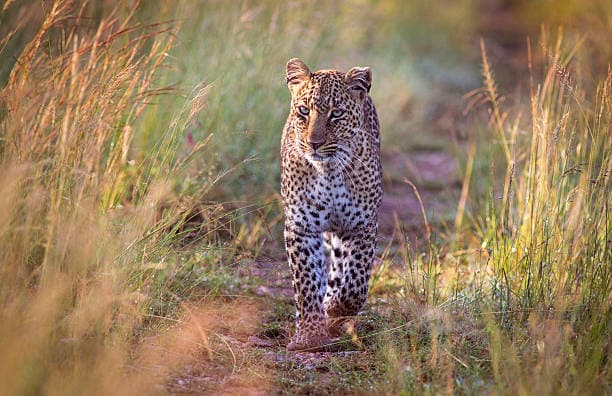
The African leopard is the most secretive and elusive of the Big Five. Primarily nocturnal and supremely camouflaged, leopards are masters of stealth. Even experienced guides count a clear leopard sighting as something special.
Strength & Hunting
Pound for pound, the leopard is the strongest of the big cats. They routinely haul kills weighing more than their own body weight up into trees — sometimes 6 metres off the ground — to protect their meal from lions, hyenas, and other scavengers. They are ambush predators with a diverse diet.
Adaptability
Leopards are the most adaptable of all big cats, thriving in habitats from rainforest to desert, mountain to coast. They have even been documented living in the outskirts of major African cities. This adaptability is key to their survival.
Solitary Life
Leopards are solitary animals that come together only to mate. Males maintain territories that overlap with several female territories. They communicate through scent marking, scraping, and distinctive rasping calls that carry far through the night.
Conservation
While more widespread than lions or cheetahs, leopard populations are declining due to habitat fragmentation, conflict with livestock farmers, and illegal wildlife trade. They are listed as Vulnerable by the IUCN.
Where Can You See African Leopard on Safari?
The elusive leopard demands patience and sharp eyes around riverine woodland and rocky outcrops. The Masai Mara National Reserve and Serengeti National Park are renowned for their tree-climbing leopards, and further sightings come from Lewa Conservancy, the woodlands around Nakuru, Uganda's Queen Elizabeth National Park and Lake Mburo National Park.
When Is the Best Time to See Them?
Leopards can be found year-round but are most active after dark and in the cool of early morning, so dawn drives and, where permitted, night drives improve the odds. The dry seasons thin the foliage and make the cats easier to detect resting in trees.
Want to know how our guides actually find these cats? Our field article on how the African leopard hides its spots breaks down rosette camouflage, habitat clues and the parks where patient tracking pays off.