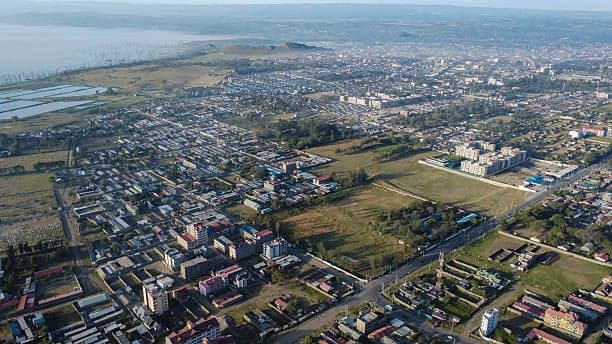
Nakuru City is the principal urban centre of Kenya's Great Rift Valley and the gateway to Lake Nakuru National Park, a compact 188-square-kilometre wildlife reserve about 160 kilometres north-west of Nairobi. The park that borders the city is one of East Africa's leading rhino sanctuaries and a world-famous birdwatching destination.
Lake Nakuru National Park was originally established to protect the alkaline lake's ecosystem and its celebrated flamingo populations. Today it has evolved into one of Kenya's most important conservation areas, providing secure habitat for both endangered black and white rhinos — visitors here have some of the best odds in the country of seeing rhinos in the wild.
What Is Nakuru Known For?
- A thriving rhino sanctuary protecting both white rhinos and the endangered black rhinoceros
- Flamingos and huge concentrations of pelicans, cormorants and fish eagles on the alkaline lake
- The endangered Rothschild's giraffe, one of the park's flagship success stories
- Big cats, including lions and leopards, often spotted resting in yellow-barked acacias
- Panoramic viewpoints such as Baboon Cliff, Lion Hill and Out of Africa Lookout
- A striking euphorbia forest and Rift Valley escarpment scenery
Beyond its rhinos, the park supports buffalo, waterbucks, zebras, impalas, baboons, vervet monkeys and hyenas across a mosaic of habitats — acacia woodland, euphorbia stands, grassland, rocky cliffs and lakeshore. Flamingo numbers fluctuate with water levels and seasonal conditions, but the lake continues to draw birdwatchers from around the world, with pelicans and other water birds present in vast numbers year-round.
The park's compact size is a genuine advantage: a single game drive can take in the lakeshore, the viewpoints and the rhino territories, making Nakuru ideal for travellers who want maximum wildlife within a limited timeframe. The city itself offers hotels, restaurants and supplies, and serves as a convenient overnight break on the safari route between Nairobi, Lake Naivasha and the Maasai Mara.
Nakuru itself — elevated to city status in 2021, only Kenya's fourth city to earn the title — rewards a little extra time. The town sits in the shadow of Menengai Crater, one of the largest calderas in the Rift Valley, whose rim viewpoints offer sweeping panoramas over the lake and surrounding farmland. The surrounding county is one of Kenya's agricultural heartlands, and the drive in from Nairobi passes some of the country's most photographed Rift Valley overlooks. For safari-goers the city's practical role is what counts: fuel, banks, hospitals and a wide spread of accommodation from budget guesthouses to lakeside lodges make it the natural overnight hub for the central Rift, and its position roughly midway between Nairobi and the Mara turns a long transfer into two comfortable half-days with a rhino-rich park in between. Game drives inside the park typically take three to four hours, so an afternoon arrival followed by a full morning drive covers the lakeshore circuit, the viewpoints and the rhino grasslands without hurry.
When Is the Best Time to Visit Nakuru?
The dry seasons — June to October and January to February — are best, when animals gather near the lake and bird concentrations peak. The park remains rewarding year-round thanks to its resident wildlife and permanent water.
How Do You Get to Nakuru?
Nakuru lies approximately 160 kilometres from Nairobi along the Nairobi–Nakuru Highway, a drive of about 2.5 to 3.5 hours through the Rift Valley. Charter flights to nearby airstrips are also available for visitors combining the park with other safari destinations.
How Many Days Do You Need?
One night with a full morning or afternoon game drive covers the park comfortably given its compact 188 square kilometres. Many itineraries pair it with Lake Naivasha for a two-night Rift Valley lakes leg en route to the Maasai Mara.
Lake Nakuru features alongside Amboseli and the Mara on the 8 Days Kenya Safari – Amboseli, Lake Naivasha, Lake Nakuru & Masai Mara, a classic Rift Valley circuit that strings together three lakes and Kenya's most famous reserve inside a single week.