A Living Prehistoric Giant
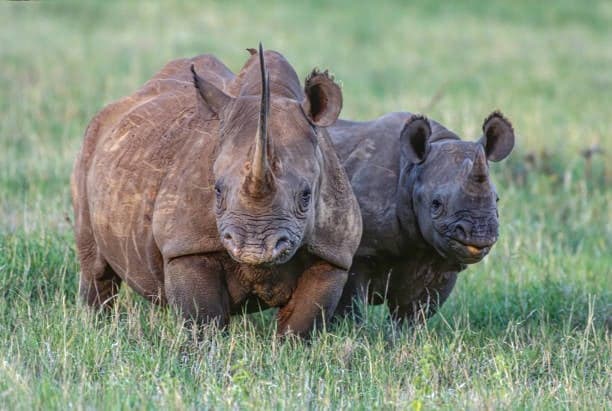
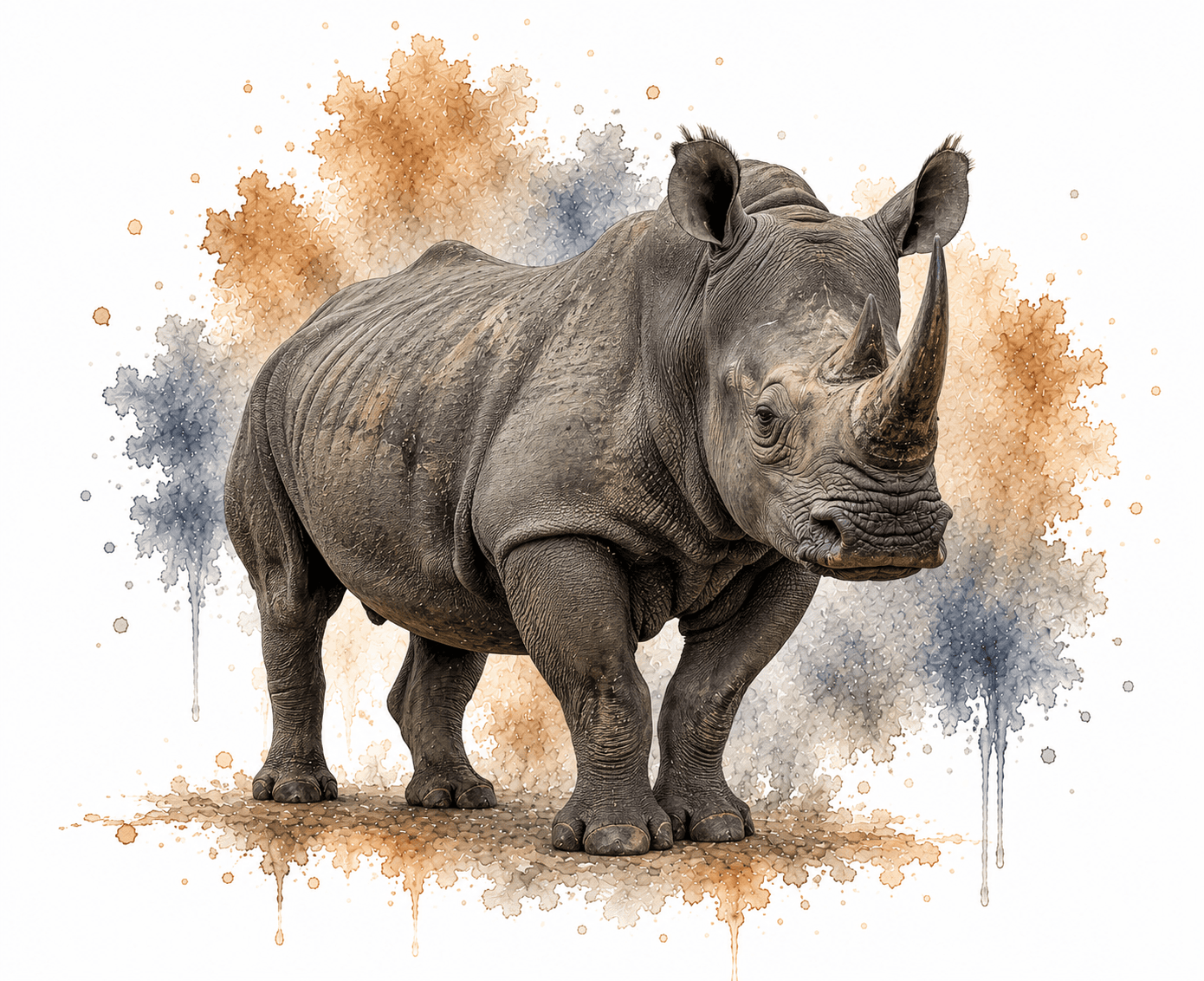
Rhinoceroses have walked the Earth for over 50 million years, predating both humans and most modern mammals. The black rhino (Diceros bicornis) is the smaller and more aggressive of Africa's two rhino species, distinguished by its hooked, prehensile upper lip used for browsing on bushes and trees.
Two Species in Africa
Africa is home to two rhino species: the black rhino and the white rhino. Despite their names, both are grey. "White" derives from the Afrikaans word "wyd" (wide), referring to the white rhino's wide, flat lip. The black rhino's pointed lip is adapted for grabbing branches and leaves.
Behaviour
Black rhinos are generally solitary and more aggressive than white rhinos. They have poor eyesight but excellent hearing and sense of smell. When threatened, they often charge first and investigate later — they've been known to charge trees, rocks, and even vehicles.
The Poaching Crisis
Rhino poaching for their horns (made of keratin, like human fingernails) remains a critical conservation crisis. Between 1960 and 1995, black rhino numbers plummeted from ~100,000 to fewer than 2,500. Thanks to intensive conservation, numbers have recovered to approximately 6,400 today — but the species remains Critically Endangered.
Where to See Rhinos
Top rhino destinations include Ol Pejeta Conservancy (Kenya — home to the last two northern white rhinos), Lewa Wildlife Conservancy, Ngorongoro Crater (Tanzania), Kruger National Park (South Africa), and Etosha (Namibia).
Where Can You See Black Rhinoceros on Safari?
Black rhino are most dependably seen in protected reserves and conservancies. In Kenya, Lewa Conservancy, Lake Nakuru National Park, Meru National Park and Lumo Community Wildlife Conservancy all protect them, while smaller numbers occur in the Serengeti National Park and Uganda's Queen Elizabeth National Park.
When Is the Best Time to See Them?
Sightings are possible year-round, especially in dedicated conservancies where the animals are closely guarded. Early morning at waterholes is the most rewarding time, and the dry seasons draw rhino to reliable water, improving the chance of a clear view.