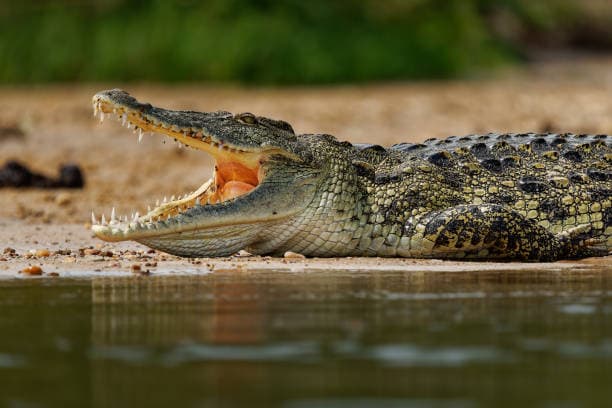
The Nile Crocodile (Crocodylus niloticus) is one of Africa's most iconic and feared predators. As the continent's largest reptile and one of the largest crocodile species in the world, the Nile Crocodile has remained largely unchanged for millions of years, earning its reputation as a living dinosaur.
These powerful reptiles inhabit rivers, lakes, swamps, wetlands, and freshwater ecosystems throughout sub-Saharan Africa. Perfectly adapted to aquatic life, crocodiles spend much of their time submerged, with only their eyes and nostrils visible above the water's surface.
Nile Crocodiles are ambush predators that rely on patience, stealth, and explosive power. They often wait motionless near riverbanks before launching sudden attacks on fish, birds, antelopes, zebras, wildebeests, and other animals that approach the water.
One of the most famous wildlife spectacles involving crocodiles occurs during the Great Migration, when thousands of wildebeests and zebras cross crocodile-infested rivers such as the Mara River and Grumeti River. These crossings provide dramatic opportunities to witness the crocodile's hunting prowess.
Despite their fearsome reputation, crocodiles are essential components of healthy ecosystems. They help regulate fish populations, remove weak or diseased animals, and contribute to nutrient cycling within aquatic habitats.
Female crocodiles are attentive mothers that guard nests and protect hatchlings from predators. Young crocodiles face numerous threats from birds, fish, monitor lizards, and larger crocodiles.
For safari visitors, observing a giant crocodile basking in the sun or silently patrolling a river channel offers a fascinating glimpse into one of Africa's oldest and most successful predators.
Where Can You See Crocodile on Safari?
Nile crocodiles lie along almost every major river and lake in the region. The Mara and Grumeti rivers of the Serengeti National Park are famous for large individuals, and Uganda's Murchison Falls National Park, Queen Elizabeth National Park and Lake Mburo National Park offer close views from boat cruises. In Kenya, Meru National Park and Tsavo West National Park hold them along their rivers and springs.
When Is the Best Time to See Them?
Crocodiles are visible year-round, basking on banks during warm daylight hours. The dry seasons of June to October and January to March offer the best viewing as the reptiles haul out on exposed sandbars; along the Mara River, the crossing months bring dramatic hunting behaviour.