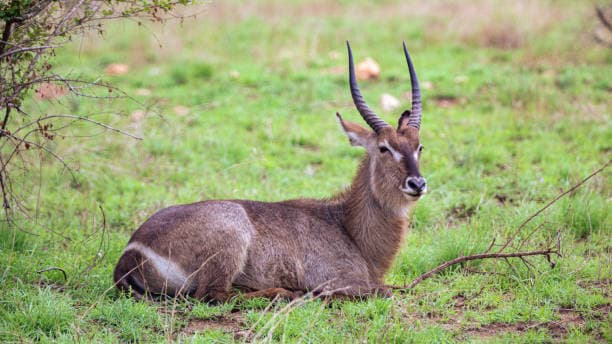
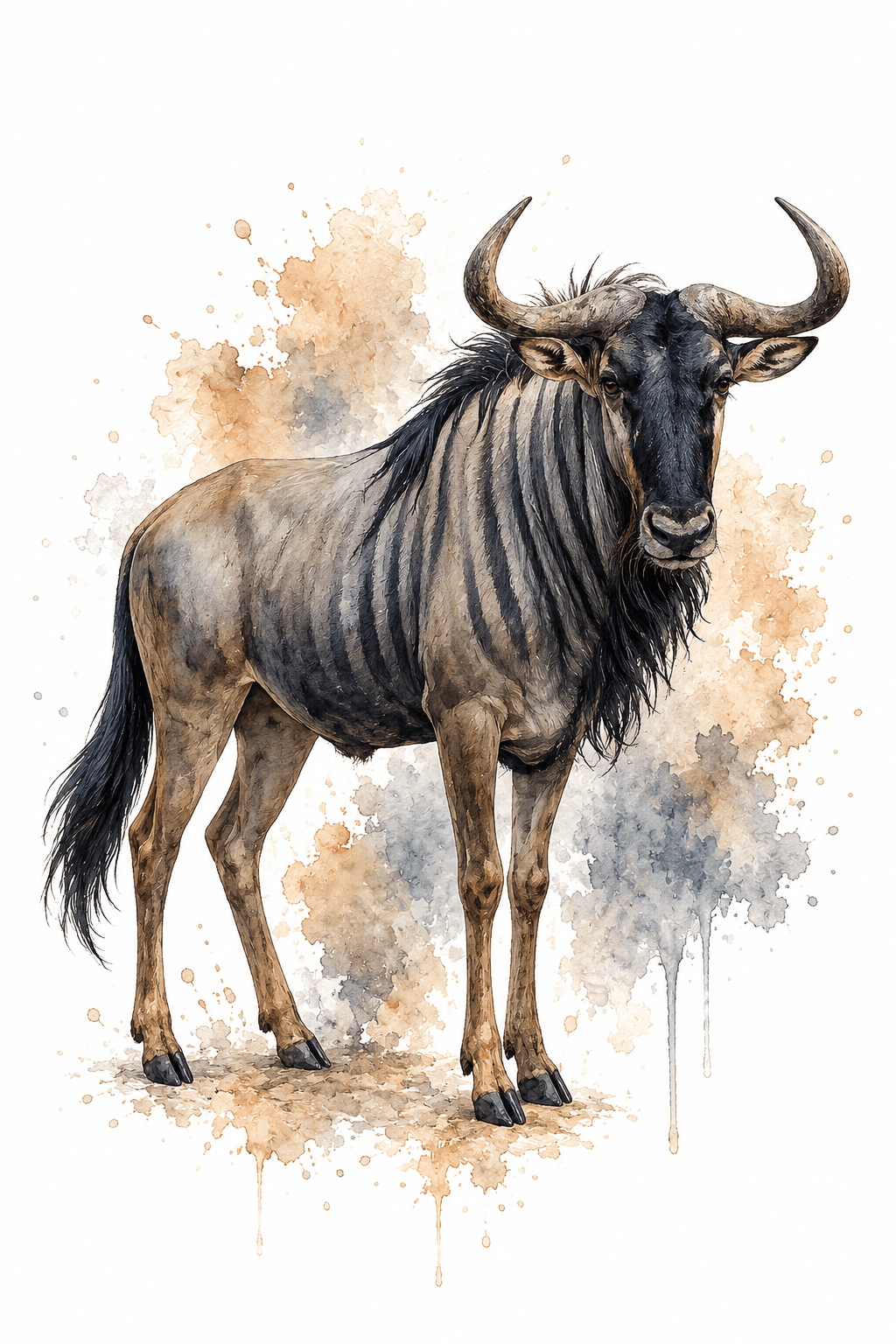
The Waterbuck (Kobus ellipsiprymnus) is one of Africa's most recognizable antelope species and a common resident of wetlands, riverbanks, lakeshores, and floodplains throughout sub-Saharan Africa. Its name reflects its close relationship with water, as these antelopes rarely venture far from permanent water sources.
Waterbucks are large, robust antelopes characterized by their coarse shaggy coats, long faces, and powerful bodies. Males possess impressive ringed horns that curve backward and then forward, while females are hornless.
One of the most notable features of the Common Waterbuck is the distinctive white ring surrounding its rump, often referred to as the "toilet seat" marking. This unique marking makes identification easy during safari game drives.
Waterbucks are highly adapted to life near water. When threatened by predators such as lions, leopards, hyenas, and wild dogs, they often escape into water or dense riverside vegetation where predators are less effective hunters.
These antelopes are primarily grazers, feeding on grasses found in floodplains and wetland ecosystems. During dry seasons, they remain close to rivers and lakes where green vegetation persists.
Waterbucks live in social groups that vary depending on habitat and season. Territorial males defend prime grazing areas, while females and young often form herds.
For safari visitors, Waterbucks are among the easiest antelopes to spot near rivers and watering points and provide excellent photographic opportunities in many African national parks.
Where Can You See Waterbuck on Safari?
The waterbuck is never far from rivers, lakes and marshes. It is regularly seen in the Serengeti National Park, around the wetlands of Lake Nakuru National Park and Nairobi National Park, and throughout Uganda's Queen Elizabeth National Park, Kibale National Park and Lake Mburo National Park.
When Is the Best Time to See Them?
Waterbuck are resident and visible year-round beside water. The dry seasons of June to October and January to March draw them and other game to permanent sources for reliable viewing, while the green season keeps the lush margins they favour at their best.