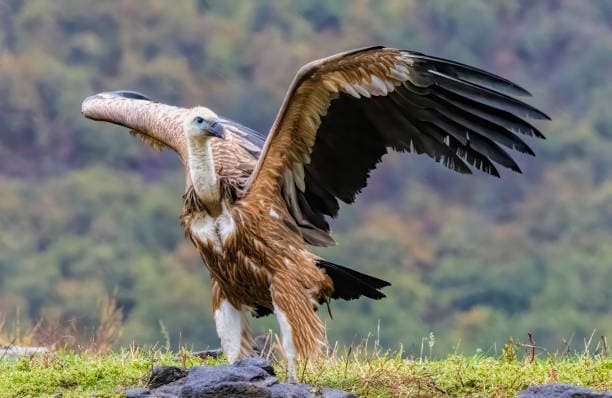
Vultures are among Africa's most misunderstood yet ecologically important birds. These highly specialized scavengers play a critical role in maintaining healthy ecosystems by consuming animal carcasses and preventing the spread of disease.
Africa is home to several vulture species, including the White-backed Vulture, Rüppell's Vulture, Lappet-faced Vulture, White-headed Vulture, Hooded Vulture, and Egyptian Vulture. Each species occupies a unique ecological niche, but all contribute to cleaning the environment.
Vultures possess extraordinary eyesight, allowing them to spot carcasses from several kilometers away while soaring high above the landscape. Using thermal air currents, they can remain airborne for hours with minimal energy expenditure.
Unlike many birds of prey, vultures rarely hunt live animals. Instead, they specialize in locating and consuming dead animals. Their powerful digestive systems can safely process bacteria and toxins that would be deadly to most other animals.
When a large animal dies, vultures can strip a carcass clean within hours, preventing disease outbreaks and reducing opportunities for harmful bacteria to spread through the environment.
Many African predators, including lions, leopards, cheetahs, and hyenas, indirectly benefit from vultures because they help maintain healthy ecosystems and reduce disease risks.
Unfortunately, vultures are among the most threatened bird groups in Africa. Poisoning, habitat loss, illegal wildlife poisoning, power line collisions, and persecution have caused significant population declines across the continent.
For safari travelers, witnessing dozens of vultures descending from the sky to a carcass is one of the most dramatic and memorable wildlife spectacles in Africa.
Where Can You See Vulture on Safari?
Vultures range widely in search of carrion and are most often seen soaring or gathered at a kill. Lewa Conservancy, Lake Nakuru National Park and Nairobi National Park all offer good chances of watching several species together, from white-backed to lappet-faced vultures.
When Is the Best Time to See Them?
Vultures are present throughout the year. The dry seasons of June to October and January to March are the most productive, as thinner vegetation and concentrated game lead to more predator kills and larger feeding gatherings; the midday thermals are best for watching them soar.