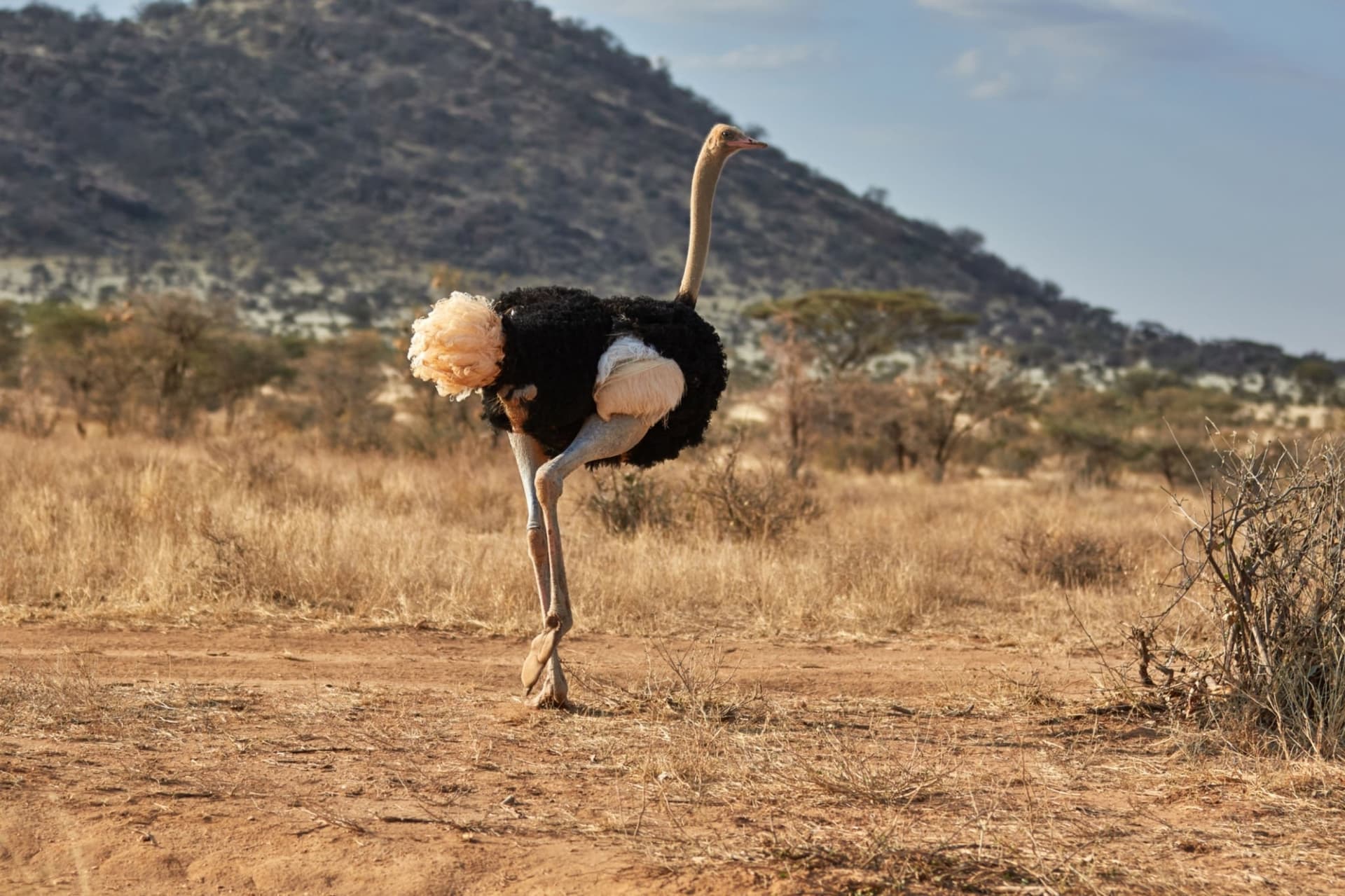
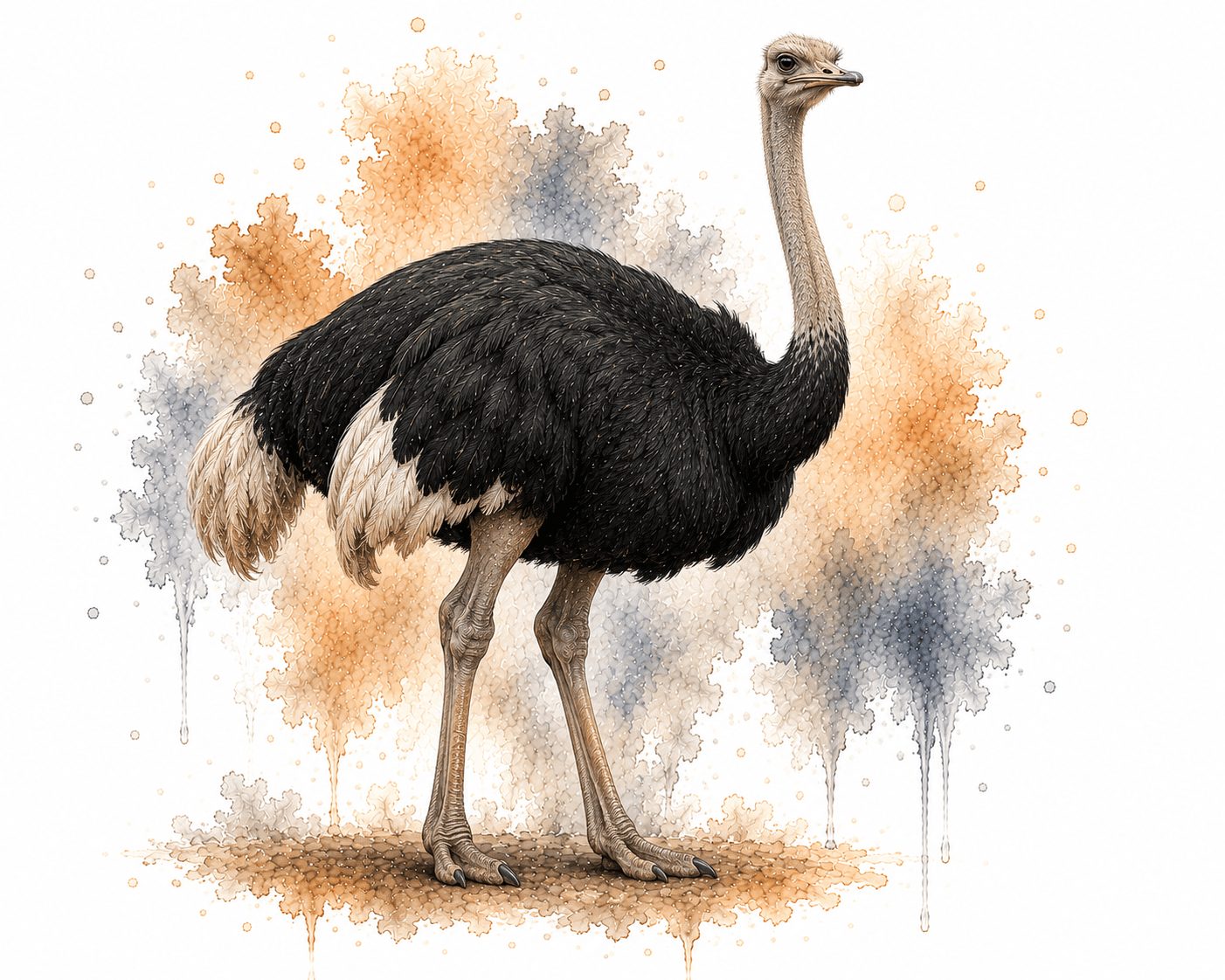
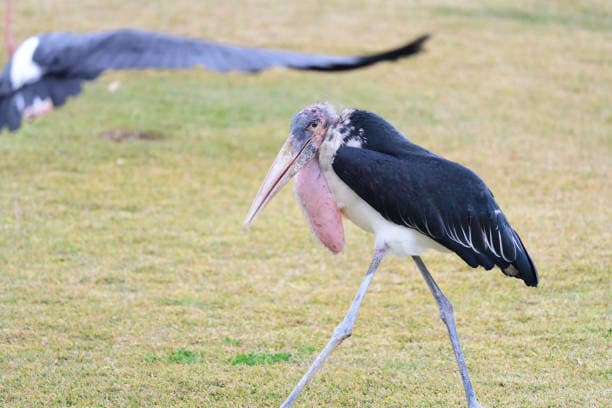
The Somali Ostrich (Struthio molybdophanes) is one of Africa's most impressive birds and the largest bird species native to the Horn of Africa. Formerly classified as a subspecies of the Common Ostrich, genetic studies confirmed its status as a separate species in 2014.
This magnificent bird is easily distinguished by its striking blue-grey neck and legs, particularly in adult males. Unlike the pinkish skin of the Common Ostrich, the Somali Ostrich's bluish coloration provides a clear identifying feature.
Adapted to the dry landscapes of East Africa, Somali Ostriches thrive in open grasslands, bushlands, and semi-arid environments. Their powerful legs enable them to run at extraordinary speeds, helping them evade predators and travel vast distances in search of food and water.
Like other ostriches, the Somali Ostrich is flightless but possesses exceptional eyesight and hearing. These abilities allow it to detect predators from great distances across open landscapes.
Somali Ostriches are omnivorous and feed on grasses, seeds, leaves, flowers, fruits, insects, and small animals. Their ability to survive in harsh conditions has made them one of the most resilient bird species in Africa.
For safari travelers visiting northern Kenya, the Somali Ostrich is one of the famous "Samburu Special Five" species and a highlight of wildlife viewing in the region.
Where Can You See Somali Ostrich on Safari?
The Somali ostrich is a speciality of Kenya's arid north, and Meru National Park is among the more reliable places to find it striding across open bush. It is also closely associated with the Samburu and Buffalo Springs reserves and the wider Laikipia plains, where its blue-grey neck and legs set it apart from the common ostrich.
When Is the Best Time to See Them?
Sightings are possible throughout the year, as the species does not migrate. The drier stretches from June to October and January to March offer the easiest viewing, when thinner vegetation and animals gathering near permanent water make the tall birds simple to pick out.