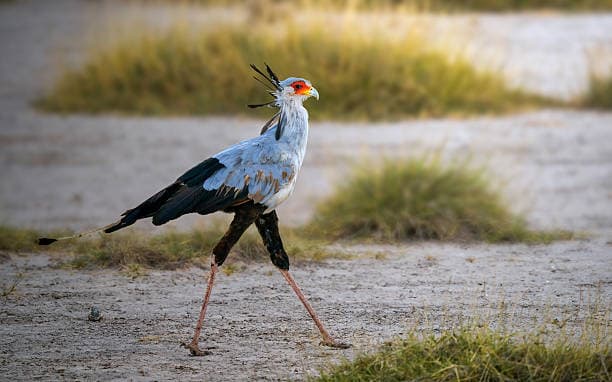
The Secretary Bird (Sagittarius serpentarius) is one of Africa's most unusual and recognizable birds. Combining the appearance of an eagle with the long legs of a crane, it is the only member of its family and occupies a unique place among the world's birds of prey.
Its name is believed to originate from the quill-like feathers protruding from the back of its head, which resemble the pens once carried behind the ears of secretaries. This elegant bird is instantly recognizable thanks to its long legs, grey plumage, black flight feathers, and distinctive crest.
Unlike most raptors, Secretary Birds spend much of their lives on the ground. They walk across open grasslands searching for prey and can cover over 20 kilometers in a single day while hunting.
The species is best known for its ability to hunt and kill snakes, including venomous cobras and puff adders. Using powerful, rapid kicks, a Secretary Bird can strike prey with tremendous force, often killing it before swallowing it whole.
Secretary Birds are opportunistic carnivores and also feed on rodents, lizards, insects, small birds, eggs, and other small animals. Their exceptional eyesight helps them locate prey across vast landscapes.
They typically nest in large acacia trees and form long-term breeding pairs. Both parents participate in nest building, incubation, and caring for chicks.
For safari visitors, spotting a Secretary Bird striding through the savannah is a memorable experience and often considered one of the highlights of African birdwatching.
Where Can You See Secretary Bird on Safari?
The secretary bird favours open grassland where it hunts on foot, and it is regularly encountered on the plains of the Serengeti National Park and the Ngorongoro Crater Park. In Kenya, Nairobi National Park gives a good chance of spotting one, while the grassy clearings of Tarangire National Park are another dependable location.
When Is the Best Time to See Them?
This resident raptor is present year-round. Sightings improve in the dry seasons of June to October and January to March, when short grass makes the striding bird easy to follow across the plains; the green season is quieter for grassland viewing but rewards visitors with dramatic skies and abundant prey.