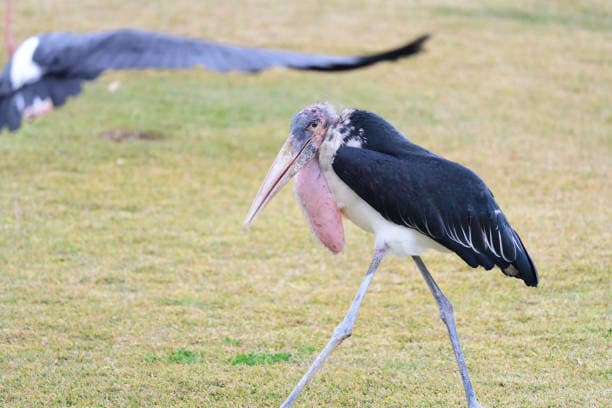
The Common Ostrich (Struthio camelus) is the largest bird on Earth and one of Africa's most remarkable wildlife species. Standing taller than most humans and weighing over 150 kilograms, the ostrich is a true giant of the African plains.
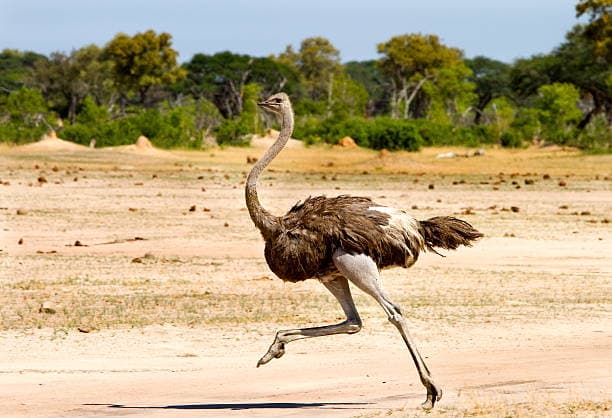
Despite possessing wings, ostriches cannot fly. Instead, they have evolved powerful legs capable of carrying them at incredible speeds across open landscapes. Their long strides and endurance make them among the fastest animals in Africa.
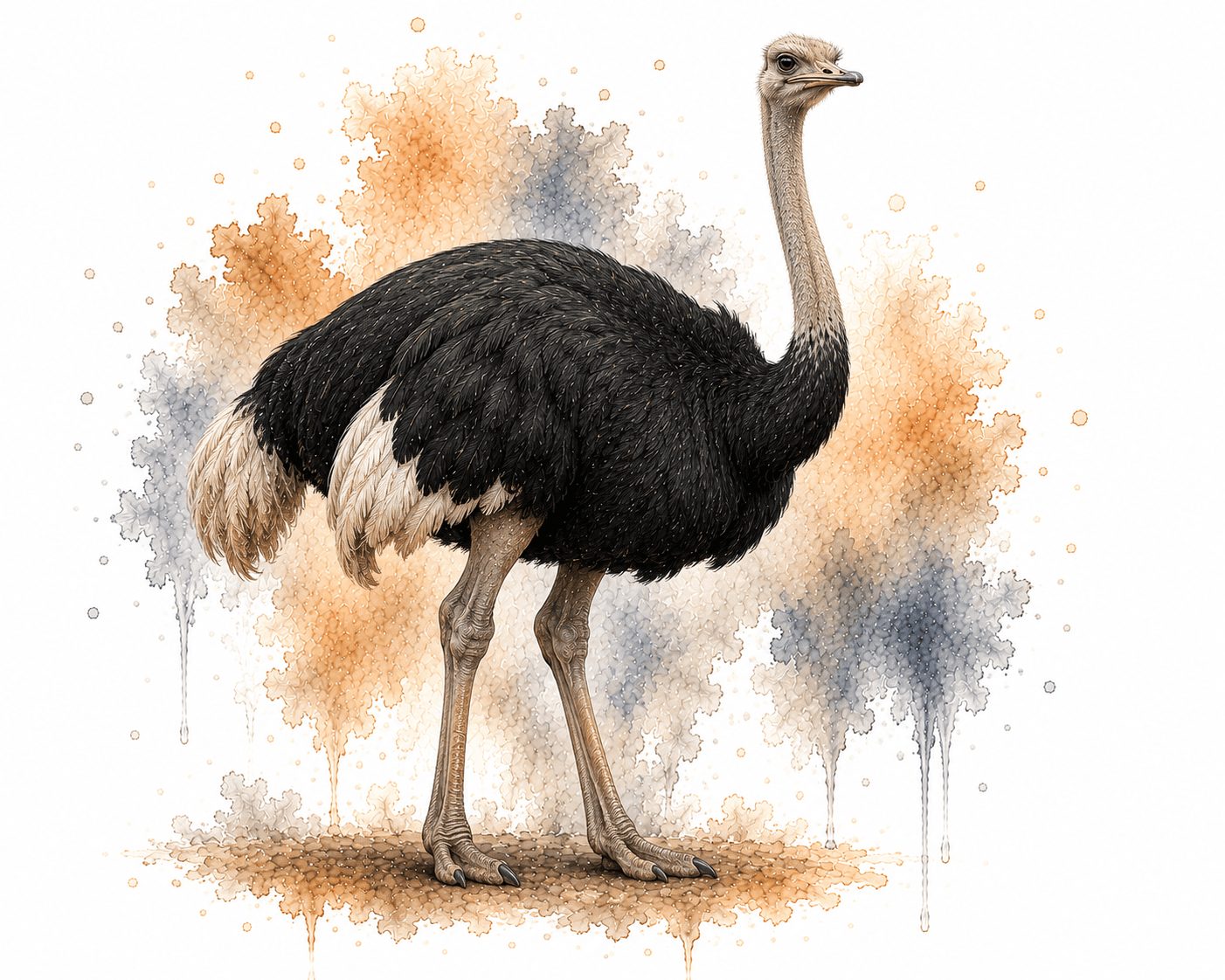
Male Common Ostriches are easily recognized by their striking black plumage accented with white wing and tail feathers, while females display more subdued grey-brown coloring that helps camouflage them while nesting.
Ostriches are highly social birds and are often found in small groups or mixed herds alongside zebras, wildebeests, and antelopes. Their excellent eyesight allows them to detect predators from long distances, benefiting other animals that share their habitat.
As omnivores, Common Ostriches feed on grasses, seeds, flowers, fruits, insects, and small animals. They swallow small stones that help grind food inside their muscular stomachs since they lack teeth.
One of the ostrich's most remarkable features is its egg. Ostrich eggs are the largest of any living bird and can weigh over 1.5 kilograms. Several females may lay eggs in a communal nest, which is guarded by a dominant male and female.
For safari travelers, seeing a Common Ostrich striding across the savannah or witnessing its powerful running ability is one of Africa's classic wildlife experience
Where Can You See Common Ostrich on Safari?
Common ostriches are widespread across East Africa's open plains. Strong options include the Serengeti National Park and the grasslands of the Ngorongoro Crater Park, while Nairobi National Park and Mount Kenya National Park give accessible sightings in Kenya. The open floor of the Central Serengeti is particularly good for watching males perform their courtship displays.
When Is the Best Time to See Them?
As a resident species, the common ostrich can be seen in all seasons. Viewing is clearest during the dry months of June to October and January to March, when short grass and concentrated game make the birds especially conspicuous; the wetter months bring greener scenery and the peak of breeding activity.