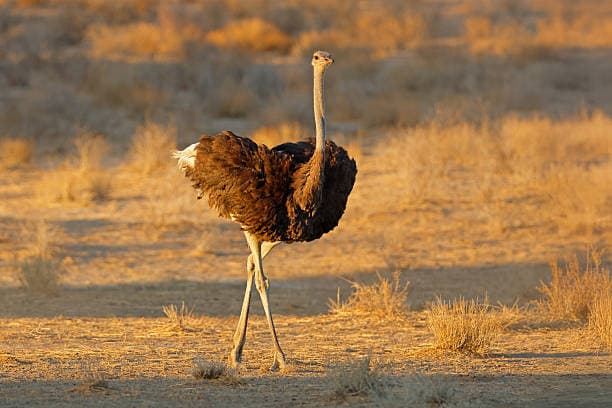
The Ostrich (Struthio camelus) is the largest bird on Earth and one of Africa's most recognizable wildlife species. Native to Africa's open landscapes, this remarkable bird has evolved to thrive in grasslands, savannahs, deserts, and semi-arid environments.
Unlike most birds, ostriches cannot fly. Instead, they rely on their powerful legs and exceptional speed to escape predators. Capable of reaching speeds of up to 70 km/h (43 mph), ostriches are the fastest birds on land and among the fastest-running animals in Africa.
Adult male ostriches are easily recognized by their striking black-and-white plumage, while females display more subdued brown and grey feathers that provide camouflage during nesting. Their long necks and large eyes allow them to detect danger from great distances across open landscapes.
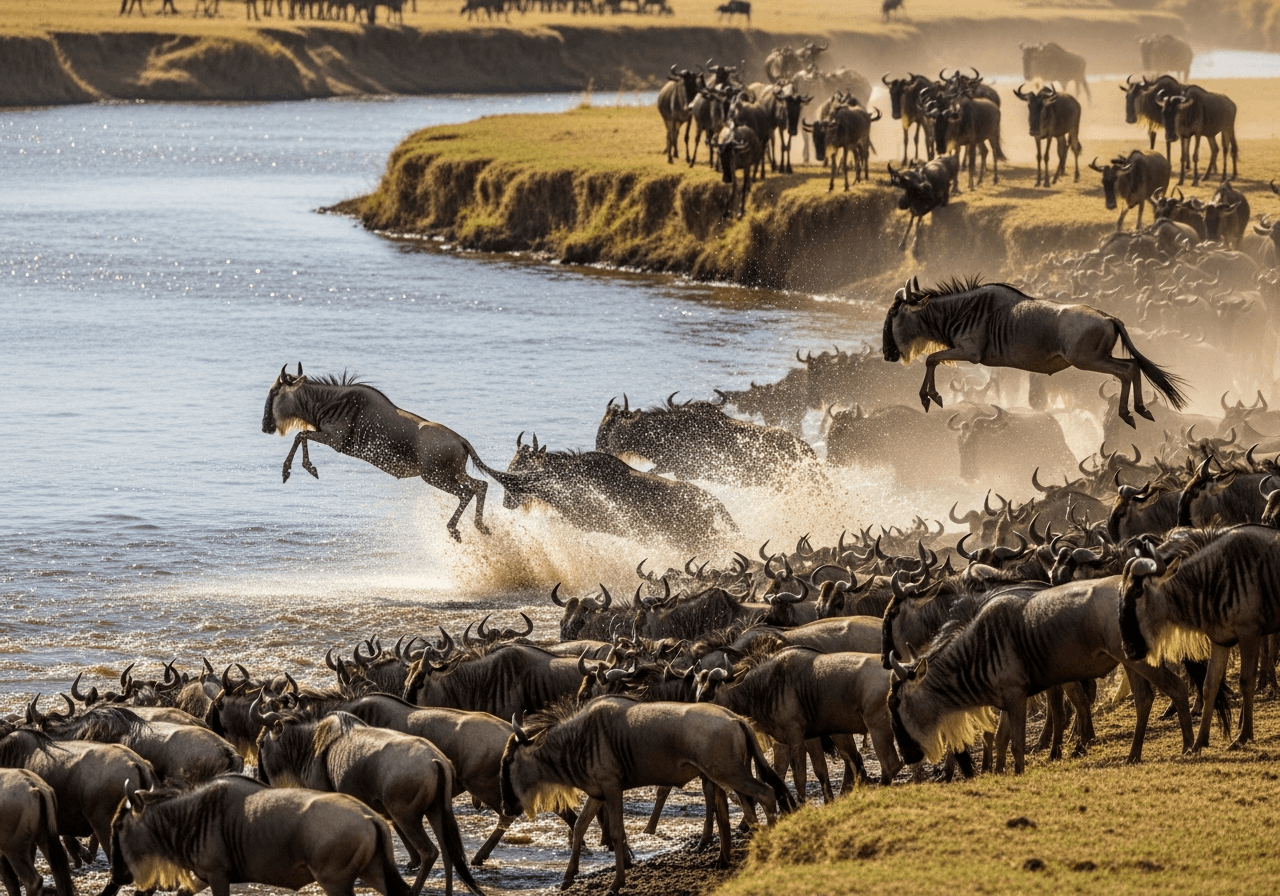
Ostriches are highly social birds and are often found in small groups or mixed herds alongside zebras, antelopes, and wildebeests. Their excellent eyesight benefits other animals, while the ostriches benefit from the heightened sense of smell and hearing of grazing mammals.
These birds are omnivorous, feeding on grasses, seeds, fruits, flowers, insects, and small animals. Since they lack teeth, ostriches swallow small stones that help grind food in their muscular stomachs.
One of the most fascinating aspects of ostrich behavior is their communal nesting system. Several females may lay eggs in a single nest, with a dominant female and male taking turns incubating the eggs.
For safari travelers, spotting an ostrich striding across the African plains or witnessing its incredible speed in action is an unforgettable wildlife experience.
Where Can You See Ostrich on Safari?
Ostriches favour open plains and semi-arid country across the region. In Tanzania they are seen in the Ngorongoro Crater Park and Ruaha National Park, and in Kenya at Nairobi National Park and the lower ground near Mount Kenya National Park. Uganda's Queen Elizabeth National Park and Murchison Falls National Park hold them in their more open sectors.
When Is the Best Time to See Them?
As a non-migratory bird, the ostrich is visible in every season. The clearest viewing comes in the dry months of June to October and January to March, when short grass and open ground reveal the birds at distance, while the breeding season adds the spectacle of the males' courtship dances.