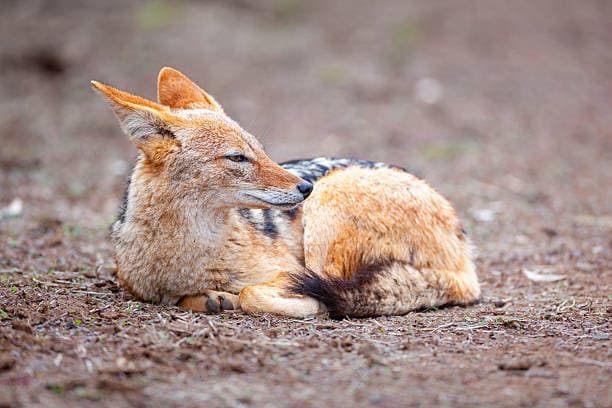
The Jackal is one of Africa's most resourceful and intelligent predators. Closely related to wolves, foxes, and domestic dogs, jackals have successfully adapted to a wide variety of habitats across the continent, from open savannahs and deserts to forests and wetlands.
The two species most commonly encountered on safari are the Black-backed Jackal and the Side-striped Jackal. Black-backed Jackals are easily recognized by the distinctive black saddle of fur running along their backs, while Side-striped Jackals feature a pale stripe along each side of their body.
Jackals are highly adaptable omnivorous carnivores. They hunt small mammals, birds, reptiles, insects, and young antelope while also feeding on fruits, berries, and carrion. Their opportunistic nature allows them to survive in environments where other predators may struggle.
Unlike many carnivores, jackals often form lifelong monogamous pairs. These pairs work together to defend territories, raise pups, and hunt for food. Family groups may remain together for extended periods, creating strong social bonds.
Jackals are known for their sharp hearing, excellent sense of smell, and remarkable intelligence. They frequently follow larger predators such as lions, leopards, and hyenas to scavenge leftover food.
Although smaller than many African predators, jackals play an important ecological role by controlling rodent populations, cleaning up carcasses, and contributing to ecosystem health.
For safari travelers, spotting a jackal trotting across the plains at sunrise or hearing its haunting calls at night is a classic African wilderness experience.
Where Can You See Jackal on Safari?
Jackals are adaptable and widespread, most often seen trotting across open country at dawn and dusk. The Serengeti National Park and Ngorongoro Crater Park offer frequent sightings, as does Ruaha National Park. In Uganda they are recorded in Queen Elizabeth National Park and Murchison Falls National Park.
When Is the Best Time to See Them?
Jackals are resident and can be found in every season. They are easiest to watch in the dry months of June to October and January to March, when short grass exposes their movements; denning during the wetter period also brings the chance of seeing pups near their burrows.