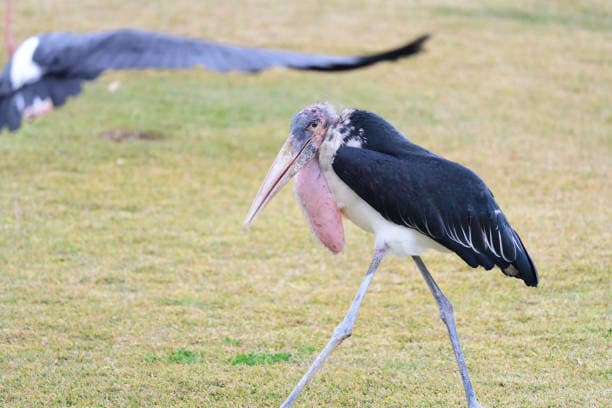
The Marabou Stork (Leptoptilos crumenifer) is one of Africa's most recognizable and unusual birds. With its towering height, bald head, massive beak, and distinctive throat sac, the Marabou Stork stands out among Africa's rich birdlife.
Often referred to as the "undertaker bird," the Marabou Stork's appearance resembles an old-fashioned funeral director wearing a dark cloak. Its bald head is an adaptation that helps it stay clean while feeding on carcasses, much like vultures.
Marabou Storks are highly adaptable birds and can be found in wetlands, rivers, lakeshores, grasslands, savannahs, and even urban areas. They are opportunistic feeders that consume a wide variety of food sources including carrion, fish, frogs, insects, reptiles, rodents, and food waste.
As scavengers, Marabou Storks perform an important ecological role by helping clean the environment and reducing the spread of disease. Their strong bills allow them to tear through carcasses, often feeding alongside vultures and hyenas.
Despite their scavenging habits, Marabou Storks are also skilled hunters and can capture fish, small mammals, and birds. They are often seen standing motionless in shallow water waiting for prey.
These birds frequently nest in large colonies, often in tall trees near water sources. During the breeding season, they build large stick nests and raise one to three chicks.
For safari travelers and birdwatchers, the Marabou Stork offers a unique wildlife sighting and is often seen around rivers, lakes, lodges, and wildlife-rich national parks throughout Africa.
Where Can You See Marabou Stork on Safari?
The marabou stork is a large scavenging bird found near water, plains and settlements alike. It is common in the Serengeti National Park and Ruaha National Park, gathers in numbers at Lake Nakuru National Park, and is easily seen at Nairobi National Park and Uganda's Queen Elizabeth National Park.
When Is the Best Time to See Them?
This resident stork is present in all seasons. The dry months from June to October and January to March make viewing simple as birds congregate around shrinking pools and carcasses, while lakeshore colonies stay active for much of the year.