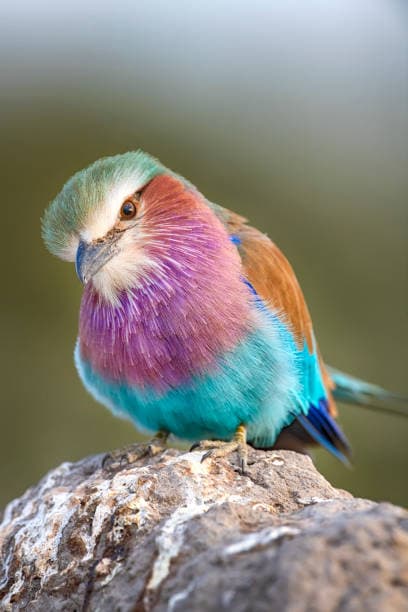
The Lilac-breasted Roller (Coracias caudatus) is widely considered one of the most beautiful birds in Africa. Famous for its breathtaking combination of colors, this bird has become an iconic symbol of African safaris and wildlife photography.
Its plumage displays a stunning blend of lilac, turquoise, royal blue, green, white, and chestnut tones. Few birds in the world can rival the roller's vibrant appearance, making it one of the easiest birds to identify on safari.
The species gets its name from the spectacular rolling and diving displays performed during courtship and territorial defense. During these aerial performances, the bird twists, turns, and rolls through the air while calling loudly, creating an impressive spectacle.
Lilac-breasted Rollers are commonly seen perched on tree branches, fence posts, termite mounds, or lookout points where they scan the ground for prey. Their excellent eyesight helps them spot insects, reptiles, and small animals from a distance.
These birds are often found in pairs and are highly territorial. They nest in natural tree cavities and abandoned woodpecker holes, where both parents participate in raising their chicks.
For safari travelers, the Lilac-breasted Roller is one of the most sought-after bird sightings and frequently appears on wildlife postcards, tourism campaigns, and African safari photography collections.
Where Can You See Lilac-breasted Roller on Safari?
The lilac-breasted roller is a colourful and confiding bird, often perched conspicuously on bushes and dead branches. It is common in the Serengeti National Park and Ngorongoro Crater Park, and in Kenya at Tsavo West National Park and Lake Nakuru National Park. Uganda's Queen Elizabeth National Park is another good area.
When Is the Best Time to See Them?
This resident roller is seen in every season. The dry months of June to October and January to March make photography easiest against clear skies and open perches, while the rains prompt the tumbling display flights that give the bird its name.