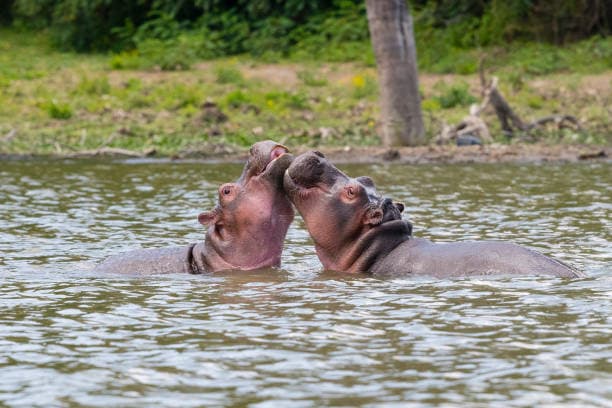
The Hippopotamus (Hippopotamus amphibius), commonly known as the hippo, is one of Africa's most iconic wildlife species and the third-largest land mammal after the elephant and rhinoceros. Despite its bulky appearance, the hippopotamus is highly adapted to life in rivers, lakes, swamps, and wetlands.
Hippos spend most of the day submerged in water to protect their sensitive skin from the intense African sun. They can remain underwater for up to five minutes and automatically surface to breathe even while sleeping.
Although herbivorous, hippopotamuses are among Africa's most territorial and dangerous animals. Adult males aggressively defend stretches of river and can charge at remarkable speed when threatened. On land, hippos can run up to 30 km/h (19 mph) over short distances despite weighing several tonnes.
At dusk, hippos leave the water and travel several kilometers to feed, consuming up to 40 kilograms of grass each night. Unlike many large herbivores, they feed almost exclusively on short grasses and rarely browse on shrubs or trees.
Hippos play a vital ecological role by transporting nutrients between land and water ecosystems. Their grazing habits help shape grasslands, while their waste provides nutrients that support aquatic food webs.
Socially, hippos live in groups called pods, schools, or bloats, which may consist of 10 to over 100 individuals depending on habitat conditions.
For safari travelers, watching hippos wallowing in rivers, opening their enormous mouths in territorial displays, or observing them during a boat safari is one of Africa's most unforgettable wildlife experiences.
Where Can You See Hippopotamus on Safari?
Hippos are tied to rivers, lakes and pools, and are almost guaranteed wherever permanent water is found. The Masai Mara National Reserve and Serengeti National Park hold large pods along the Mara River, while Uganda's Queen Elizabeth National Park and Murchison Falls National Park are famous for boat cruises past crowded groups. Lake Nakuru National Park and Ruaha National Park add further reliable sightings.
When Is the Best Time to See Them?
Hippos are present all year. They are easiest to see in the dry seasons of June to October and January to March, when falling water levels crowd them into shrinking pools; boat trips at any time offer close, safe viewing as the animals rest by day and feed on land after dark.