Масаи Мара против Серенгети: какое сафари лучше в 2026/27 году?
Наше сравнение сафари в Масаи Мара Серенгети объясняет дикую природу, сезоны миграции, доступ к парку, стоимость и практические маршруты, чтобы впервые путешественники могли выбирать с уверенностью.
30 min read74views
Updated Oct 6, 2026
Black Rhinoceros
74views
Share
Listen~30 min
In this articleTap to view 13 sectionsTap a section to jump
Choose the Masai Mara for compact wildlife viewing, easier access from Nairobi and a strong first safari in 3–4 nights.
Choose the Serengeti for greater scale, varied habitats and a longer route following the migration across Tanzania.
Mara river crossings are most likely from July to October, but rainfall and animal movements make exact dates unpredictable.
A combined itinerary works best with at least 8–10 days and carefully planned internal flights or border transfers.
Camp location matters as much as park choice: staying near the right wildlife area reduces long daily drives.
A Masai MaraSerengeti safari suits most first-time travellers when they want concentrated wildlife, while the Serengeti suits vast landscapes, longer itineraries and migration beyond Kenya. Combining both gives the fullest view when time and budget allow, with our guides shaping the route around season, wildlife priorities and comfort.
Masai Mara Serengeti Safari: the short answer
The Masai Mara works best for a short, focused safari. Its grasslands are compact, wildlife is often close to camp, and a three- to five-night stay can deliver excellent game viewing without long daily transfers. A Kenya safari options route can also add Lake Nakuru, Amboseli or Lake Naivasha.
KE
Featured
Kenya
Masai Mara National Reserve
The Masai Mara National Reserve in southwestern Kenya is a premier 1,510-square-kilometre wildlife sanctuary. Renowned for the annual Great Wildebeest Migration from July to October, it offers exceptional year-round Big Five viewing across open savannahs. The reserve is contiguous with Tanzania's Serengeti, forming a critical, biodiverse transboundary ecosystem.
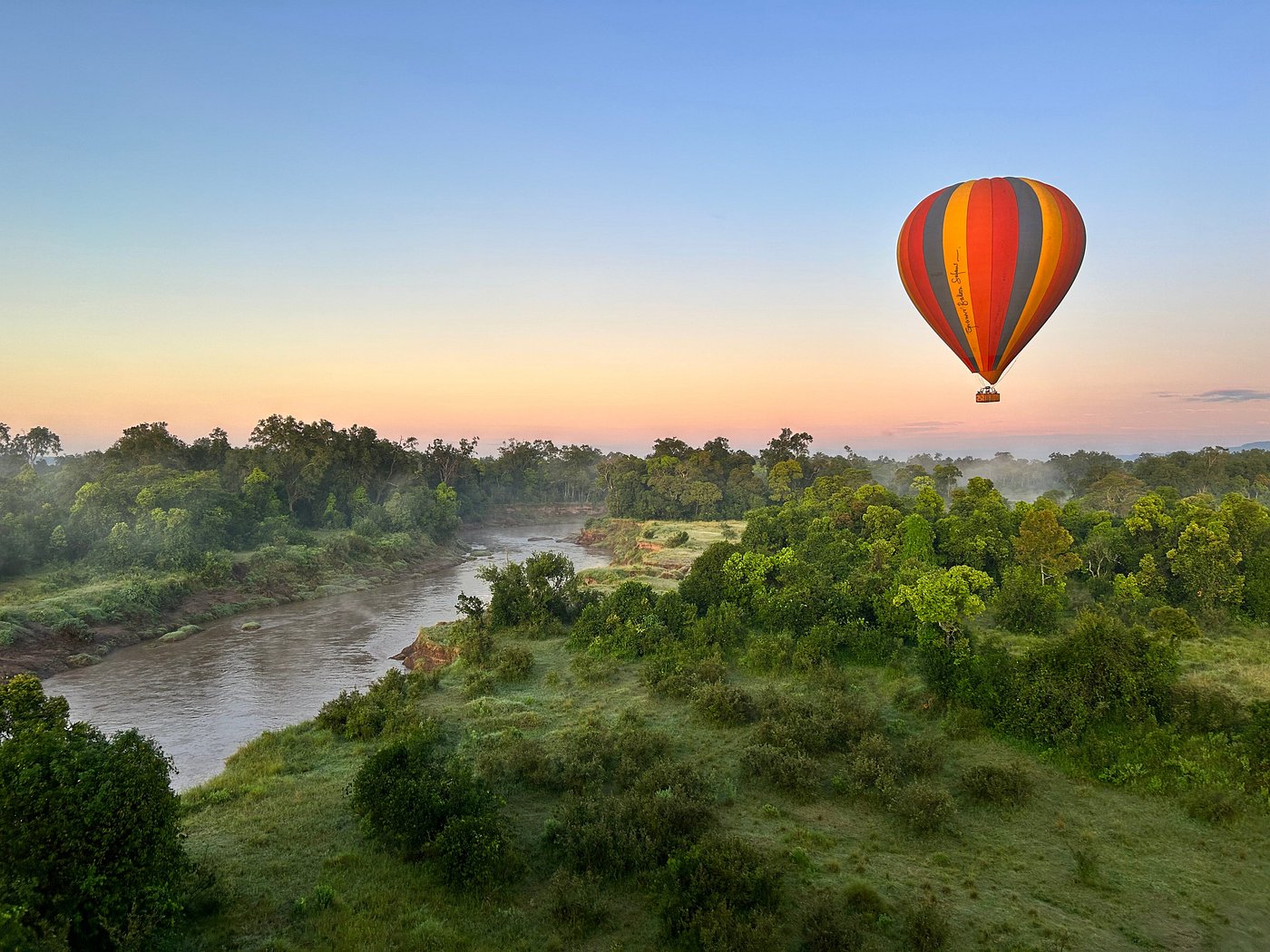
Discover the magic of Serengeti National Park, one of Africa’s most celebrated wildlife destinations and home to the spectacular Great Wildebeest Migration. Stretching across the heart of northern Tanzania, the Serengeti offers exceptional game viewing, breathtaking savannah landscapes, and unforgettable encounters with the Big Five. From luxury safari lodges and hot air balloon adventures to year-round wildlife experiences, the park provides the perfect setting for nature lovers, photographers, and safari enthusiasts seeking an authentic and unforgettable African wilderness adventure.
Experience the heart of the Serengeti in Central Serengeti (Seronera), Tanzania's most famous wildlife destination! Renowned for year-round game viewing, the Big Five, abundant predators, and endless golden plains, Central Serengeti offers unforgettable safari adventures in one of Africa's greatest national parks. Discover breathtaking landscapes and exceptional wildlife with Imara Africa Safaris!
The Serengeti rewards more time. Its plains stretch across a much larger area, and the best wildlife zone changes with the season. Four to six nights allow you to explore Central Serengeti, follow seasonal herds and spend longer away from busy areas.
Choose the Masai Mara if you want
Choose the Serengeti if you want
A concentrated first safari with three to five nights
Four to six nights and longer game drives
Easy access from Nairobi by road or light aircraft
Vast plains, kopjes and several distinct wildlife sectors
Strong predator viewing in open grassland
More scope to follow the migration across Tanzania
Walking and night drives in selected private conservancies
A quieter sense of scale, especially in the western or northern Serengeti
Our wider Kenya versus Tanzania comparison helps with the country-level choice. For many guests, the practical answer is not one park over the other. It is the park that fits the time available.
What is the difference between the Masai Mara and Serengeti?
The Masai Mara National Reserve covers approximately 1,510 sq km. Serengeti National Park covers approximately 14,763 sq km. Both belong to the wider Serengeti–Mara ecosystem, but they are separate destinations in Kenya and Tanzania, with different authorities, fees, roads and accommodation systems.
Masai Mara vs Serengeti at a glance
The right choice depends on time, season and appetite for scale.
Masai Mara
Best for shorter trips
Landscape and scale
Compact, rolling grasslands and riverine areas
Wildlife concentration
Often excellent, with sightings frequently close together
Migration window
Mara crossings are most likely July–October; timing varies
Best for shorter trips
Getting around
Road and air access from Nairobi
Serengeti
Best for scale
Landscape and scale
Vast plains, kopjes and several distinct wildlife sectors
Wildlife concentration
Excellent, though distances between sightings can be longer
Migration window
Year-round movement, with calving usually strongest January–March in the south
Best for shorter trips
Usually better with four or more nights
Getting around
Road and air access from Arusha or Kilimanjaro; internal flights are useful
Compare
Best for shorter trips
Masai Mara
Best for scale
Serengeti
Landscape and scale
Compact, rolling grasslands and riverine areas
Vast plains, kopjes and several distinct wildlife sectors
Wildlife concentration
Often excellent, with sightings frequently close together
Excellent, though distances between sightings can be longer
Migration window
Mara crossings are most likely July–October; timing varies
Year-round movement, with calving usually strongest January–March in the south
Best for shorter trips
Usually better with four or more nights
Getting around
Road and air access from Nairobi
Road and air access from Arusha or Kilimanjaro; internal flights are useful
Both destinations offer exceptional wildlife; route design and camp location often matter as much as the country.
The Mara feels compact because its main wildlife areas sit within a manageable driving network. The Serengeti feels more open and remote. A move from Central Serengeti to the northern sector can take most of a day by road, so the camp location matters as much as the park name.
Factor
Masai Mara National Reserve
Serengeti National Park
Country and gateway
Kenya; Nairobi is the main starting point
Tanzania; Arusha City or Kilimanjaro are common gateways
Approximate area
1,510 sq km
14,763 sq km
Typical road access
About five to six hours from Nairobi, depending on the camp
About six to eight hours from Arusha to Central Serengeti by road
Flight access
About 45 to 60 minutes from Nairobi, often landing at a local airstrip
About one to two hours from Arusha, depending on stops and sector
Accommodation
Reserve lodges, reserve-edge camps and private conservancies
Camps and lodges spread across central, western, southern and northern sectors
Activities
Game drives in the reserve; walking and night drives in some conservancies
Game drives in the park; activities vary by concession and camp location
Kenya’s Mara conservancies add a second layer to the experience. They are privately managed areas beside the reserve, not part of the national reserve itself. Their rules can allow off-road viewing, guided walks and night drives in zones where the public reserve does not.
How do the landscapes and wildlife viewing compare?
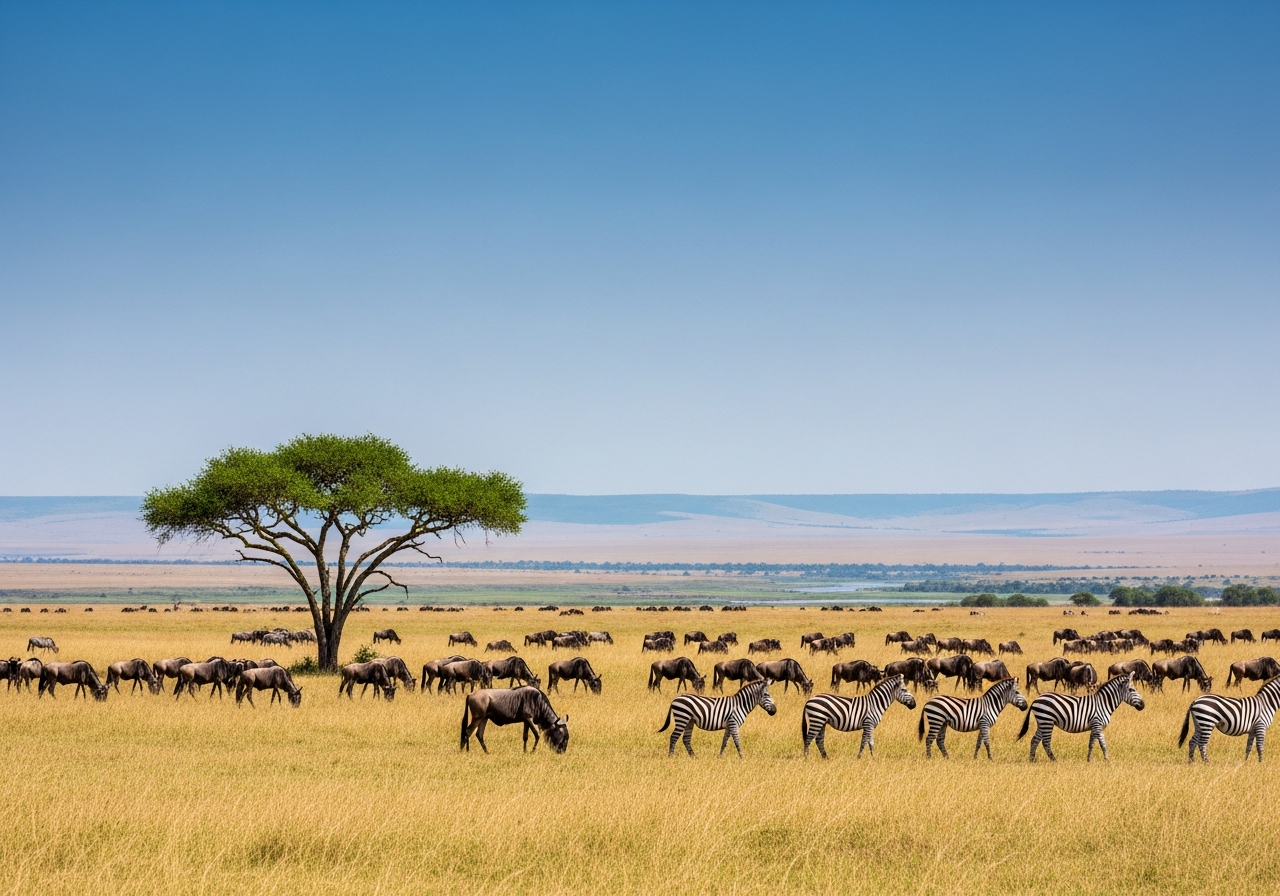
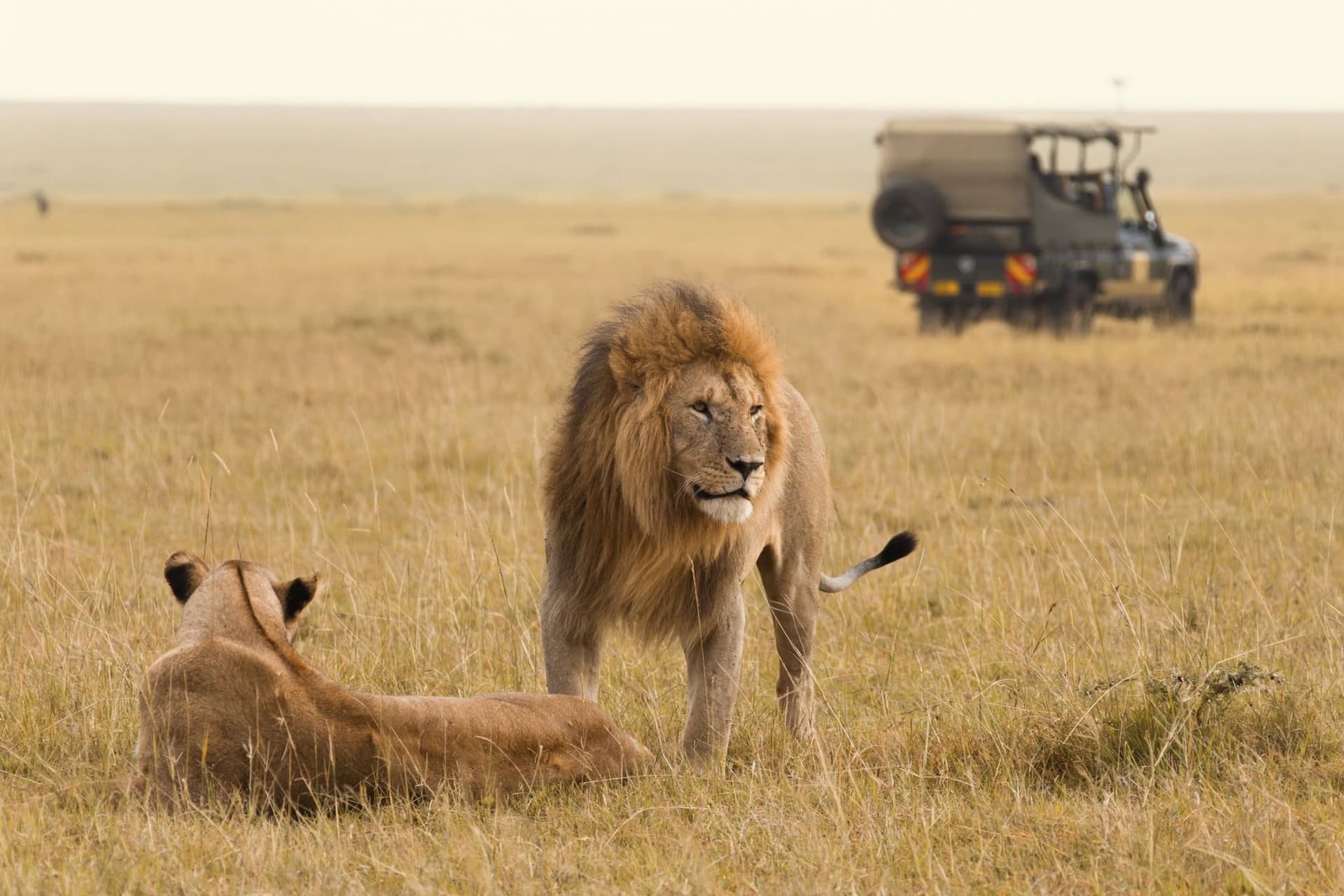
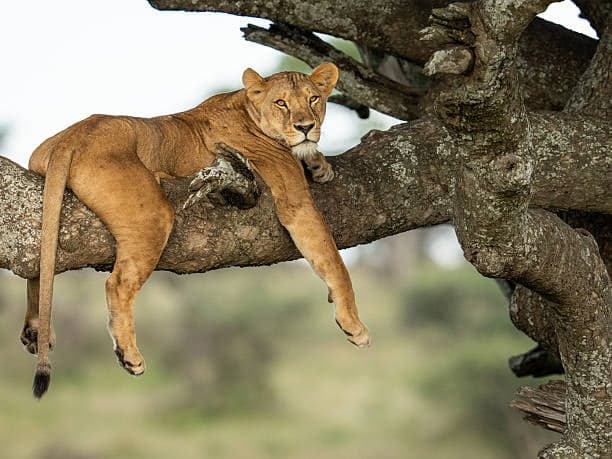
The Masai Mara’s rolling grasslands turn gold in the dry season. The Mara River and its tributaries bring riverine woodland, while the western escarpment gives some camps broad views across the plains. Lions often rest beneath acacias after a night hunt, and cheetahs use the open ground to scan for young wildebeest and gazelle.
Golden plains, acacia shade and distant wildebeest capture the calm beauty of the Masai Mara dry season.
1,510 sq km
Approximate area of the Masai Mara National Reserve
14,763 sq km
Approximate area of Serengeti National Park
1.5 million
Wildebeest involved in the annual migration
July–October
Typical peak window for Mara river crossings
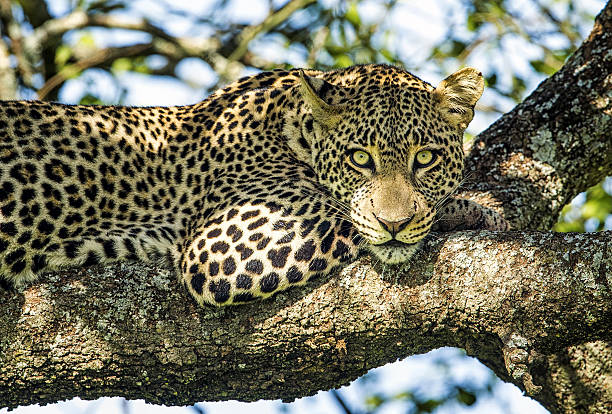
Leopards favour thicker cover along the river and seasonal streams. Elephants and buffalo use the woodland and grassland edges, while giraffes browse above them. Hyenas are active at dawn and dusk. The Mara’s compact terrain means several habitats can fall within one morning drive.
The Serengeti changes character across its sectors. Central Serengeti has kopjes, acacia woodland and resident big cats. The southern plains open into low grassland, while the western corridor becomes greener and more wooded. Northern Serengeti has rocky hills, river valleys and quieter tracks near the Mara River.
Lions: Both parks support strong lion populations, with prides often using shade, drainage lines and rocky outcrops.
Cheetahs: Open plains favour cheetahs, especially where grass is short and prey can be seen from a distance.
Leopards: Look in riverine woodland, thicker thickets and trees with good cover.
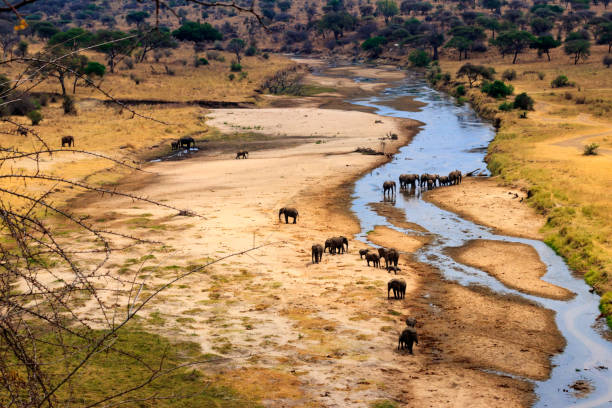
Elephants and buffalo: These large herbivores need water and shade, so woodland edges and river systems are useful places to search.
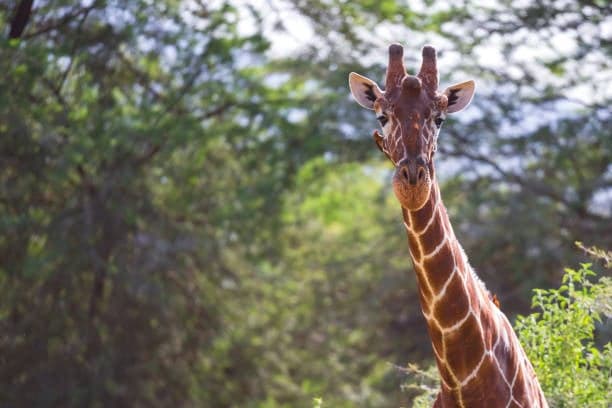
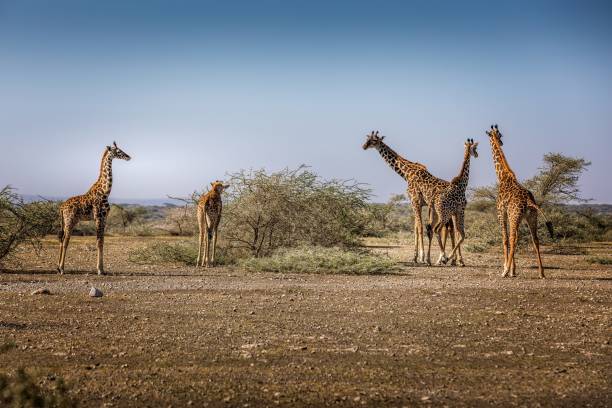
Giraffes and plains game: Zebra, wildebeest, gazelle and giraffe are common subjects across both ecosystems.
Hyenas: Dawn is a good time to watch clans return from the night, or inspect a recent kill.
No park can promise a particular animal. Skilled guides read tracks, alarm calls, vultures and recent sightings, then balance patience with the need to cover ground. That approach gives better results than chasing every radio report.
When is the best time to choose each park?
June to October is the main dry season in both parks. Roads are easier to use, skies are often clear and animals gather near reliable water. Short grass also improves visibility, although July to October brings more visitors to popular wildlife areas.
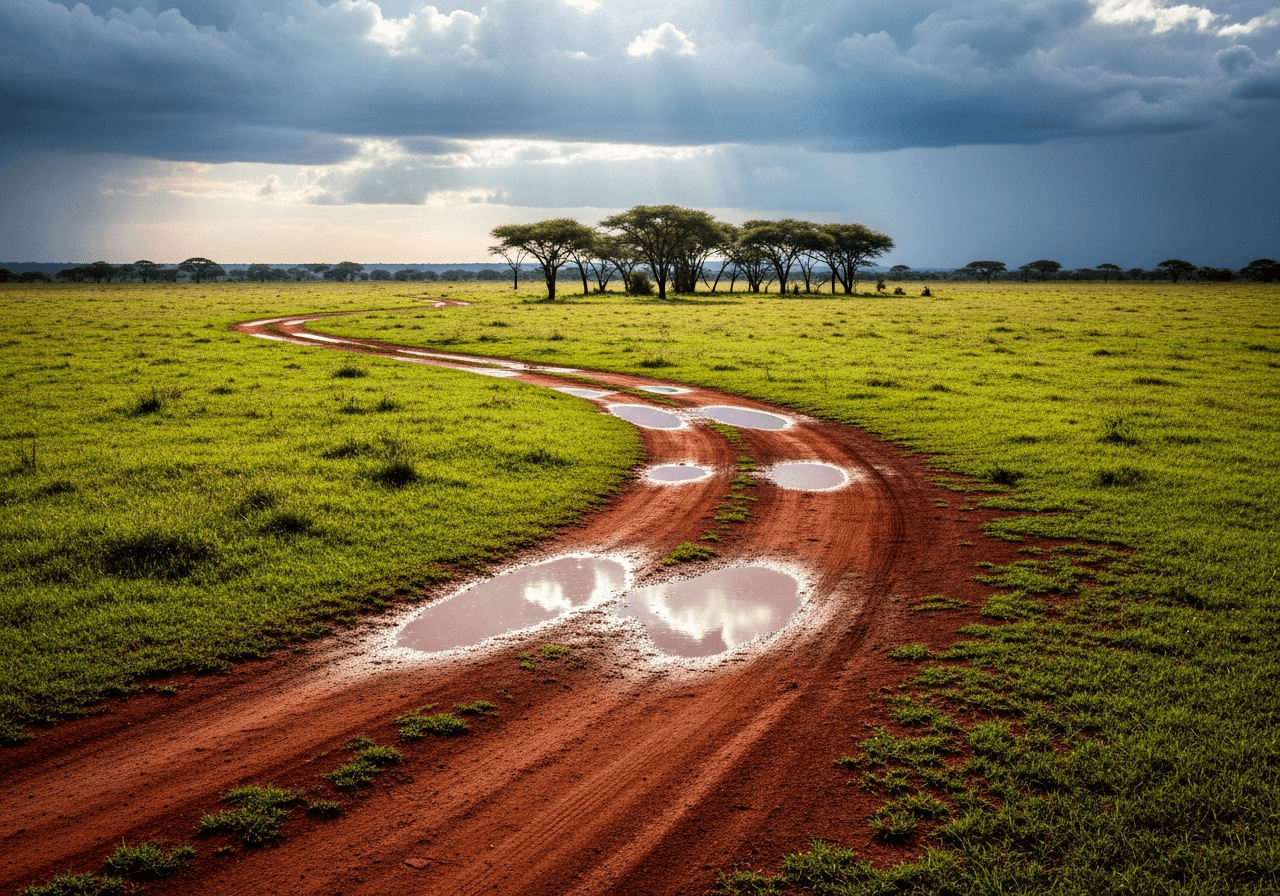
A cheetah stands poised on the Masai Mara plains after the short rains, framed by fresh grass and soft morning haze.
Great Migration Calendar
Where to find the herds, month by month
Live
The Great Migration is a continuous, year-round clockwise loop of over 1.5 million wildebeest and hundreds of thousands of zebra, driven by rainfall and fresh grazing across the Serengeti–Mara ecosystem. Use the live calendar below to see where the herds are right now — and plan your trip around calving or the famous river crossings.
1.5M+
Wildebeest on the move
300K+
Zebra & gazelle
~8,000
Calves born / day (Jan–Feb)
1,800 km
Annual circular route
JanuaryCalving
Calving season begins on the southern Serengeti's short-grass plains around Ndutu. Roughly 8,000 wildebeest are born each day, drawing lion, cheetah and hyena.
Southern Serengeti
Southern SerengetiLate Jan–Mar (+ Dec)
Western CorridorMay–Jul
Northern SerengetiJul–Oct
Masai MaraAug–Oct
Region
Southern Serengeti
Western Corridor
Northern Serengeti
Masai Mara
Peak season Herds present Not present
Southern Serengeti
Late Jan–Mar (+ Dec)
Ndutu & southern plains
The short-grass plains around Ndutu host the calving season — the densest concentration of newborns and predators in the entire cycle. Around 8,000 calves are born each day at the peak, drawing lion, cheetah and hyena onto the open plains.
Western Corridor
May–Jul
Grumeti River
The herds push through the western corridor, where the Grumeti River and its giant crocodiles provide the season's first dramatic crossings, alongside the wildebeest rut. Exclusive reserves mean far fewer vehicles.
Northern Serengeti
Jul–Oct
Kogatende & Mara River (TZ)
The Mara River runs through the northern Serengeti, making it the prime crossing zone from July to October — often with fewer vehicles than the Kenyan side, plus big resident lion prides.
Masai Mara
Aug–Oct
Masai Mara, Kenya
The northern stage of the loop. From August to October the herds spill across the Mara River into Kenya for heart-stopping crossings, with superb resident big cats and balloon safaris all year.
Climate change has shifted migration timing in recent years; the herds follow the rains, so actual movement may vary by a few weeks each year.
Season
Masai Mara
Serengeti
January to March
Good resident game and green landscapes after rain
Southern Serengeti calving is generally strongest; predators follow the newborns
April to May
Long rains can bring lush grass and fewer visitors
Green season, with lower visitor numbers and rich birdlife; some roads become slow
June
Dry-season viewing improves, with cooler mornings
Herds begin moving north and west from the southern plains
July to October
Mara and northern Serengeti river crossings are most likely, subject to rainfall
Strong dry-season viewing; northern sectors can be well placed for migration herds
November to December
Short rains refresh the grass and can reduce crowd levels
Herds move towards the southern plains, with green landscapes and young calves later in the season
Southern Serengeti calving is generally strongest from January to March. This is a productive period for predator action, but the experience is not limited to migration animals. Resident lions, cheetahs, leopards, elephants and giraffes remain present across both parks.
July to October is popular for the Mara because herds may reach the river and northern grasslands. Timing depends on rainfall and grazing conditions, so a camp in the right area matters more than a promise tied to a calendar date. Our guide to Great Migration timing explains how we position routes by season.
Where can we see the Great Migration?
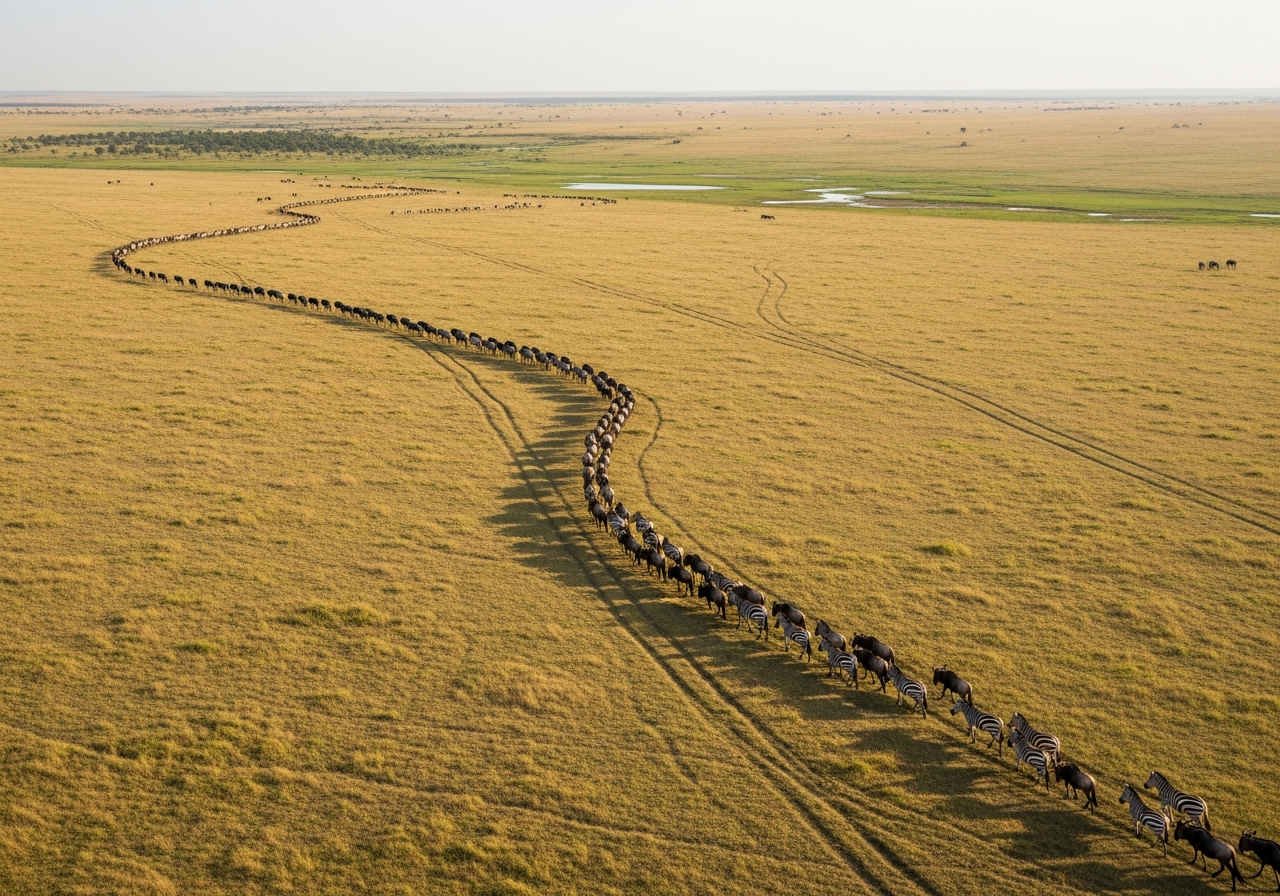
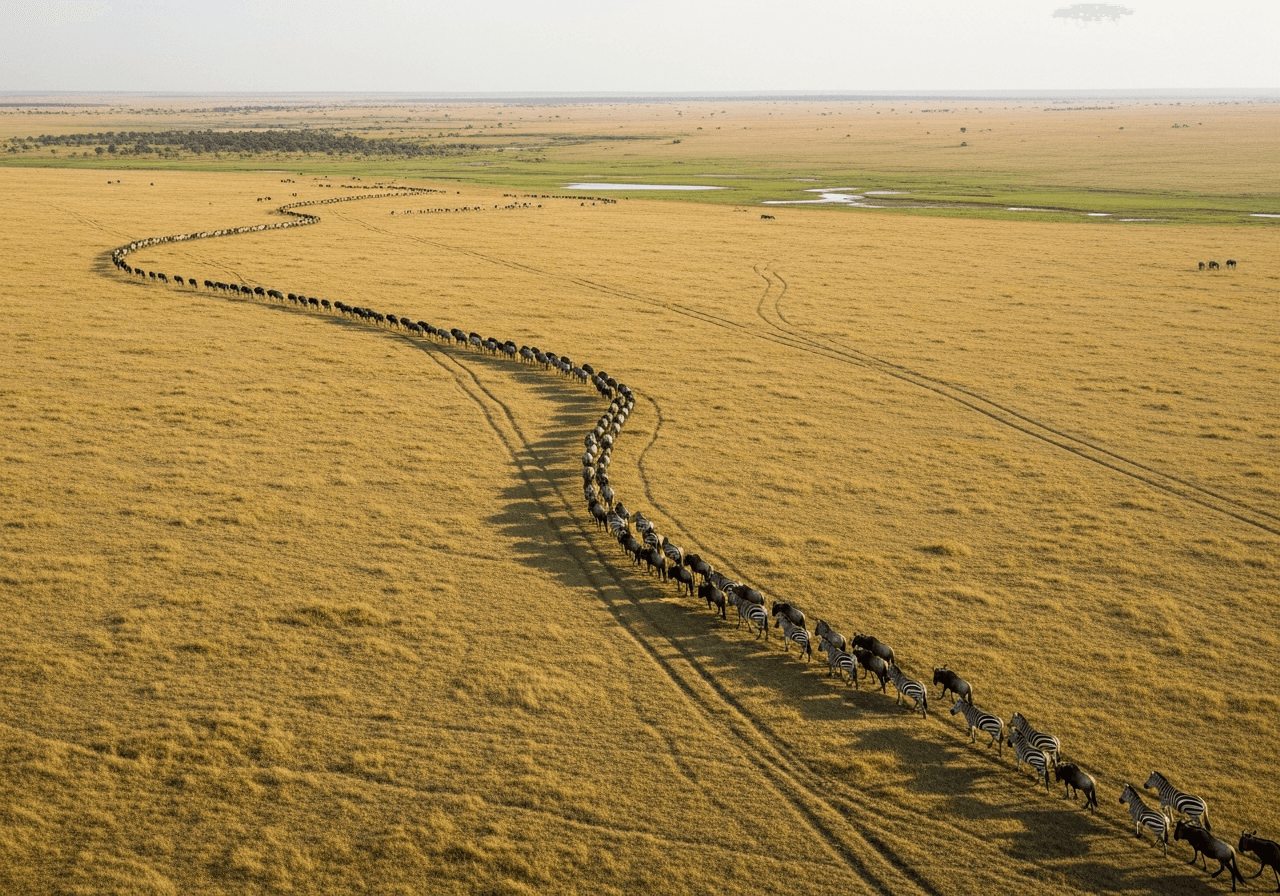
The annual wildebeest migration involves roughly 1.5 million wildebeest, alongside hundreds of thousands of zebra and gazelle. It is a moving response to rain and fresh grass, not a fixed procession that follows the same route each year.
A dramatic Mara River crossing captures the raw momentum of the Great Migration as wildebeest surge through crocodile-filled waters.
Most herds calve on the short-grass plains of the southern Serengeti between January and March. As the grass dries, they move through the central plains and towards the western corridor. Some continue north into northern Serengeti and the Masai Mara from about July onwards.
The Mara river crossings can be dramatic. Herds gather on the bank, hesitate, split apart and sometimes turn back. Crocodiles may wait in deeper channels, while lions and hyenas patrol the approaches. Yet no guide can book a crossing for a particular day.
“
““The river is only one moment of the migration. The best day may be the quiet morning before it, when the herd is still deciding where to go.””
Rainfall changes the timing, and different herds can occupy different sectors at once. A northern Serengeti camp can offer access to crossing areas, while a Mara conservancy may provide a quieter setting away from the reserve’s busiest viewpoints.
For a migration-focused masai mara serengeti safari, we normally allow several nights in the likely wildlife zone rather than moving each day. That gives the guide time to respond to fresh conditions.
Which park is better for a first safari?
Three to five nights in the Masai Mara suit many first-time visitors. From Nairobi, a flight reaches the reserve in under an hour, and a road route can show the changing landscape from city to savannah. The compact reserve also reduces the chance of spending a full day in transit.
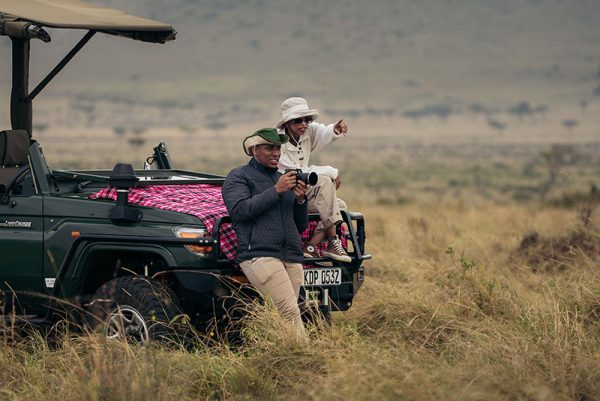
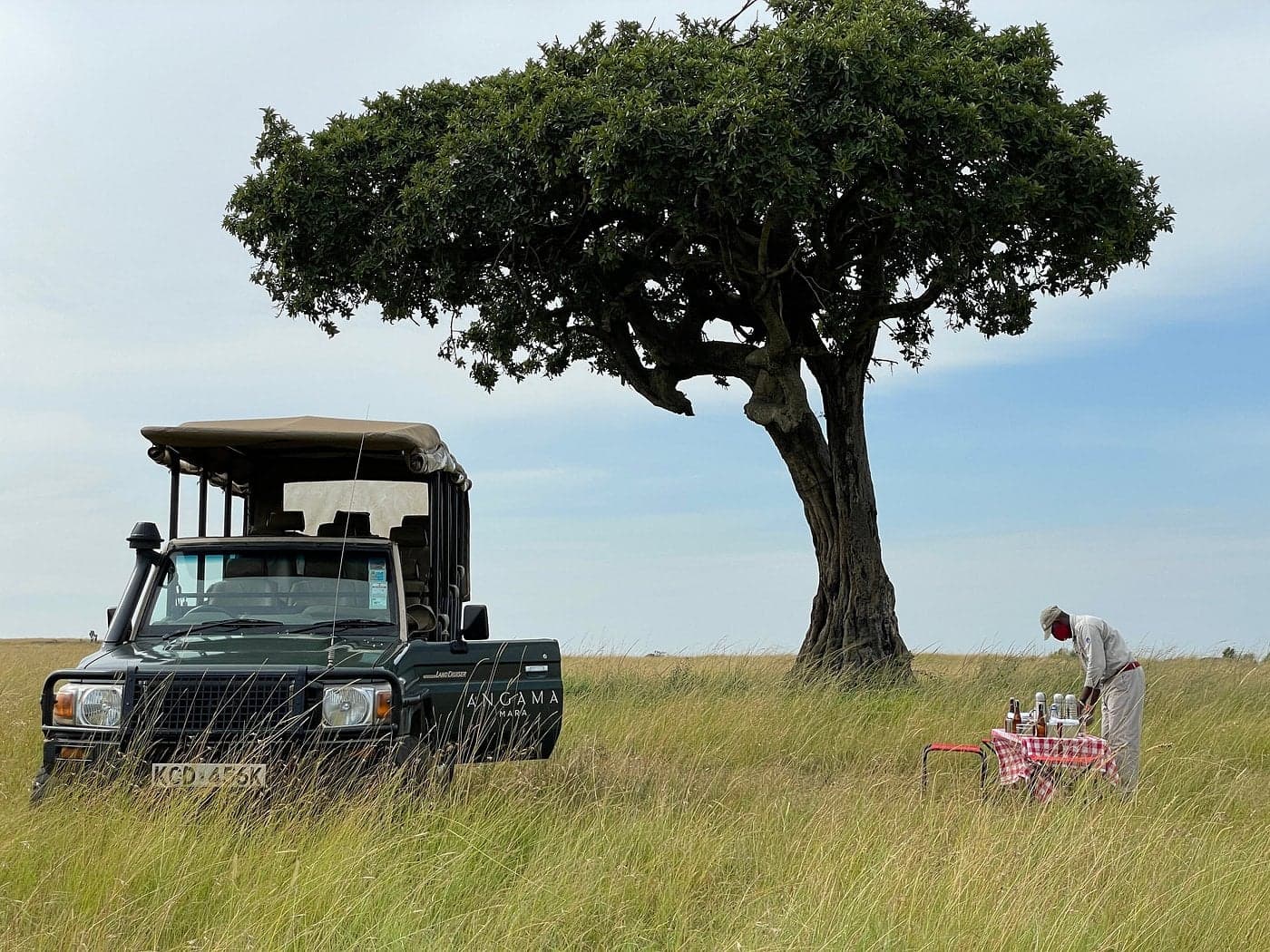
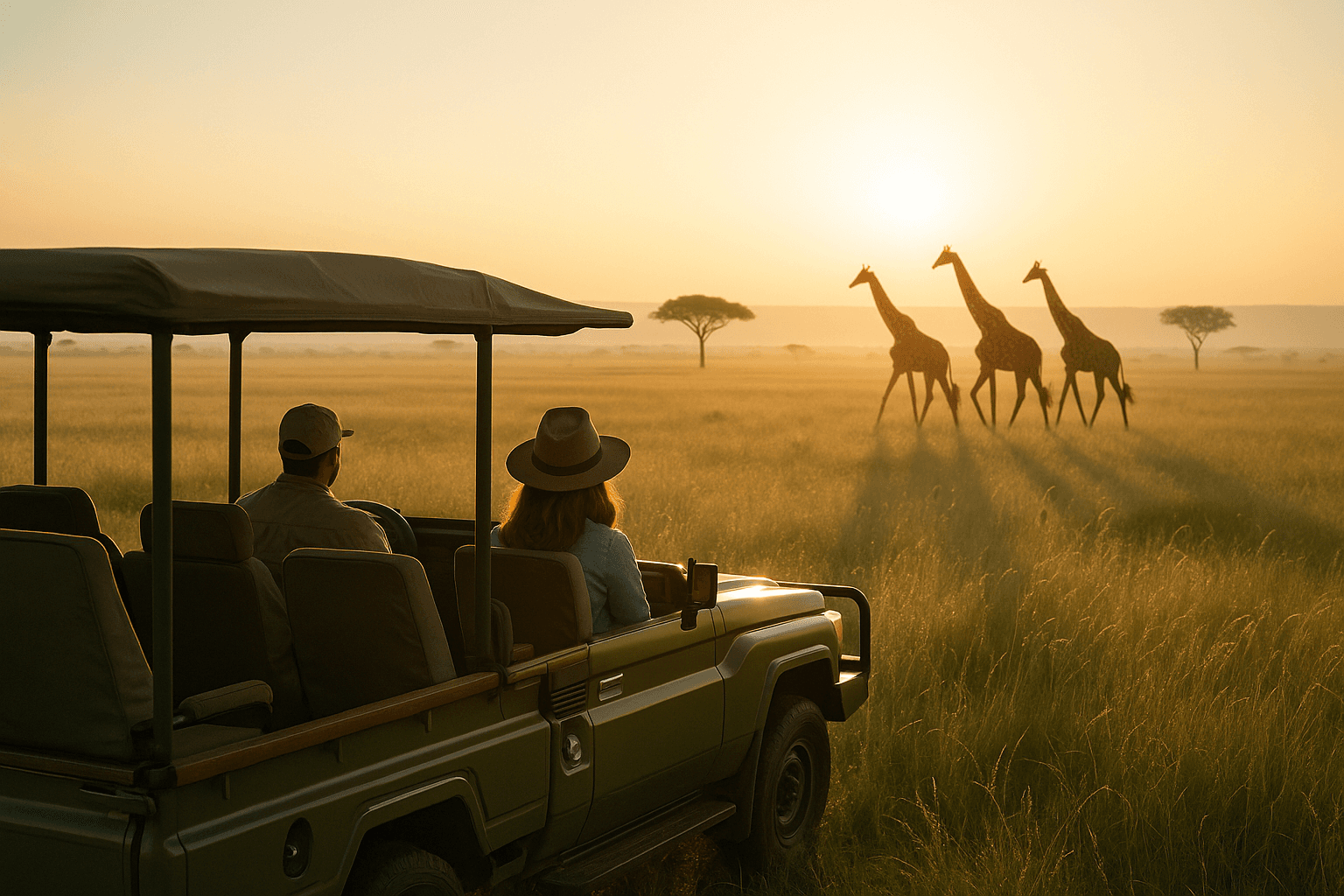
A premium open-sided 4x4 safari vehicle stands ready for adventure in the sun-drenched golden savannah of Kenya's Masai Mara.
Why many first-time travellers choose the Masai Mara
Pros
Compact wildlife areas make it possible to see a great deal in three to four nights.
Straightforward road and flight access from Nairobi.
Excellent chances of seeing lions, cheetahs, elephants, giraffes and large herds of plains game.
Nearby private conservancies may offer walking and night drives where permitted.
Cons
Peak migration months can bring more vehicles at famous river-crossing areas.
The reserve is much smaller than the Serengeti.
A river crossing is never guaranteed on a particular date.
The Serengeti suits travellers who value space and a slower rhythm. Four to six nights allow time for longer game drives, quiet picnic sites and a move between two sectors. Central Serengeti is a strong all-round choice, while northern or western areas can offer more solitude in the right months.
Private conservancies around the Mara can improve a first safari for guests who want more than standard game drives. Depending on the conservancy, our guides may arrange:
Guided bush walks with trained local walking guides
Night drives to look for aardvark, civet, bat-eared fox and nocturnal predators
Off-road viewing near a sighting, where local rules permit it
Lower vehicle density than some public reserve viewpoints
Cultural visits arranged with respect for local community schedules
For a first safari, the best choice is often the one with fewer complicated transfers. The Mara gives a strong introduction in a short time. The Serengeti gives a broader sense of East Africa’s scale.
How many days should we allow for each park?
Three to four nights is a sensible Masai Mara stay for a focused first visit. Three nights provide two full game-drive days, while four nights add flexibility for weather, a walking activity or a slower final morning.
At a glance
A sensible first-safari rhythm
Single-park stay
Allow 3–4 nights in the Masai Mara or 4–6 nights in the Serengeti.
Mara road transfer
Typically 5–6 hours from Nairobi, depending on traffic and road conditions.
Serengeti overland access
Allow a full travel day by road from Arusha to a distant sector.
Best game-drive hours
Early morning and late afternoon are usually strongest for activity and light.
Plan four to six nights for the Serengeti. If the route allows, split the stay between two sectors rather than crossing the entire park every day. For example, three nights in Central Serengeti followed by two nights in the north can work well during the dry migration months.
Available time
Suggested route
What it allows
Three days
Fly in and out of the Masai Mara
Two strong game-drive days with minimal transfer time
Five to seven days
Masai Mara with one or two Kenyan additions
More varied habitats, such as Nakuru, Naivasha or Amboseli
Four to six nights
Serengeti, with one or two sectors
Longer drives and a better chance to follow seasonal wildlife movement
Eight to ten days
Kenya and Tanzania combination
Two major ecosystems without rushing every day
Eight to ten days is a sensible starting point for a combined Kenya–Tanzania safari. Shorter combinations can work, but only if you fly between gateways and accept less time in each park.
What does a Masai Mara Serengeti safari cost?
Camp location and season shape the price more than the park name alone. Peak dry-season dates, private vehicles, internal flights and camps close to migration areas raise the cost. A basic road itinerary can cost less, but it may use longer transfers and shared vehicles.
Trip style
Typical route
Indicative price from
Kenya-only, mid-range
Three nights in the Masai Mara by road or scheduled flight
$1,500 pp
Kenya-only, premium
Four nights in a reserve or conservancy camp with flights
$3,200 pp
Tanzania-only, mid-range
Four nights in Central Serengeti, often with Ngorongoro Crater
$2,400 pp
Tanzania-only, premium
Five nights across two Serengeti sectors with flights
$4,500 pp
Two-country, premium
Eight to ten days in the Mara and Serengeti
$5,500 pp
These are planning figures for two people sharing, excluding international flights and based on seasonal availability. Exact prices change with camp category, dates, exchange rates, park fees and flight schedules.
The main cost drivers are:
Park and conservancy fees: These vary by destination and may be higher in private conservancies.
Accommodation: Tented camps range from practical mobile units to large suites with private decks and plunge pools.
Flights: Light aircraft links save time but cost more than a shared road transfer.
Vehicle and guide: A private 4x4 gives flexible stops, better photography space and control over the day.
Season: July to October and festive dates often have higher rates and tighter availability.
Border logistics: Two countries add immigration handling, vehicle changes and possible gateway nights.
A low headline price may place you far from the best wildlife zone. It may also include shared game drives, fixed departure times or a long road transfer. We compare the full route, not just the nightly camp rate.
Where should we stay in the Masai Mara and Serengeti?
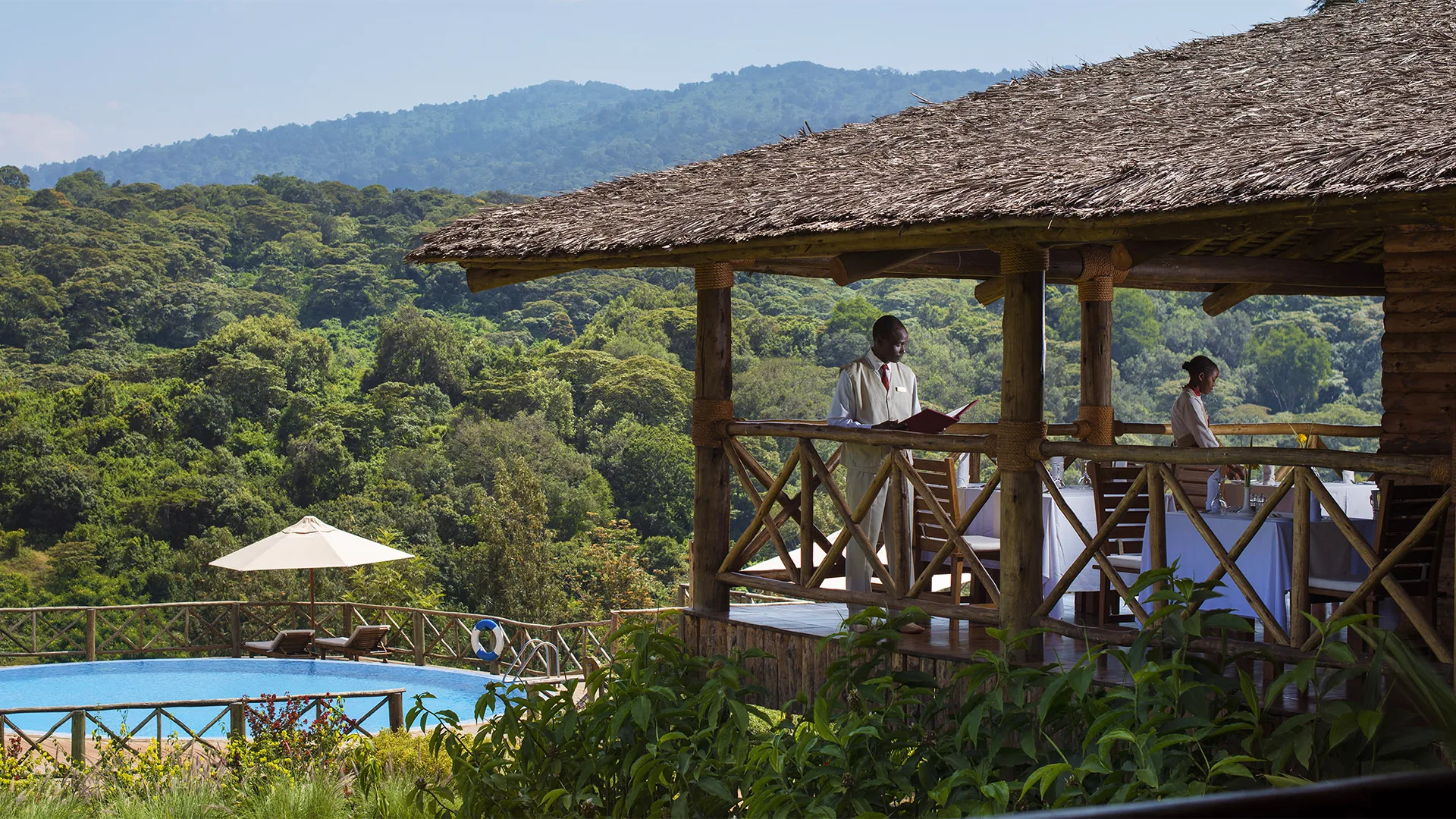
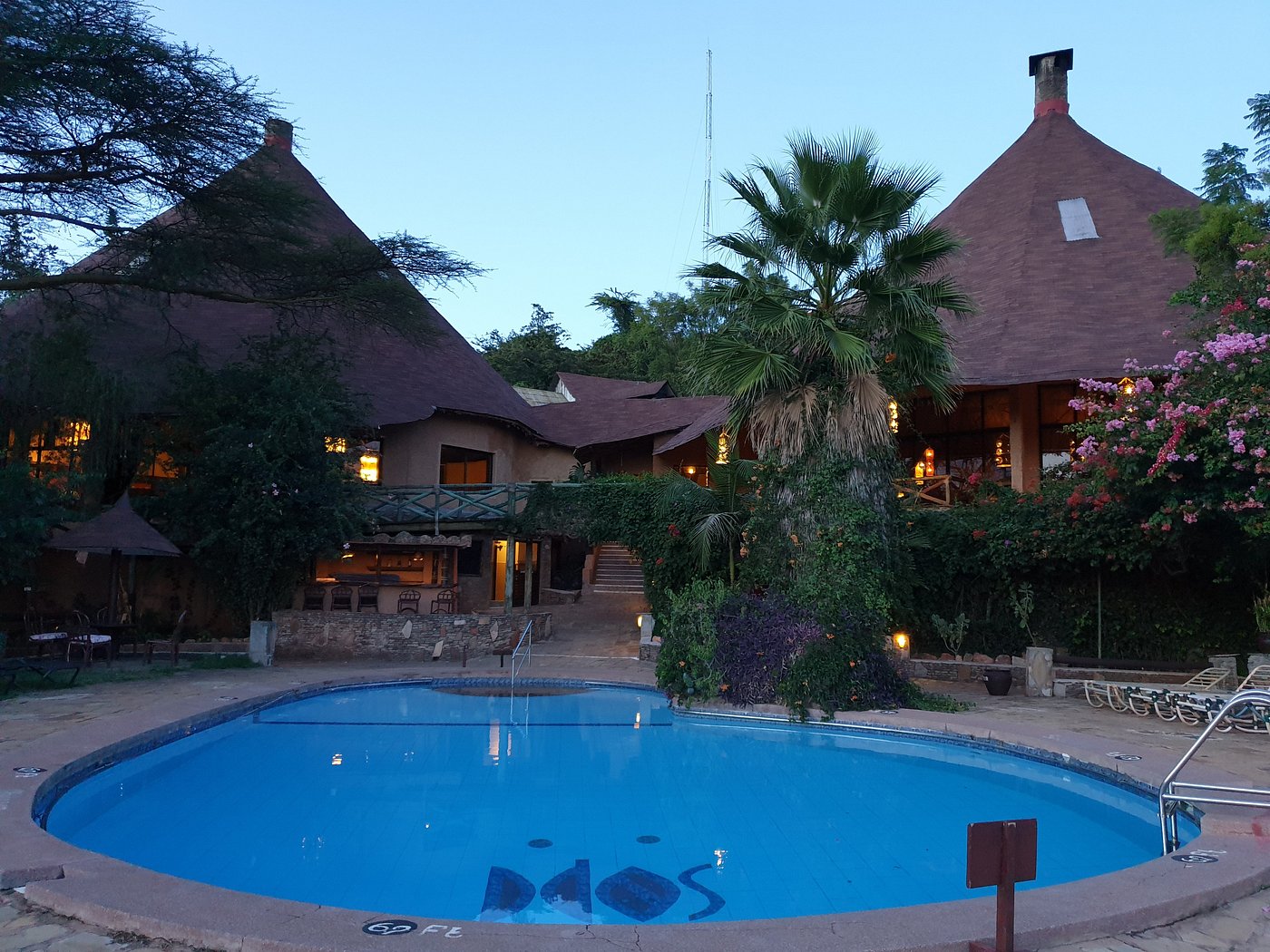
A camp near the right wildlife area can save hours over a five-night safari. In the Masai Mara, reserve-edge camps offer quick access to the public reserve, while camps inside or close to the reserve can suit guests who want classic full-day game drives.
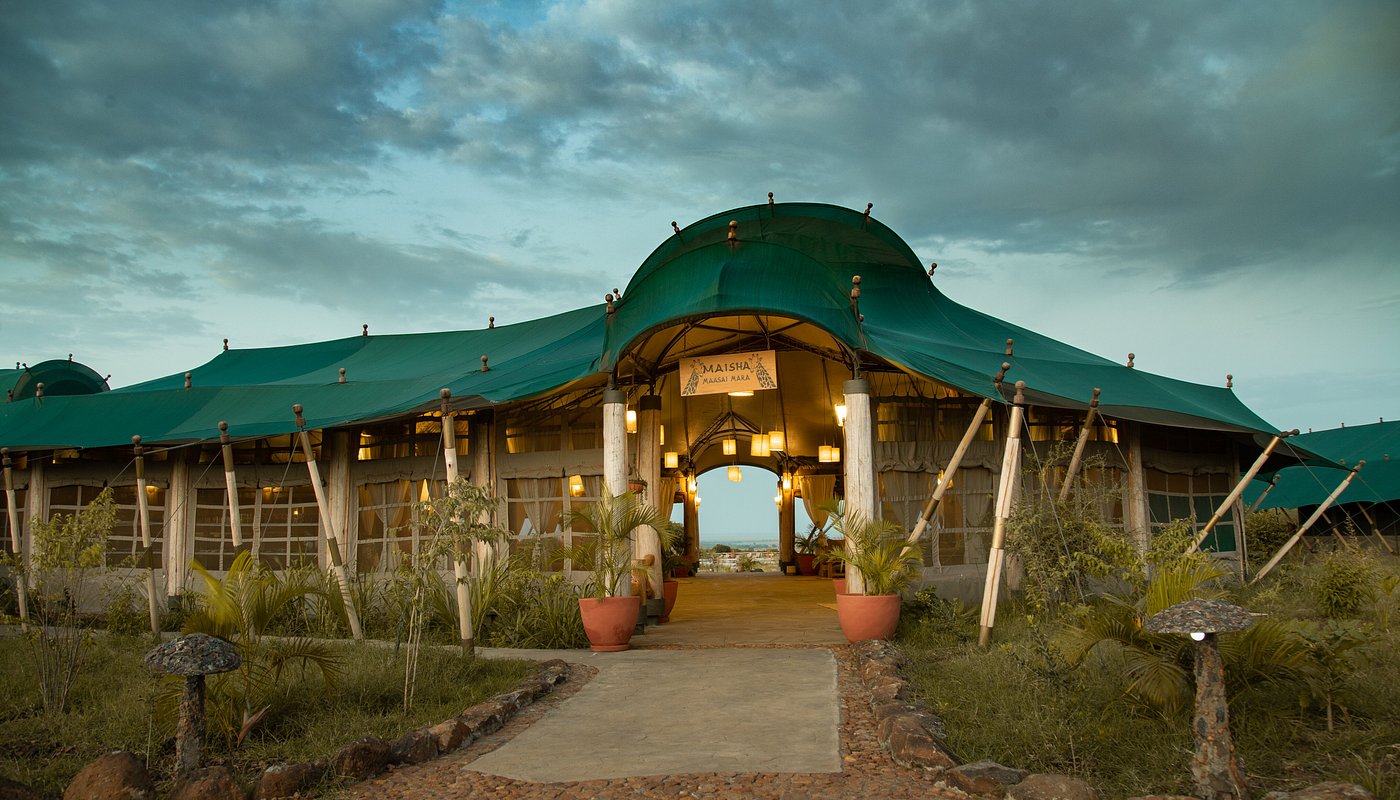
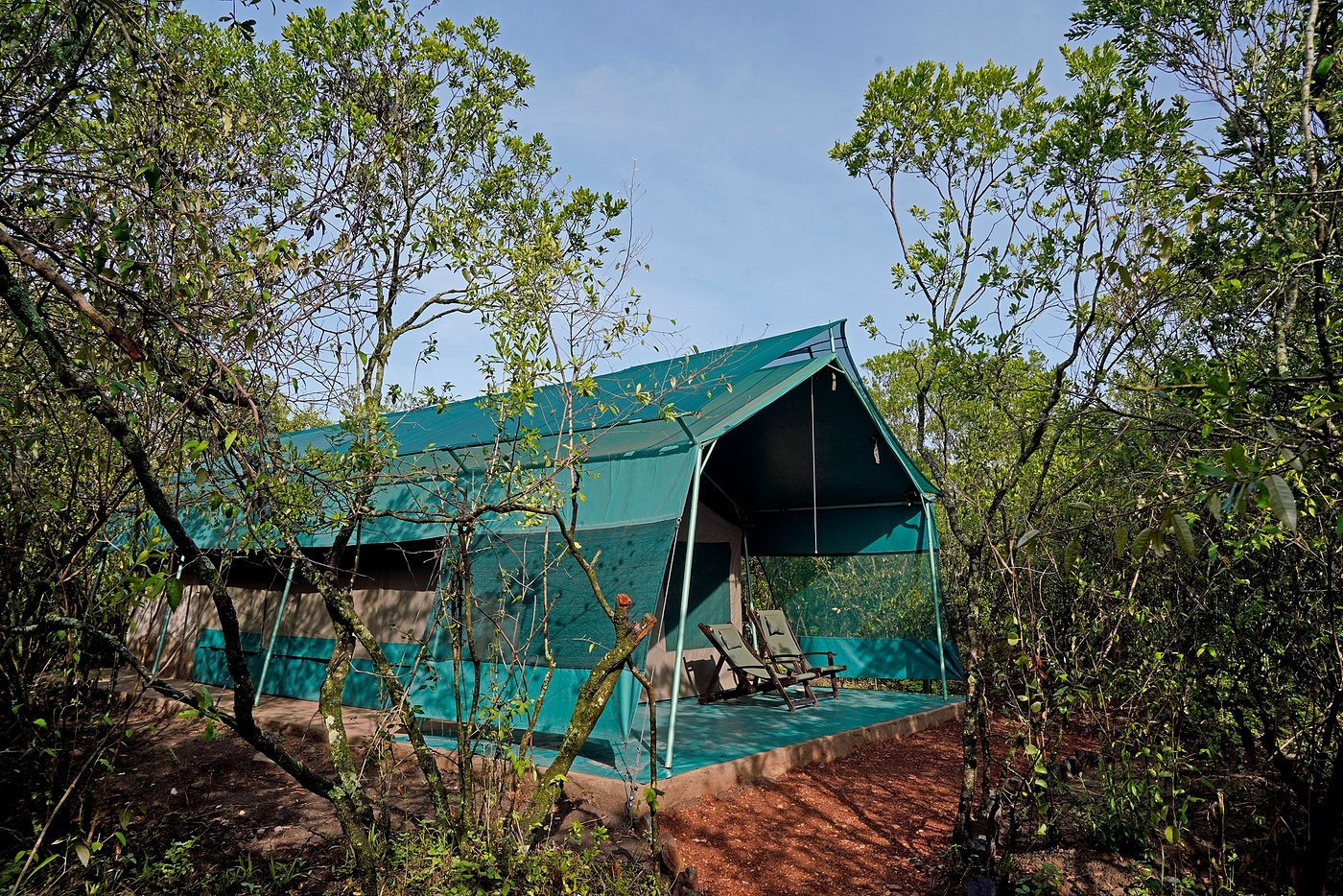
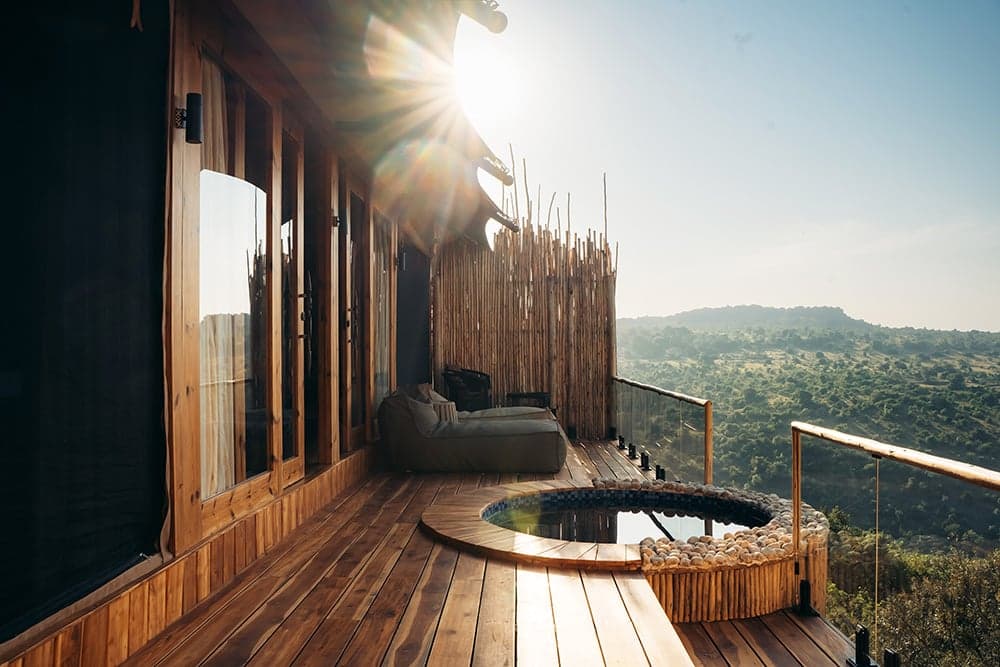
Lantern light and indigo skies set a quiet, exclusive mood at a luxury tented camp in the Masai Mara.
Discover Authentic African Luxury in the Maasai Mara
Masai Mara, Kenya
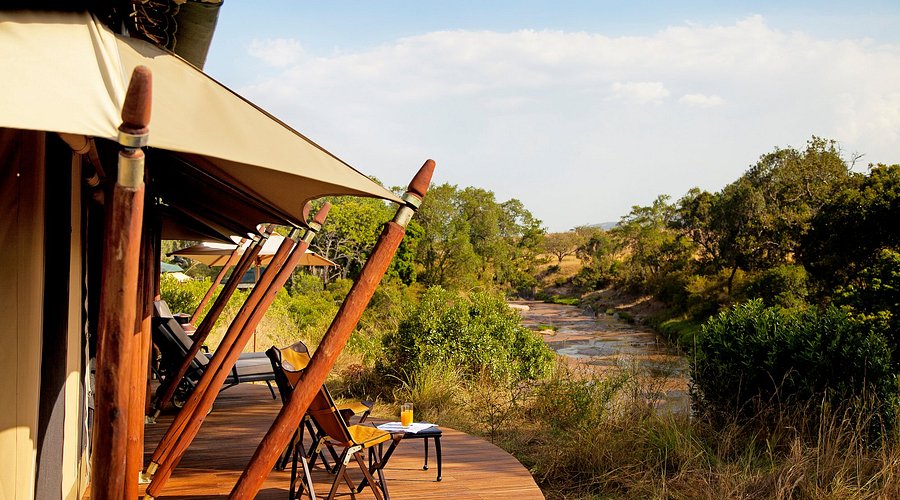
Zebra Plains Mara Camp offers a selection of luxury tents that combine comfort with the raw beauty of the Masai Mara. Each tent is spacious and elegantly furnished, with a blend of African-inspired décor and modern amenities. The camp’s tented accommodations include:
Subtitle: An Award-Winning Eco-Luxury Tented Sanctuary Hidden Inside Ol Kinyei Conservancy
Masai Mara, Kenya
Olkinyei Mara Tented Camp is a welcoming safari camp located just outside the Talek Gate of the Masai Mara National Reserve, offering an authentic and relaxed safari experience in a scenic setting near the Talek River.
Private conservancy camps offer a different style. They often have fewer vehicles, walking and night-drive options, and a quieter setting. Conservancy fees can be included in the nightly rate, so compare the total cost rather than the room price alone.
In the Serengeti, divide the map before choosing the room:
Central Serengeti: A dependable all-round base with kopjes, resident predators and good access to several plains.
Western Serengeti: Useful for the western corridor and Grumeti area during the herd’s northward movement.
Northern Serengeti: Best positioned for the Mara River region in the dry-season months, with rocky terrain and fewer camps in some areas.
Southern Serengeti: A strong choice from January to March for calving and predator activity on the short-grass plains.
Room style matters, but location comes first. We help guests choose a safari camp by season, road access, activity rules and likely wildlife area before comparing décor.
How do we reach each park?
Nairobi gives the Masai Mara its main access advantage. A road journey usually takes five to six hours, depending on traffic, stops and the camp’s location. It passes through the Great Rift Valley and rural Kenya, so it can work well for guests who enjoy a scenic overland route.
1
Choose the gateway
Use Nairobi for the Masai Mara and Arusha or Kilimanjaro for the Serengeti.
2
Decide road or air
Choose road travel for flexibility and scenery, or a bush flight when time and comfort matter most.
3
Match the arrival point to the camp
Select an airstrip or route near the wildlife sector where we plan to spend the nights.
4
Protect game-viewing time
Avoid changing parks too frequently; a longer stay in one area is usually more rewarding.
5
Build in seasonal flexibility
Allow our guides to adjust daily routes according to rainfall, wildlife movement and local conditions.
Scheduled flights from Nairobi take about 45 to 60 minutes. They land at airstrips such as Keekorok, Musiara, Mara Serena or nearby conservancy strips, followed by a short game drive to camp. Baggage limits are strict, so soft bags work best.
Arusha City and Kilimanjaro are the common gateways for the Serengeti. Driving from Arusha to Central Serengeti can take six to eight hours, with time for the Ngorongoro highlands and wildlife stops. Internal flights are useful for northern, western or southern sectors where road distances are long.
Option
Best for
Trade-off
Road from Nairobi to the Mara
Scenic travel and lower transport cost
Longer transfer, with traffic risk near Nairobi
Flight from Nairobi to the Mara
Short trips and guests who value game-drive time
Higher cost and soft-bag baggage limits
Road from Arusha to Serengeti
Guests adding Tarangire or Ngorongoro Crater
Long transfer to central or northern sectors
Flight into the Serengeti
Remote sectors and longer stays
Higher cost and possible airstrip stops
Can we combine the Masai Mara and Serengeti?
Yes, but the border needs careful planning. Kenya and Tanzania use separate safari vehicles and immigration systems, so a direct park-to-park transfer is not a simple drive across open country.
It can work for travellers who prefer an overland connection, but border procedures and the long transfer require careful coordination. We assess the route against the camps, available time and road conditions.
Flights are valuable when they protect an extra game-drive day, connect remote sectors or make a luxury itinerary more comfortable. They are particularly useful when combining Nairobi, the Mara, Arusha and the Serengeti.
Yes, if seeing the contrast between Kenya and Tanzania is a priority and you can spare at least eight to ten days. For shorter trips, one well-positioned park is usually better than rushing between both.
The most comfortable option is often to route through Nairobi and Arusha. You can fly from the Mara to Nairobi, connect to northern Tanzania, then continue by road or light aircraft into the Serengeti. This costs more but reduces the risk of losing a full safari day.
A road connection can use the Isebania–Sirari border. The Mara side and Serengeti side each require their own vehicle arrangements, and immigration formalities can take time. The route may suit guests who want a land journey, but we build in room for delays and avoid placing a critical flight immediately afterwards.
It makes sense to combine both parks when you have eight to ten days, want to compare the ecosystems or hope to see different migration stages. It makes less sense on a six-day trip, where border and gateway logistics could replace two valuable game-drive days.
Which itinerary fits our time and travel style?
A three-day fly-in Masai Mara safari is the cleanest short option. Travel from Nairobi on the first morning, enjoy an afternoon drive, then take two full drives before flying back. It suits a first East African safari added to a business trip or a longer Kenya holiday.
Soft luggage is loaded onto a bush aircraft for a seamless safari departure from the Masai Mara.
Ultra Luxury
TZ+1
Safari
Tanzania · Masai Mara National Reserve
10Days
10 Days Two Nations Safari Kenya&Tanzania Flying (Ultra-Luxury)
Masai Mara National ReserveSerengeti National ParkNgorongoro Crater+1
Experience a well-planned 10-day Kenya and Tanzania safari with Imara Africa Safaris, covering Lake Nakuru, Masai Mara, Serengeti, Ngorongoro Crater, Tarangire, and Amboseli. This two-nation safari combines big cats, rhinos, elephants, scenic landscapes, cultural experiences, and some of East Africa’s most iconic wildlife destinations.
10 Days Two Nations Safari Kenya&Tanzania (luxury)
Masai Mara National ReserveSerengeti National ParkNgorongoro Crater+1
Experience a well-planned 10-day Kenya and Tanzania safari with Imara Africa Safaris, covering Lake Nakuru, Masai Mara, Serengeti, Ngorongoro Crater, Tarangire, and Amboseli. This two-nation safari combines big cats, rhinos, elephants, scenic landscapes, cultural experiences, and some of East Africa’s most iconic wildlife destinations.
7-Day Great Migration River Crossing Safari in Tanzania
Serengeti National ParkNgorongoro CraterTarangire National Park+1
This 7-day Great Migration river crossing safari is a mid-range Tanzania road itinerary from Arusha through Tarangire, the Northern Serengeti, the Central Serengeti and the Ngorongoro Crater, priced from US$2,140 per person. Timed for the July-to-October season, it places travellers near the Mara River when wildebeest crossings are most likely.
A five- to seven-day Kenya route can include the Mara with Lake Nakuru, Lake Naivasha or Amboseli National Park. This gives more habitat variety, but avoid adding every park simply to fill a map. Two nights in a destination often leave little time for wildlife.
Traveller priority
Practical route
Recommended pace
Short first safari
Three nights in the Masai Mara by air
One arrival drive and two full days
Classic Kenya safari
Nakuru, Naivasha and Masai Mara over five to seven days
Two or three nights in the Mara
Luxury and comfort
Fly between Nairobi, the Mara, Serengeti and Arusha
Longer stays with fewer road transfers
Family safari
Private vehicle, shorter drives and camps with family rooms
Three nights or more in each main wildlife area
Photography
Private vehicle in the Mara or two Serengeti sectors
Flexible starts, patient sightings and fewer camp changes
Two-country safari
Masai Mara, northern or central Serengeti and Ngorongoro Crater
Eight to ten days, with flights where useful
Luxury travellers may prefer a private air itinerary and small camps in prime wildlife areas. Families often benefit more from a private vehicle and sensible pacing than from the most expensive room. Photographers should prioritise vehicle access, light, dust control and time at sightings.
Our first-timer's guide covers packing, tipping, health planning and daily safari routines. It helps set useful expectations before we refine the route.
What should we book first?
Start with your travel dates and the number of nights available. Then decide if migration herds, calving, predators, photography, walking or family comfort matter most. These choices determine the right park sector before we discuss individual camps.
Let us build the right Mara–Serengeti route
Tell us your travel dates, preferred pace and wildlife priorities, and our Nairobi-based team will shape the parks, camps and transfers around you.
Choose the season: Mark dry-season dates, the January-to-March calving period or the quieter green season.
Set the safari length: Allow three to four nights in the Mara, four to six in the Serengeti, or eight to ten days for both.
Select the access style: Compare a scenic road journey with scheduled flights and shorter transfers.
Reserve camps and flights: Peak July-to-October dates can sell out well ahead, especially in small conservancies and northern Serengeti camps.
Refine the guiding plan: Choose a private vehicle, photography set-up, child-friendly pacing or mobility support.
Check the practical details: Share dietary needs, room requirements, baggage limits and any special celebrations.
We can then build a route with the right balance of game drives and rest. Start by plan your safari details, or browse safari itineraries for a sense of available styles.
Our team can also extend the route beyond the two parks. Consider Ngorongoro Crater and Arusha City in Tanzania, or Nakuru City and Amboseli in Kenya. The strongest itinerary is not the one with the most stops. It is the one that places you in the right habitat for the time you have.
The Masai Mara is usually better for a first safari lasting three to five nights because access is easy and wildlife areas are concentrated. Choose the Serengeti if you have more time and value scale, varied habitats and longer game drives.
Yes, but the herds move between the two areas throughout the year. Southern Serengeti is strongest for calving from January to March, while the Mara and northern Serengeti are most likely to see river crossings from July to October, subject to rainfall.
Allow at least eight nights for a balanced two-country safari, with three or four nights in the Mara and four or five in the Serengeti. Six nights can work with flights, but the route will feel more rushed.
Usually, yes. Two countries add flights or long transfers, border logistics, separate park fees and more accommodation nights. A Kenya-only or Tanzania-only safari can offer better value when you have less than eight days.
You can travel by road through the Isebania–Sirari border, with immigration checks and a change of safari vehicle. Many guests find it more comfortable to route through Nairobi and Arusha or use connecting light aircraft flights.
Some reserve areas can be busy from July to October, especially near reported river crossings. Staying in a private conservancy, choosing a less central camp and using a private guide can reduce vehicle density and give the day more flexibility.
74views
Share
About the author
Lewis Munuhe
Founder & Director
<p>Lewis Munuhe is the Director and Owner of Imara Africa Safaris, a trusted safari company dedicated to creating tailor-made African safari experiences across Kenya, Tanzania, Uganda, and Rwanda. With a strong passion for African travel, wildlife, culture, and conservation, Lewis leads the company’s vision of delivering personalized, seamless, and unforgettable safari journeys for travelers from around the world.</p><p>Through Imara Africa Safaris, Lewis helps guests discover East Africa’s most iconic destinations, from the Masai Mara and Serengeti to Uganda and Rwanda’s gorilla trekking regions. His approach focuses on understanding each traveler’s interests, comfort level, budget, and expectations, then transforming those details into carefully curated safari itineraries that feel personal, meaningful, and well-planned.</p><p>As Director and Owner, Lewis is committed to maintaining high standards in safari planning, guest care, destination expertise, and responsible tourism. Whether arranging a luxury wildlife safari, honeymoon escape, family adventure, cultural journey, gorilla trekking safari, or multi-country East African itinerary, he ensures every experience reflects the quality, authenticity, and attention to detail that define Imara Africa Safaris.</p><p>Under his leadership, Imara Africa Safaris continues to help travelers experience the beauty of Africa through expertly planned safaris that celebrate wildlife, landscapes, local cultures, conservation, and unforgettable adventure.</p>
<p>Lewis Munuhe is the Director and Owner of Imara Africa Safaris, a trusted safari company dedicated to creating tailor-made African safari experiences across Kenya, Tanzania, Uganda, and Rwanda. With a strong passion for African travel, wildlife, culture, and conservation, Lewis leads the company’s vision of delivering personalized, seamless, and unforgettable safari journeys for travelers from around the world.</p><p>Through Imara Africa Safaris, Lewis helps guests discover East Africa’s most iconic destinations, from the Masai Mara and Serengeti to Uganda and Rwanda’s gorilla trekking regions. His approach focuses on understanding each traveler’s interests, comfort level, budget, and expectations, then transforming those details into carefully curated safari itineraries that feel personal, meaningful, and well-planned.</p><p>As Director and Owner, Lewis is committed to maintaining high standards in safari planning, guest care, destination expertise, and responsible tourism. Whether arranging a luxury wildlife safari, honeymoon escape, family adventure, cultural journey, gorilla trekking safari, or multi-country East African itinerary, he ensures every experience reflects the quality, authenticity, and attention to detail that define Imara Africa Safaris.</p><p>Under his leadership, Imara Africa Safaris continues to help travelers experience the beauty of Africa through expertly planned safaris that celebrate wildlife, landscapes, local cultures, conservation, and unforgettable adventure.</p>
<p>Lewis Munuhe is the Director and Owner of Imara Africa Safaris, a trusted safari company dedicated to creating tailor-made African safari experiences across Kenya, Tanzania, Uganda, and Rwanda. With a strong passion for African travel, wildlife, culture, and conservation, Lewis leads the company’s vision of delivering personalized, seamless, and unforgettable safari journeys for travelers from around the world.</p><p>Through Imara Africa Safaris, Lewis helps guests discover East Africa’s most iconic destinations, from the Masai Mara and Serengeti to Uganda and Rwanda’s gorilla trekking regions. His approach focuses on understanding each traveler’s interests, comfort level, budget, and expectations, then transforming those details into carefully curated safari itineraries that feel personal, meaningful, and well-planned.</p><p>As Director and Owner, Lewis is committed to maintaining high standards in safari planning, guest care, destination expertise, and responsible tourism. Whether arranging a luxury wildlife safari, honeymoon escape, family adventure, cultural journey, gorilla trekking safari, or multi-country East African itinerary, he ensures every experience reflects the quality, authenticity, and attention to detail that define Imara Africa Safaris.</p><p>Under his leadership, Imara Africa Safaris continues to help travelers experience the beauty of Africa through expertly planned safaris that celebrate wildlife, landscapes, local cultures, conservation, and unforgettable adventure.</p>








Comments
Loading…