
The best east africa safari countries for Local Culture
Use our guide to the best east africa safari countries for meeting the Maasai and other communities, with timing, etiquette and route ideas.
29 min read1views
“Imara” means strongin Swahili. We build every safari with that same strength — expert knowledge, honest pricing, and relentless attention to detail.
Tell us what you're looking for and we'll build a custom itinerary — free, no obligation, within 24 hours.
Start PlanningNo spam, ever. Unsubscribe anytime.
Protected by Cloudflare Turnstile & Google reCAPTCHA. Privacy & Terms apply.
Safari deals, travel tips & destination guides — straight to your inbox.
No spam, ever. Unsubscribe anytime.
Protected by Cloudflare Turnstile & Google reCAPTCHA. Privacy & Terms apply.
Use our guide to the best east africa safari countries for meeting the Maasai and other communities, with timing, etiquette and route ideas.
Author to-do · boost SEO / AEO / GEO (remove before publishing)
Quick answer
For most first-time safari travellers, the easiest cultural-wildlife pairing is a Kenya safari or northern Tanzania safari. Both countries combine famous big-game areas, reliable guiding, good flight access and established community visits with Maasai hosts. If your dream is an africa safari masai mara journey with lions, open savannah and meaningful local context, Kenya is usually the simplest place to begin.
Tanzania is equally strong when you want the Serengeti, Ngorongoro and Lake Eyasi in one route. Uganda and Rwanda are different: they are less about wide-open savannah culture and more about forest communities, primates and the history of people living beside protected mountain habitats.
If you have a week, choose Kenya. If you have ten to twelve days, consider Kenya and Tanzania together. If gorillas are your priority, add Uganda or Rwanda after your savannah safari. That is the clearest way to balance culture, wildlife, comfort and pace on a first africa safari.
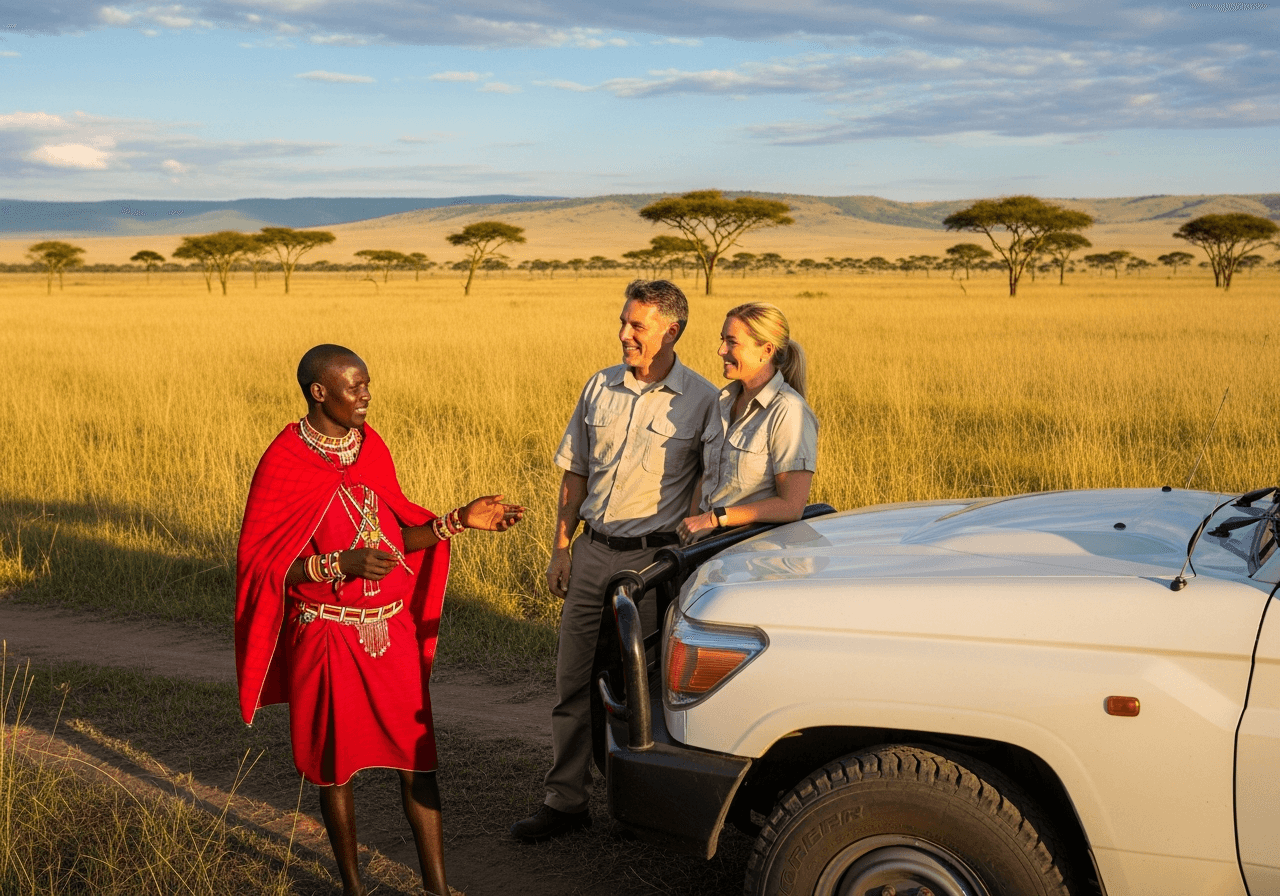
A good cultural visit is a guided conversation, not a performance dropped into the middle of your day. It usually begins with introductions, an explanation of who you are visiting, how fees are handled and what is appropriate to photograph. Your guide becomes translator, context-giver and quiet guardian of respectful behaviour.
The quality of the experience depends less on the activity itself and more on how it is arranged. A community-run visit, a lodge-arranged experience and a roadside stop can feel completely different.
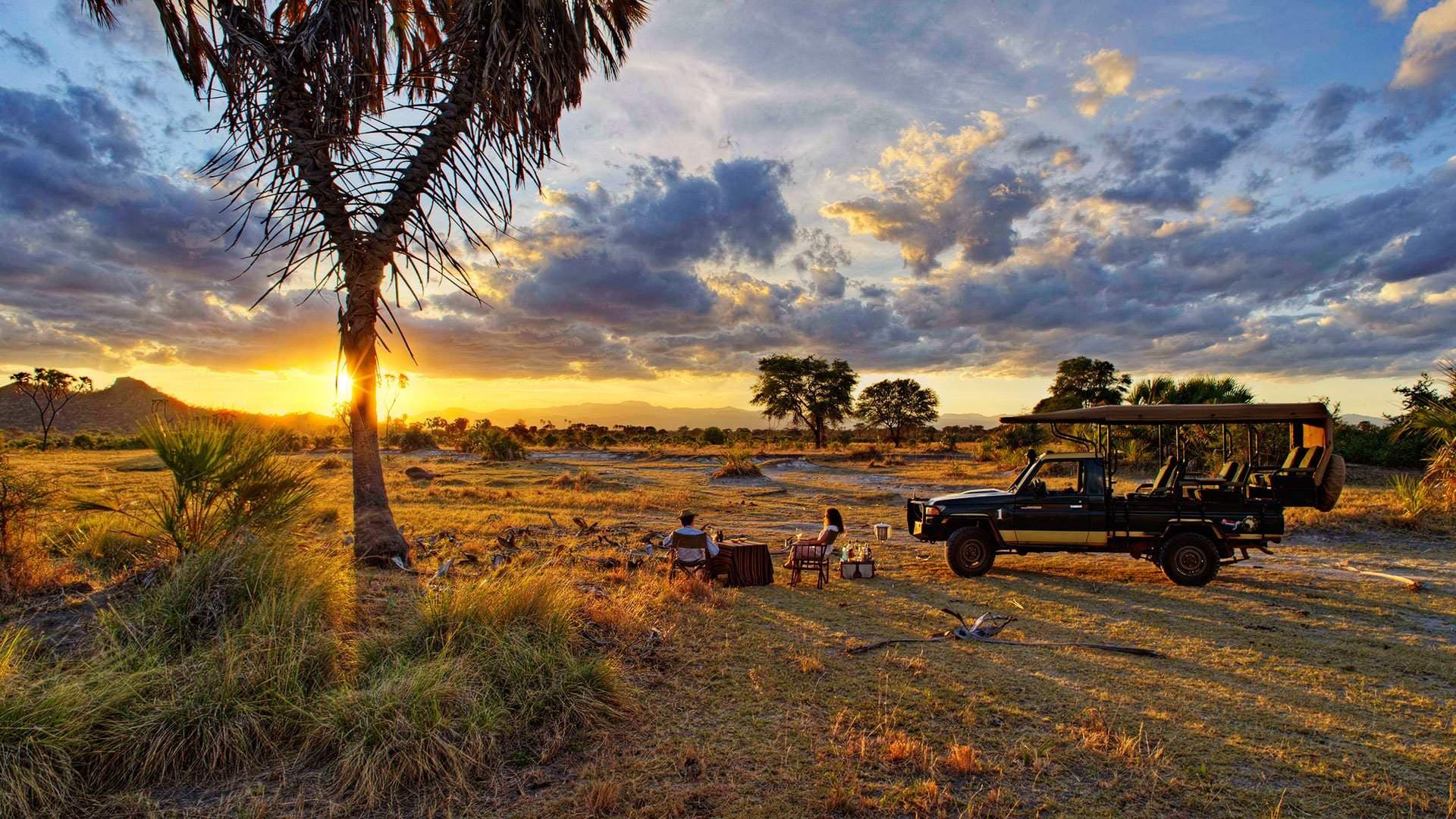
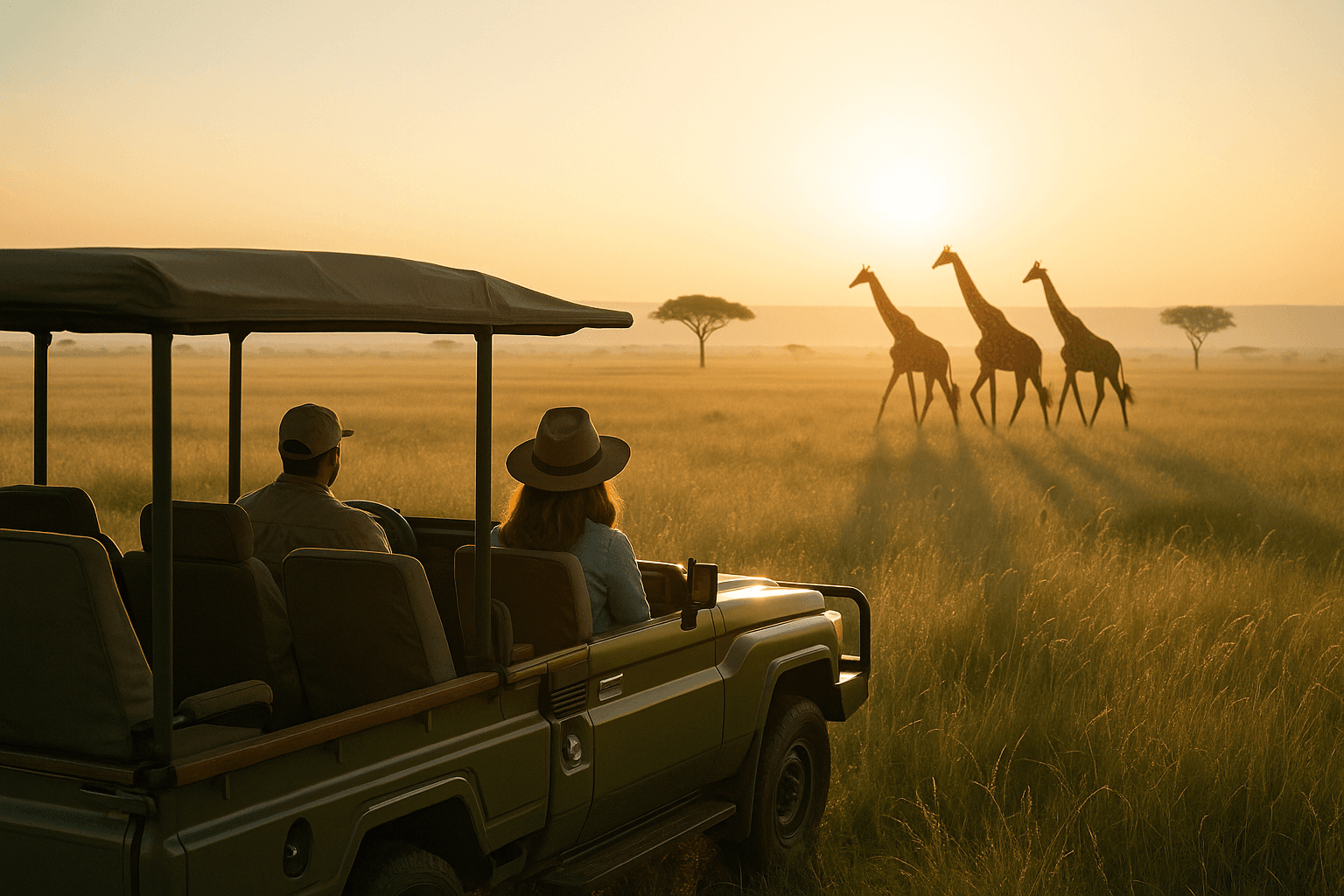
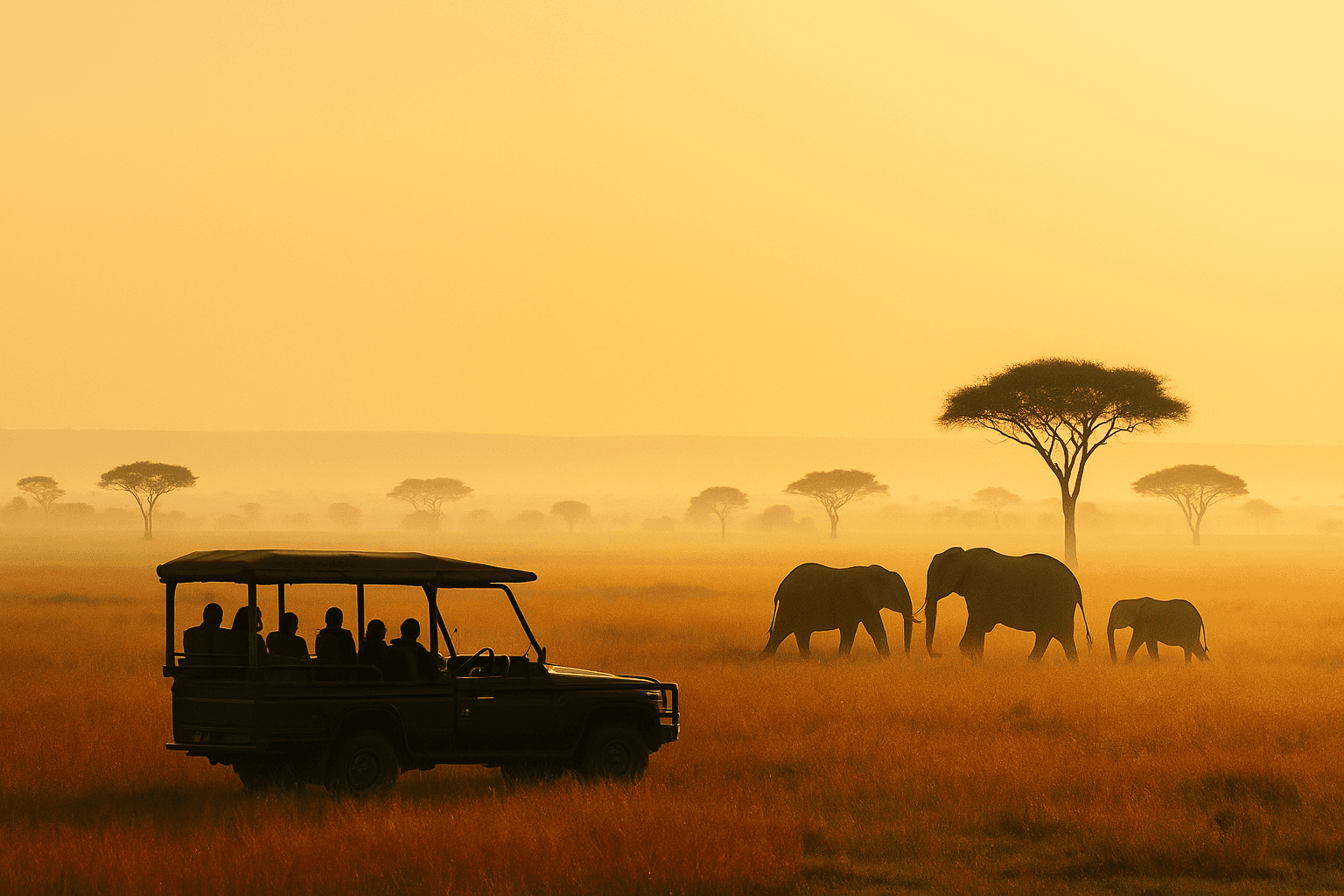
Culture also fits best into the natural rhythm of safari. You might leave before sunrise for a lion or elephant drive, return for breakfast, rest through the heat of the day, then spend an hour or two with a local host before the late-afternoon game drive. That rhythm keeps the encounter relaxed and avoids stealing time from the best wildlife hours.
“Our guides often say: the best village visit is the one where you stop counting minutes and start asking better questions.”
For first-time travellers, this matters. A safari can move quickly: airports, park gates, game drives, packed lunches and evening campfires. Thoughtful planning gives local culture enough room to breathe.
Kenya is the simplest first-time choice for meeting Maasai hosts because the country’s best-known safari areas sit close to Maasai land, community conservancies and long-established guiding networks. Kenya’s 2019 Population and Housing Census recorded 1,189,522 Maasai residents, and Maasai culture is visible across many of the southern rangelands that also support elephants, lions, cheetahs and wildebeest.
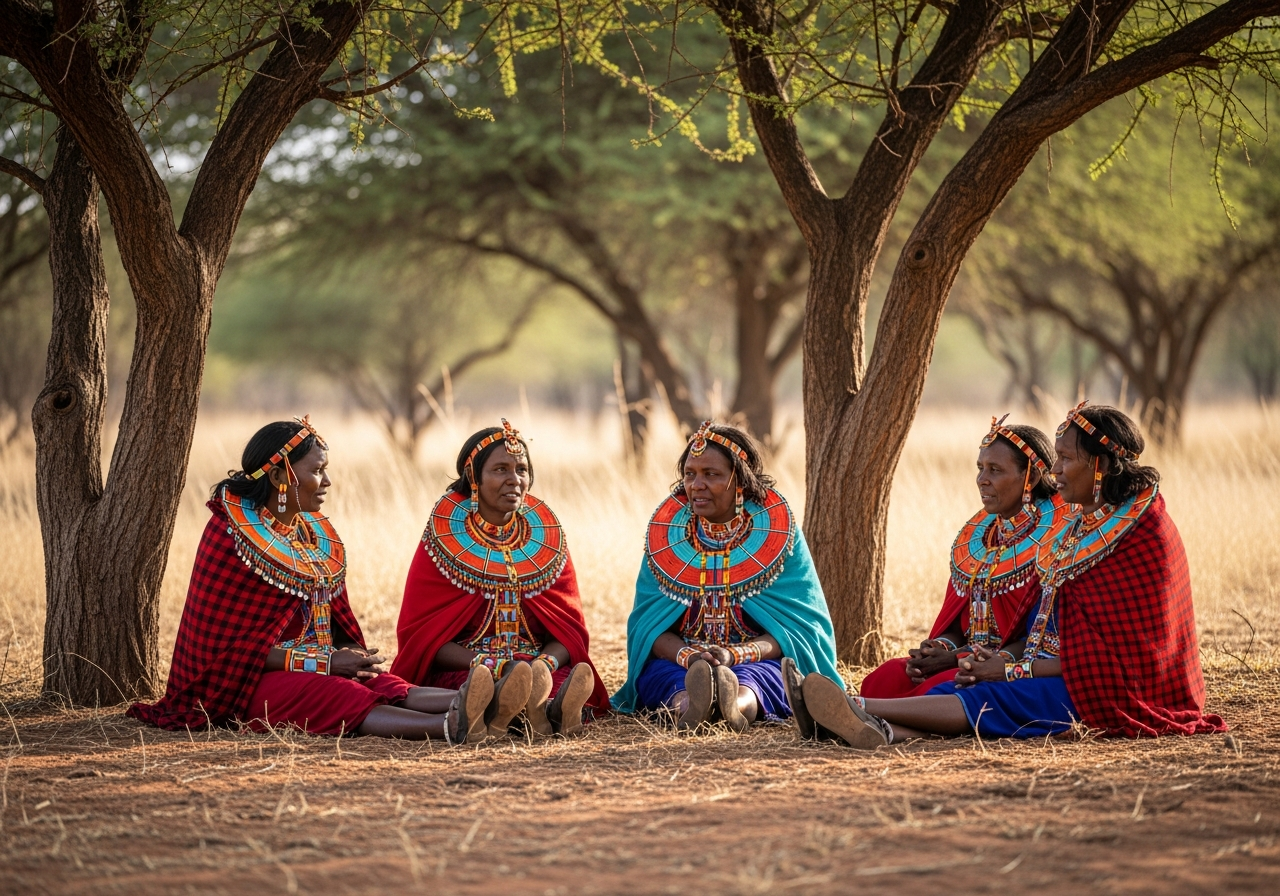
Best for a first Maasai encounter paired with lions, cheetahs, wildebeest plains and classic Mara game drives.
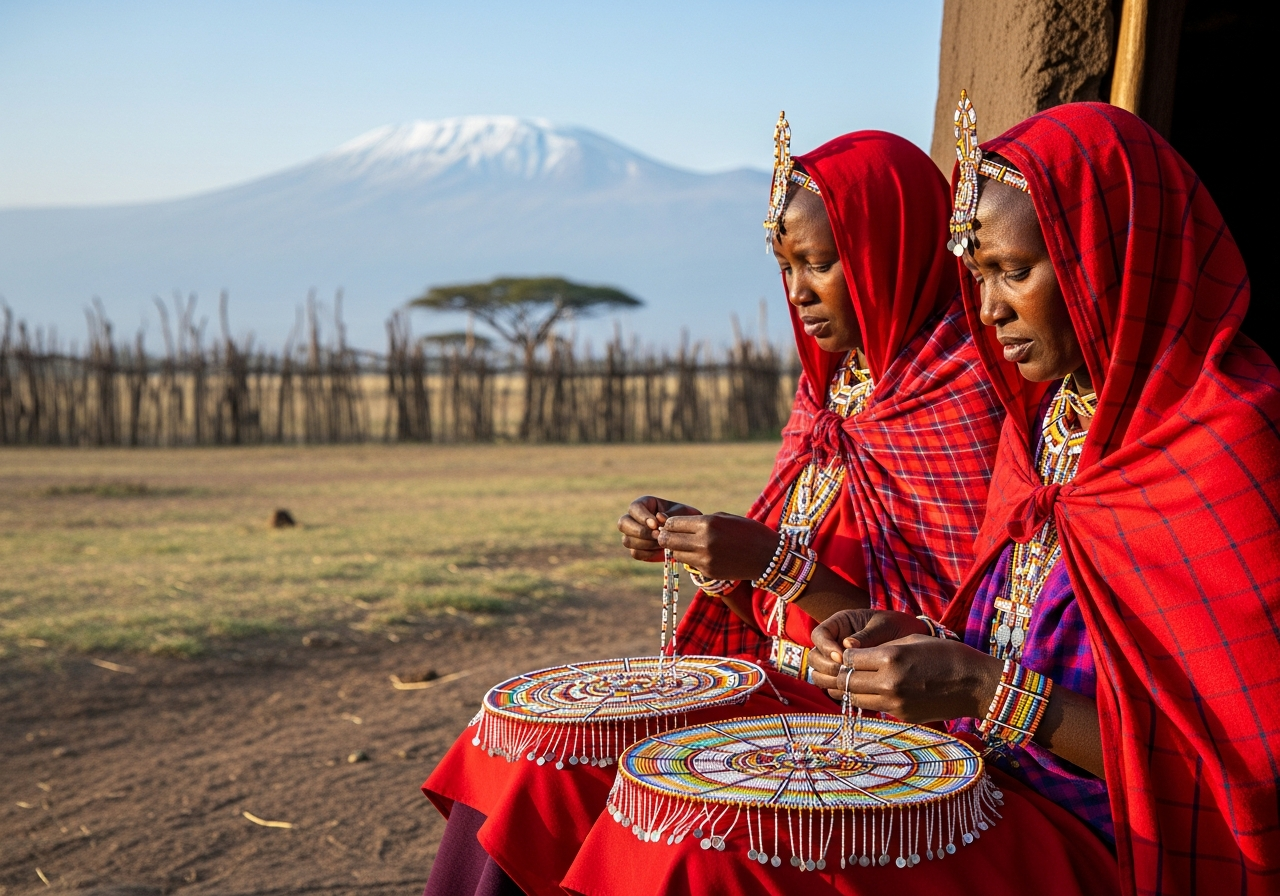
Strong for Maasai culture, elephant herds and Kilimanjaro views, especially from lodges near community conservancies.
Adds Samburu culture and northern wildlife such as reticulated giraffe, Grevy’s zebra and gerenuk.
A good arrival or departure stop for fairer souvenir shopping, beadwork cooperatives and context before the bush.

 KE
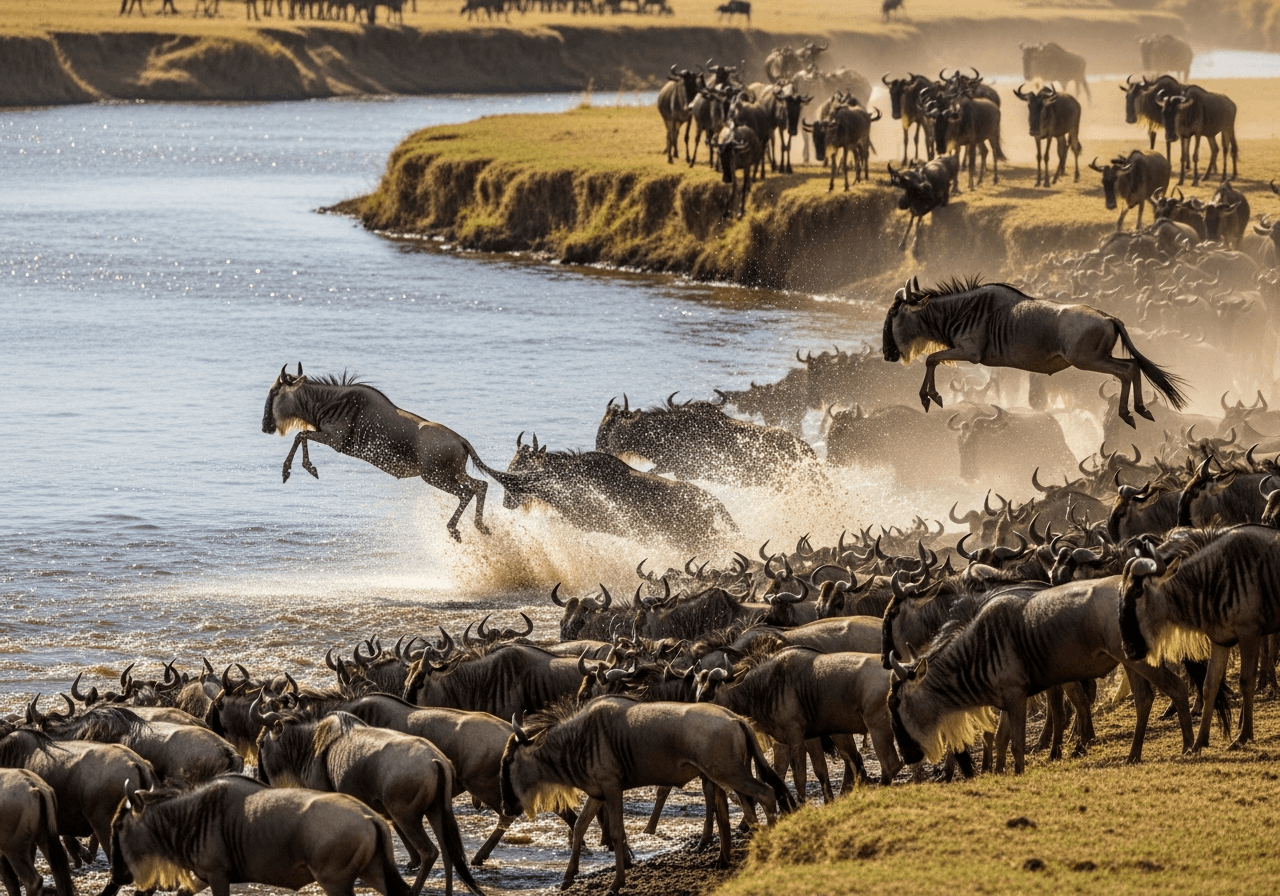
KEThe Masai Mara National Reserve in southwestern Kenya is a premier 1,510-square-kilometre wildlife sanctuary. Renowned for the annual Great Wildebeest Migration from July to October, it offers exceptional year-round Big Five viewing across open savannahs. The reserve is contiguous with Tanzania's Serengeti, forming a critical, biodiverse transboundary ecosystem.
For many travellers, Kenya safaris begin with the Mara. The Masai Mara National Reserve in Kenya covers about 1,510 km² of protected savannah. It is one of the strongest places in Africa for big cats, and the private conservancies around it add a more intimate layer: Maasai landowners, local guides, low-density camps, night drives in some conservancies and community-led projects.
This is why the masai mara national reserve in kenya remains the most searched cultural-wildlife pairing. Guests want lions and leopard, but they also want to understand whose land borders the reserve, how cattle and wildlife share space, and why conservancy fees matter. A well-planned Africa safari Kenya itinerary can include beadwork with women’s groups, a guided homestead visit, time with Maasai naturalists and a conversation about cattle, grazing, marriage customs, schooling and modern pastoral life.
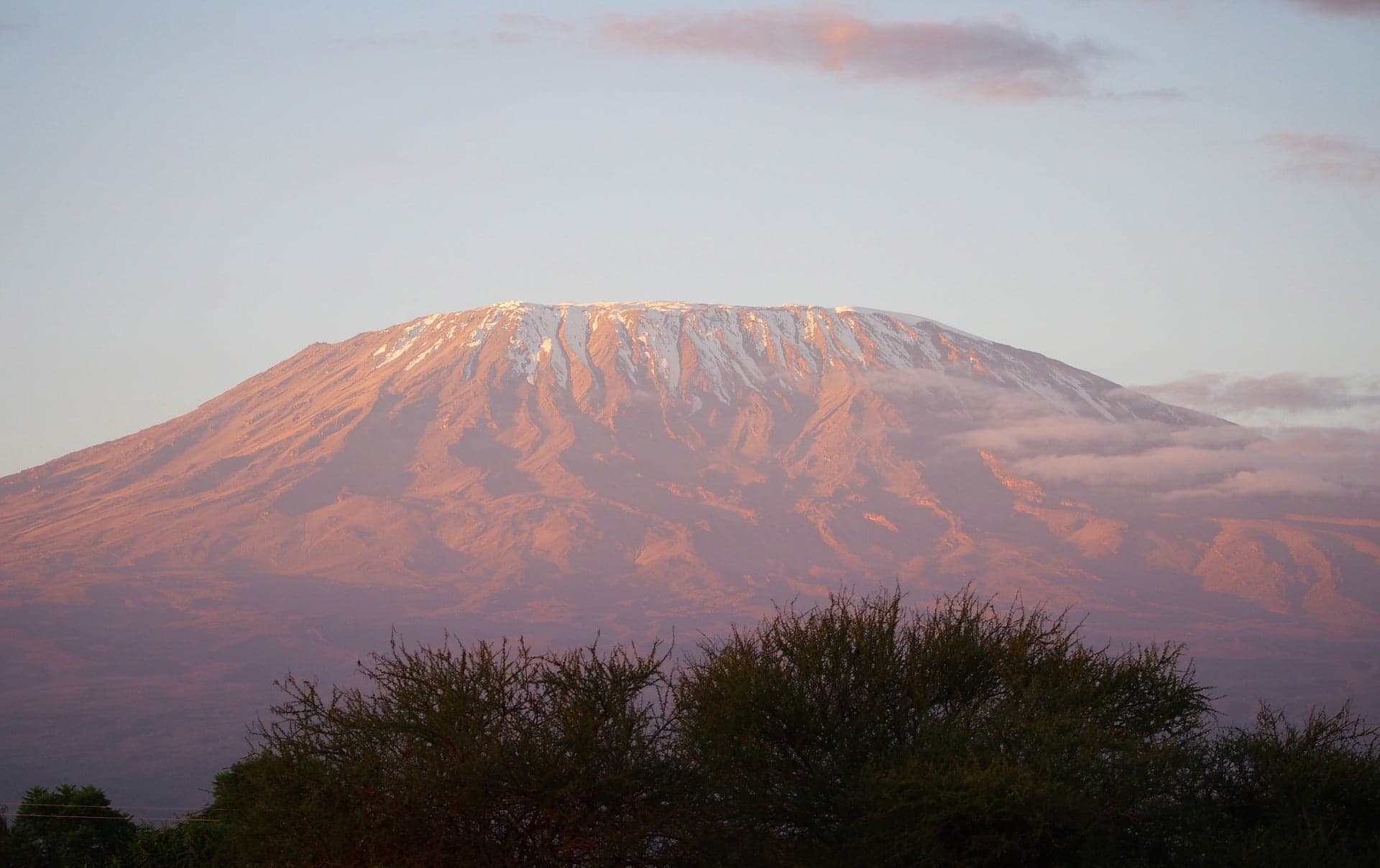
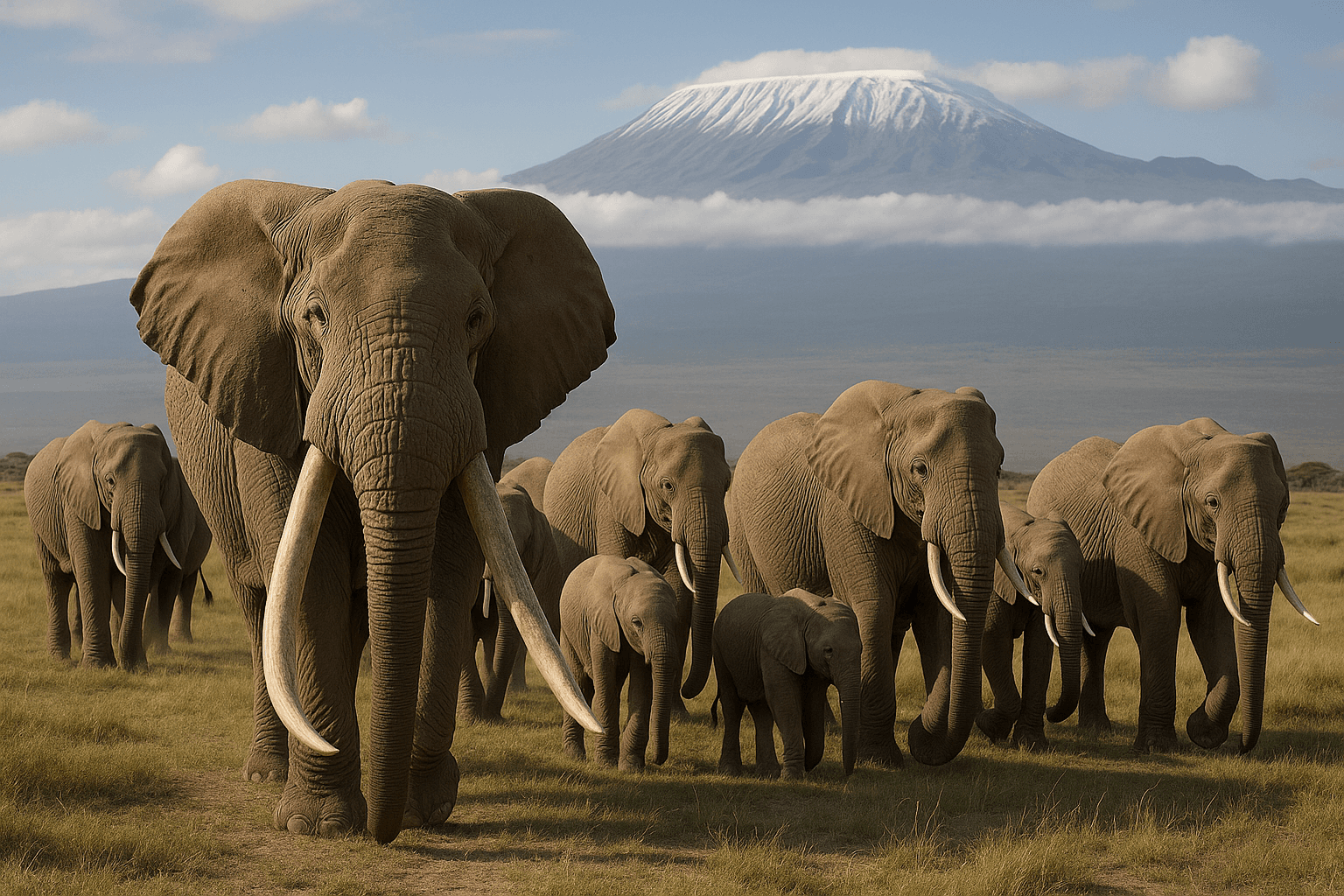
Amboseli is another superb cultural base. Amboseli National Park covers 392 km², with Maasai group ranches and conservancies around its unfenced ecosystem. The park is famous for large elephant herds under Mount Kilimanjaro, but the surrounding lands are just as important to the story. Wildlife moves beyond the park boundary, and local Maasai communities play a direct role in keeping corridors open.
Northern Kenya adds a different voice. In and around Samburu National Reserve, Samburu hosts share pastoral traditions closely related to the Maasai but distinct in language, dress, beadwork and local history. Samburu also brings specialist wildlife: Grevy’s zebra, reticulated giraffe, gerenuk, Beisa oryx and Somali ostrich. It is an excellent choice if you want culture and rare species without following the most obvious route.
A classic first-time kenya safari might combine the Mara, Amboseli and Samburu over nine to twelve days. With shorter time, we would usually choose two areas rather than rush through three. For example, a Mara and Amboseli route gives you cats, elephants, Maasai context and strong chances for a big 5 safari africa experience when paired with Lake Nakuru or Ol Pejeta.
Tanzania is one of the best east africa safari countries for travellers who want a longer cultural arc: Maasai pastoral life in the north, hunter-gatherer heritage near Lake Eyasi, farming traditions on Kilimanjaro’s lower slopes and Swahili culture on the coast. It works beautifully when you have ten days or more.
Pastoralist culture sits close to one of Africa’s densest wildlife areas, so visits must be arranged carefully and respectfully.
Hadzabe and Datoga experiences are usually best as a slower half-day from Karatu rather than a rushed transfer stop.
Chagga farming heritage and Swahili coastal culture add a different rhythm after northern Tanzania’s big-game areas.
 TZ
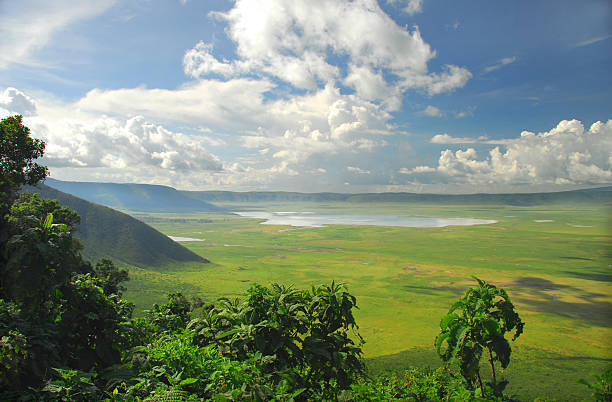
TZExplore the breathtaking Ngorongoro Crater, one of Africa's most extraordinary safari destinations and the world's largest intact volcanic caldera. Located in northern Tanzania, this UNESCO World Heritage Site offers incredible wildlife encounters, spectacular landscapes, and one of the highest concentrations of animals in Africa. Visitors can witness the Big Five, endangered black rhinos, large lion prides, elephants, and thousands of other animals within a stunning natural amphitheater, creating an unforgettable safari experience unlike anywhere else on Earth.
The northern circuit usually centres on Tarangire, Lake Manyara, the Serengeti and Ngorongoro. Serengeti National Park covers 14,763 km² in northern Tanzania, and its open plains form part of the immense wildebeest migration system. Nearby, Ngorongoro Conservation Area covers 8,292 km² and is a multiple-use landscape where Maasai pastoralists live alongside wildlife.
Many guests visit the Ngorongoro Crater for black rhino, lions and dramatic scenery, then spend time in the highlands learning how Maasai families use cattle, seasonal grazing and social networks. Because Ngorongoro is a lived-in conservation landscape rather than a conventional national park, it raises important questions about land, access, tourism and identity. Good guides help guests approach that complexity with care.
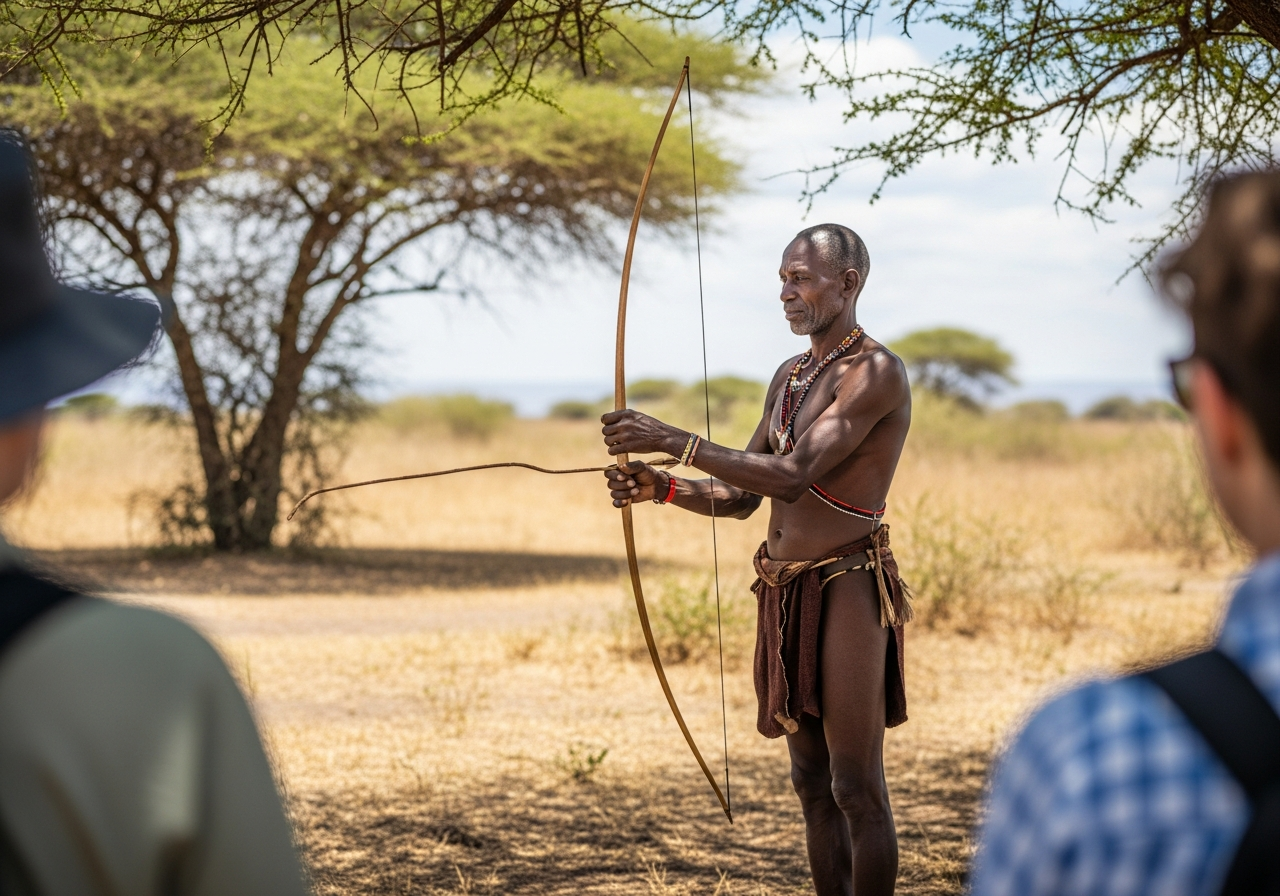
Lake Eyasi adds a very different cultural experience. This is the key area for meeting Hadzabe and Datoga hosts. The Hadzabe are often introduced through early-morning walks that explain foraging, tracking, honey, bow-making and the use of local plants. The Datoga are known for metalwork, pastoral life and skilled craft traditions. These visits should be arranged respectfully, with clear fees and realistic expectations: you are not stepping into a museum, but into living communities adapting to modern pressures.
The Kilimanjaro foothills can add Chagga farming heritage, coffee growing, banana groves, irrigation channels and village walks around places such as Marangu or Materuni. At the end of the safari, Zanzibar brings a coastal chapter: Swahili architecture, spice farms, dhow history, Islamic heritage, carved doors and the trading story of Stone Town. For travellers who want culture beyond the safari vehicle, Tanzania offers remarkable range.
Indicative costs vary widely. A private northern Tanzania safari with quality camps often starts from around US$550–US$850 pp per day, depending on season, camp level and routing. Community visits may be included by a lodge or arranged separately from about US$30–US$120 pp, with Lake Eyasi experiences usually needing careful timing and an early start.
Uganda and Rwanda are not usually the first answer for a classic savannah-and-Maasai journey, but they are deeply rewarding for travellers drawn to forests, gorillas, chimpanzees and communities living beside protected mountain habitats. Their cultural encounters are often quieter, more emotional and more closely linked to conservation history.
 RW
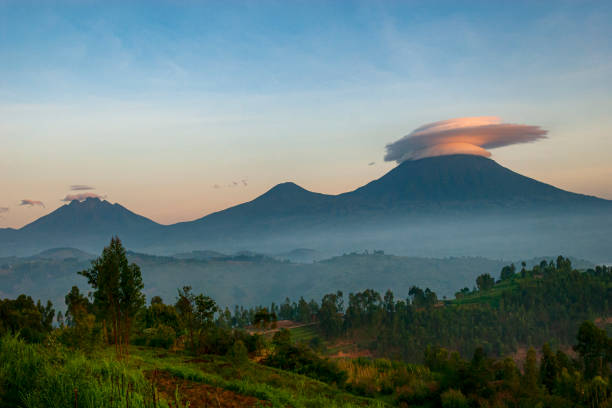
RWPremium gorilla trekking experiences in Rwanda's spectacular volcanic landscape, home to Dian Fossey's famous research.
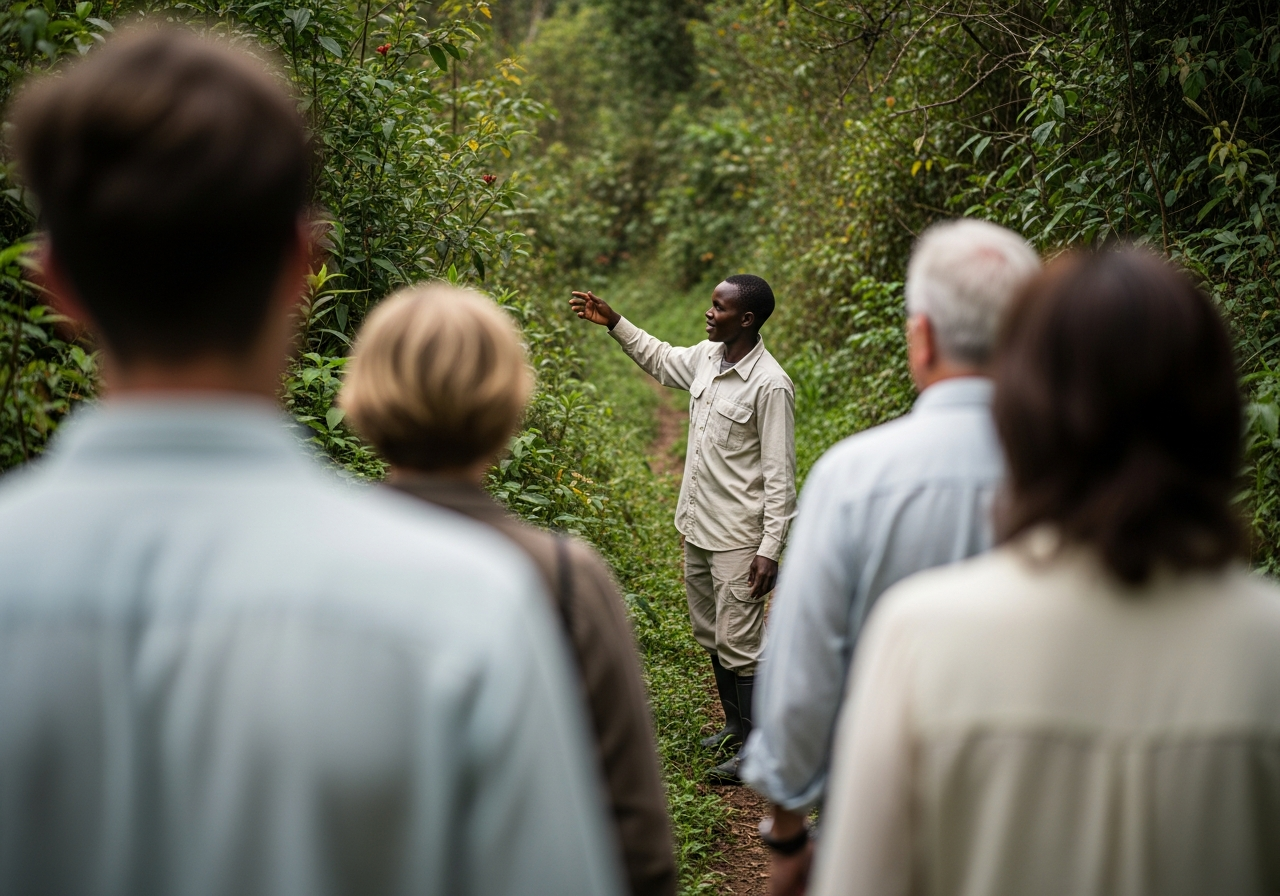
In Uganda, Batwa-led experiences near Bwindi Impenetrable Forest and Mgahinga help explain forest displacement, resilience and the challenge of maintaining identity after protected areas changed access to ancestral land. A good Batwa experience is not just a dance or demonstration. It may include forest-edge walking, storytelling, traditional plant knowledge, fire-making, music and direct discussion of how tourism income is shared.
Bwindi is best known for mountain gorilla trekking, but the human story around the forest is essential to understanding the place. Guests often arrive focused on gorillas and leave with a much wider view of conservation: who benefits, who pays the costs and how local communities are involved in tourism.
Rwanda’s Volcanoes National Park pairs gorilla trekking with cultural centres, village visits and craft cooperatives near Musanze. Rwanda is polished and efficient, with short driving distances and high-quality lodges, so it works well for travellers adding three to five nights after a Kenya or Tanzania safari. Gorilla permits are a major part of the budget, and Rwanda is generally the premium option, while Uganda often gives a longer, more adventurous feel.
These countries work best as cultural extensions to primate safaris. Choose them if you are interested in gorillas, chimpanzees, forest ecology and the relationship between communities and conservation. If your main dream is an africa safari with big cats, elephants and Maasai encounters, begin in Kenya or Tanzania and add Uganda or Rwanda afterwards.
Choosing the best east africa safari countries for culture starts with three simple questions: what wildlife matters most, how much time do you have, and what kind of cultural encounter feels right to you? First-time travellers sometimes try to include every famous place in one trip. A better safari is usually slower, with fewer transfers and more time in each landscape.
Best fit for first-time travellers
Choose Kenya or Tanzania for a first Big Five and Maasai-focused safari. Choose Uganda or Rwanda when gorillas, chimpanzees and forest cultures matter most. Africa Kenya safaris and Tanzania combinations make sense when you have at least ten to fourteen days and want both the Mara and the Serengeti, or the Mara and Ngorongoro, without rushing border crossings and flights.
Budget also matters. Kenya often gives the broadest range, from excellent small camps to top-end conservancy lodges. Tanzania’s park fees and distances can raise costs, especially in peak season. Rwanda’s gorilla permits and premium lodges make it the highest-cost extension, while Uganda can offer more varied price points and a more adventurous road journey.
A thoughtful Maasai, Samburu or village visit usually begins before you arrive. Your guide explains who you are meeting, what the community receives and how to behave. On arrival, there are greetings and introductions, often led by a village elder, host family, women’s group representative or local guide. If translation is needed, your safari guide will help both sides speak naturally.
What you see depends on the host and region, but a typical visit may include:
Good questions make the encounter warmer. Instead of asking only what something costs or whether people still live “traditionally”, ask about daily choices and change. For example:
Most cultural visits last one to two hours. Less than 45 minutes can feel rushed; more than two hours may be tiring unless it includes a walk, meal, workshop or specific project visit. The sweet spot is usually enough time for introductions, questions and unhurried conversation before returning to camp for lunch or an evening game drive.
Respectful etiquette is simple: ask, listen, pay transparently and remember that you are a guest. The best cultural encounters are based on consent, not assumption. Your guide will help, but your own behaviour sets the tone.
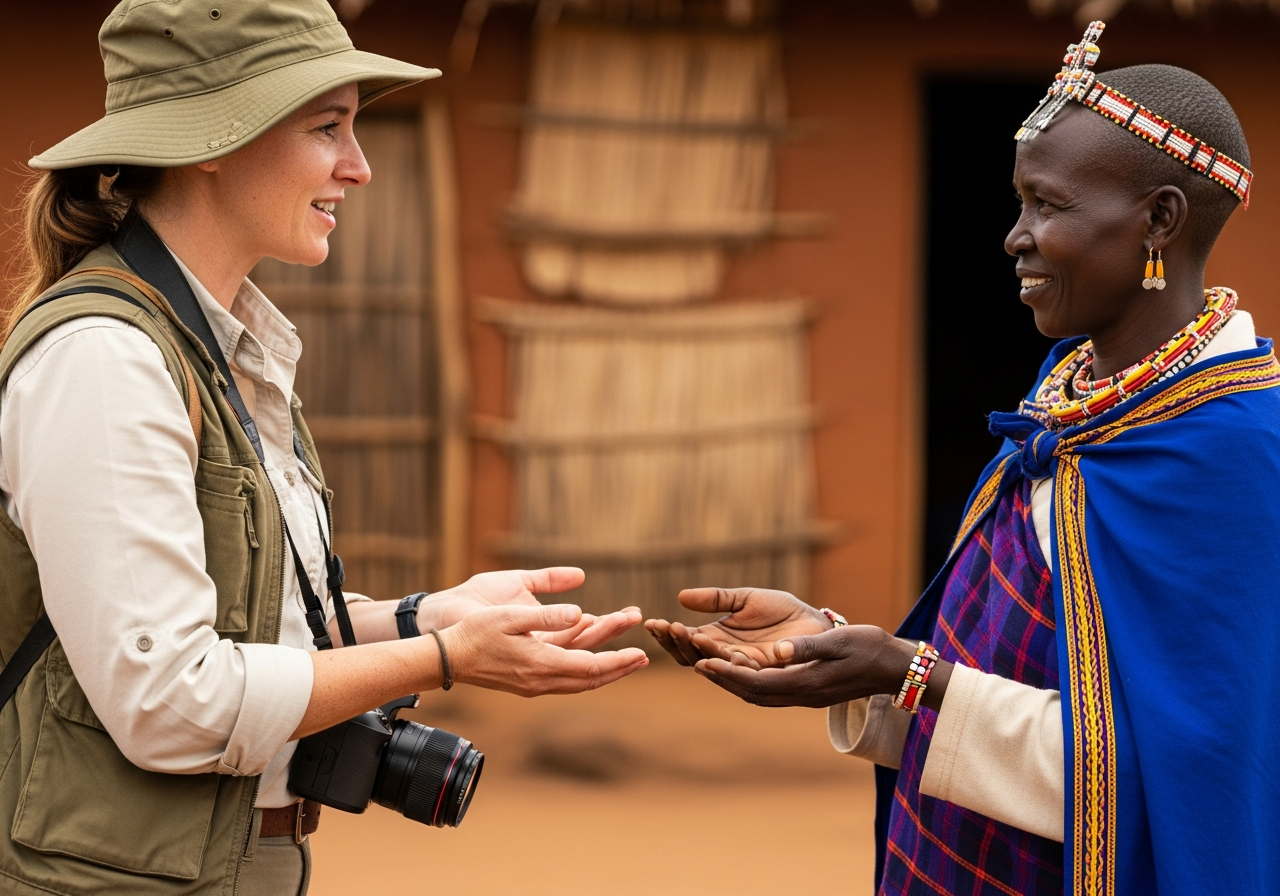
Pause, smile and let your guide translate. If someone says no, accept it immediately.
Beadwork, baskets and small carvings are often a better form of support than handing out cash.
Avoid sweets, pens or money. If you want to help a school, we can guide you to the right channel.
Let the host decide where you walk, what you see and which areas are private.
Some of the best moments happen after the photos, when people realise you are genuinely listening.
It is ethical to visit Maasai, Samburu, Hadzabe, Datoga or Batwa hosts when the visit is invited, fairly paid and properly explained. It becomes uncomfortable when travellers arrive unannounced, treat people as scenery or bargain aggressively over tiny amounts after paying thousands of dollars for the safari itself.
Kenya and Tanzania are entering the June–October dry-season safari window after the March–May long rains. For wildlife, this is excellent timing: grass is drying, water sources become more important, and visibility improves. Roads are usually firmer than during the long rains, although local conditions vary by conservancy, park and altitude.
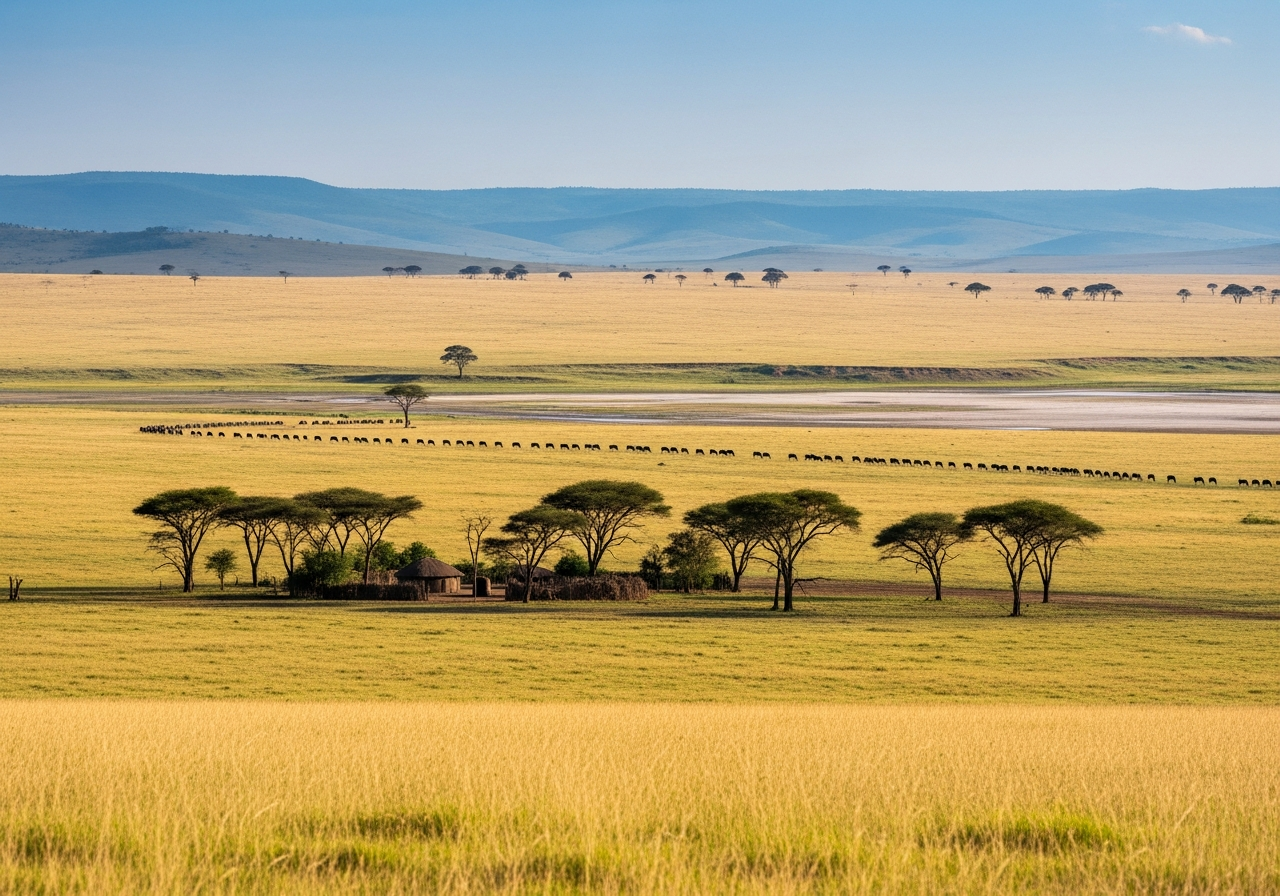
The long rains have usually eased, tracks are drying and wildlife visibility is improving. Cultural visits fit well between game drives.
Expect stronger wildlife concentrations and busier lodges, especially in the Mara and Serengeti. Book community visits through your guide in advance.
Showers are usually brief, landscapes turn greener and cultural encounters can feel less rushed outside the busiest migration weeks.
Good birding, warm weather and fewer vehicles make this a lovely time for slower conversations, especially in Kenya and northern Tanzania.
Some remote roads are harder, so we plan carefully. If you travel then, choose good access, flexible pacing and fewer one-night stops.
For cultural encounters, the dry season has both strengths and drawbacks. It is easier to move between lodges and villages, but popular areas such as the Mara, Serengeti and Ngorongoro are busier. In July to October, it is especially important to arrange visits in advance so they do not feel like an afterthought squeezed between crowded game drives.
November to March can be a lovely period for travellers who value slower time. Landscapes are greener, dust is lower and some hosts have more breathing room outside the busiest months. April and May are possible for experienced or flexible travellers, but the long rains can affect tracks, light aircraft schedules and rural access, especially around black-cotton soils.
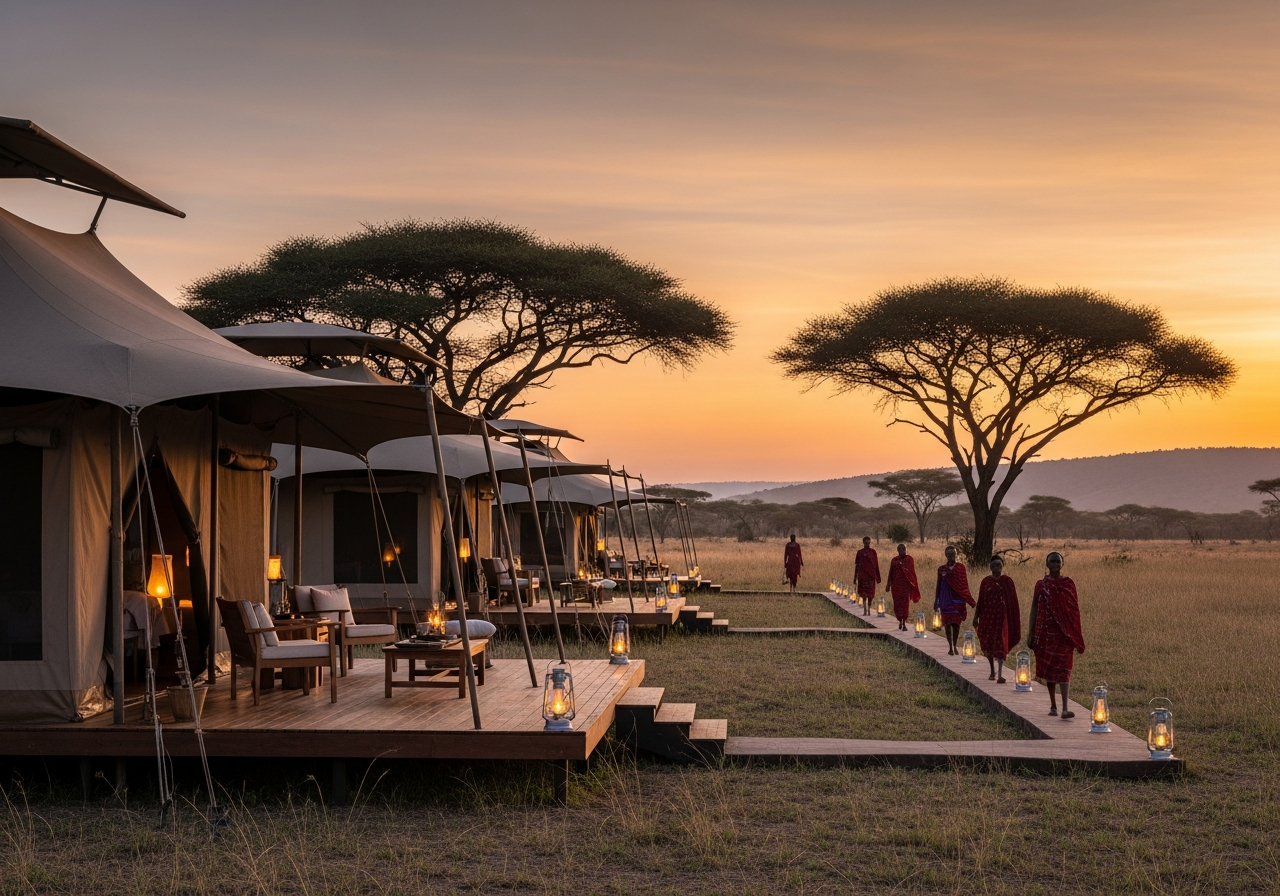
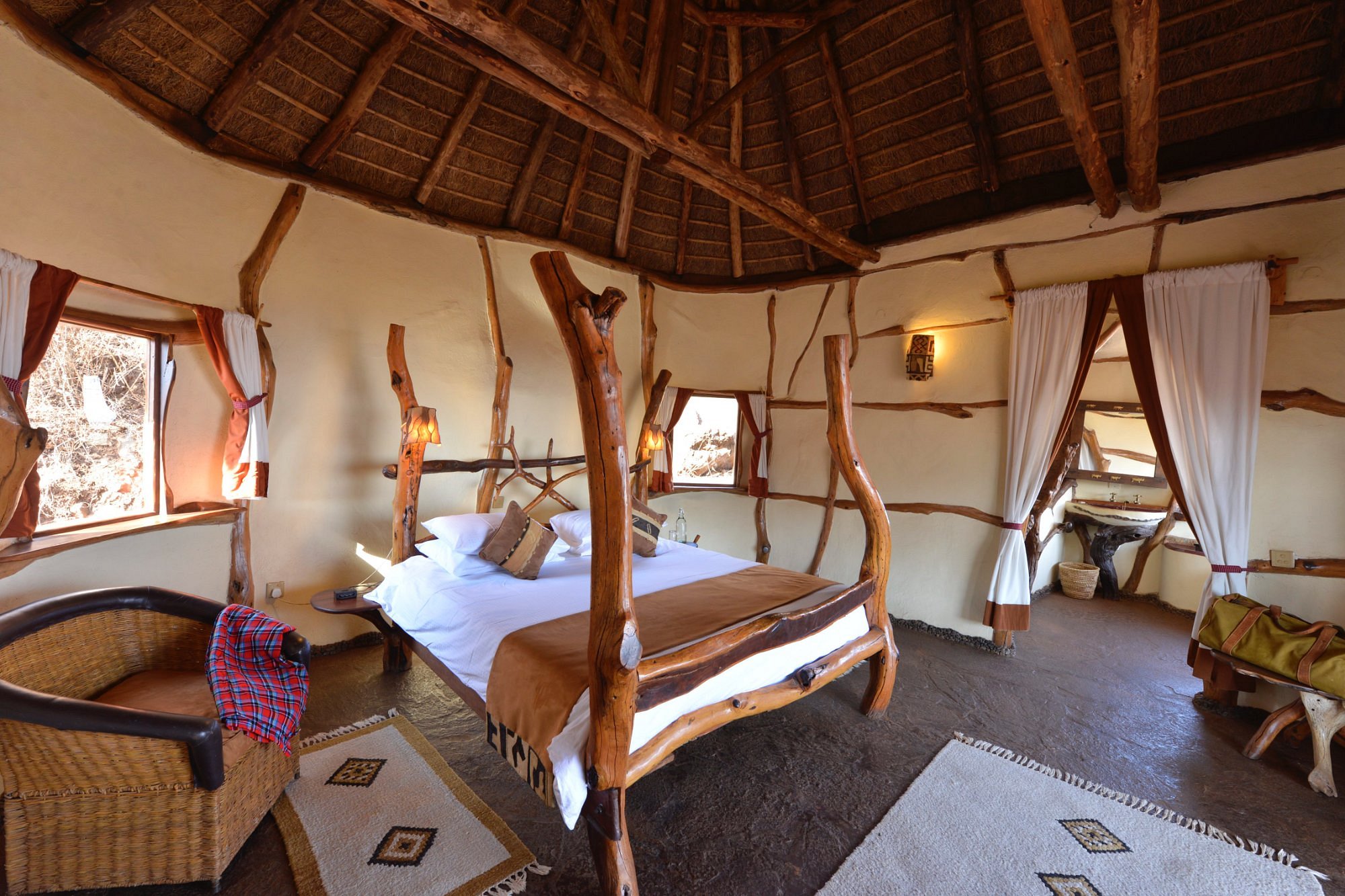
Your lodge or camp has a major effect on the quality of your cultural experience. Conservancy camps often create more thoughtful community links than one-off stops because their business model depends on relationships with local landowners, guides, staff and neighbouring schools or clinics.
 KE
KEEco-Luxury Living on a Private Conservancy Under the Shadow of Kilimanjaro
Amboseli National Park
Eco-Friendly
In the Mara, camps in private conservancies can arrange Maasai-led walks, homestead visits, school or women’s group visits and conversations about grazing and wildlife corridors. Around Amboseli, lodges and conservancy camps may focus on elephants, Maasai group ranches and the challenge of keeping migration routes open between farms, settlements and protected land. In Samburu, the best camps introduce Samburu culture alongside specialist northern wildlife rather than treating the visit as a side show.
Near Ngorongoro, experiences vary. Some lodges arrange short Maasai boma visits; others connect guests with longer walks, markets or highland communities. Around Lake Eyasi, the lodge choice affects timing because Hadzabe visits usually begin very early, before the day becomes hot. In Uganda and Rwanda, the strongest Batwa experiences are often connected to recognised community organisations or conservation-linked initiatives near gorilla trekking bases.
Before booking, ask these questions:
Premium does not always mean more authentic, but good camps usually have the time, trust and local knowledge to make an encounter feel human. That is what we look for when choosing lodges for culture-rich safaris.
The best routes balance famous wildlife with enough local time to make culture meaningful. A big 5 safari africa wish-list is completely compatible with community encounters, but not if every day is spent changing lodges. We prefer two or three-night stays wherever possible, with cultural visits placed during the quieter middle of the day or on a softer travel day.
Start with the Mara, Amboseli, Serengeti, Ngorongoro, Bwindi or Volcanoes depending on whether you want big cats, elephants, migration, crater wildlife or gorillas.
A single unhurried visit is better than three rushed stops. We match the visit to your route, lodge and interests.
Early morning and late afternoon are best for animals, so cultural visits often work well late morning, after lunch or on transfer days.
If Big Five sightings are a priority, we design the route so culture enriches the safari without reducing your best wildlife-viewing time.
Before you arrive, we clarify how payment works, who receives it and whether photography is welcome.
The best encounters often happen when there is time for travellers and hosts to ask each other simple, honest questions.
 KE
KEKenya · Nairobi City
A seven-day Kenya route works well for first-timers because it keeps logistics manageable while still offering variety. Amboseli gives elephants and Maasai context; Lake Naivasha breaks the drive with boat rides and walking options; Lake Nakuru improves rhino chances; the Mara delivers the classic predator-rich finale.
A Kenya-Tanzania route is better when you want a richer cultural spread. You can start with an africa safari kenya experience in the Mara, cross or fly towards the Serengeti, continue to Ngorongoro, then add Lake Eyasi for Hadzabe and Datoga encounters. This journey needs more days and a higher budget, but it is one of East Africa’s great cultural-wildlife combinations.
Uganda and Rwanda extensions work best after the savannah. By then, you have seen open plains and big mammals, so the shift to misty forests, steep trails and Batwa context feels powerful rather than rushed. It also gives the journey a strong emotional finish.
Imara Africa Safaris is based in Nairobi, so our planning begins close to the people, parks and routes we recommend. We match guests with the right hosts, guides and lodges according to interests, comfort level, season and pace. A family with teenagers, a honeymoon couple and a retired couple interested in anthropology should not be given the same cultural visit.
Tell us whether you are drawn to the Maasai, Samburu, Hadzabe, Datoga, Batwa or Swahili coast, and our Nairobi team will shape the right wildlife-and-culture route.
We avoid rushed roadside performances where the main goal is a quick photograph. Instead, we prefer transparent community arrangements, lodges with genuine local links and guides who can explain context before, during and after the visit. That includes discussing fees, photography, dress, timing and what kind of questions are appropriate.
Our Nairobi team designs each africa safari around wildlife seasons as well as cultural interests. In late June to October, we plan carefully around peak wildlife viewing and busier park circuits. In November to March, we may suggest greener, quieter routes with more relaxed time for walking, conversation and community projects. In April and May, we build in flexibility for rain, road conditions and camp openings.
Contact imara africa safaris when you want a private, culture-rich itinerary rather than a generic package. Tell us what matters most: Maasai culture, Samburu country, Lake Eyasi, Batwa experiences, gorillas, the Big Five, comfort level, photography, walking, children or slower travel. We will shape the route around that, with honest advice on what fits and what should be saved for another journey.
The best east africa safari countries for culture are not only about where you go. They are about how you arrive, who guides you, who benefits and whether you leave with a fuller understanding of the land beyond the wildlife sightings.
Key facts at a glance
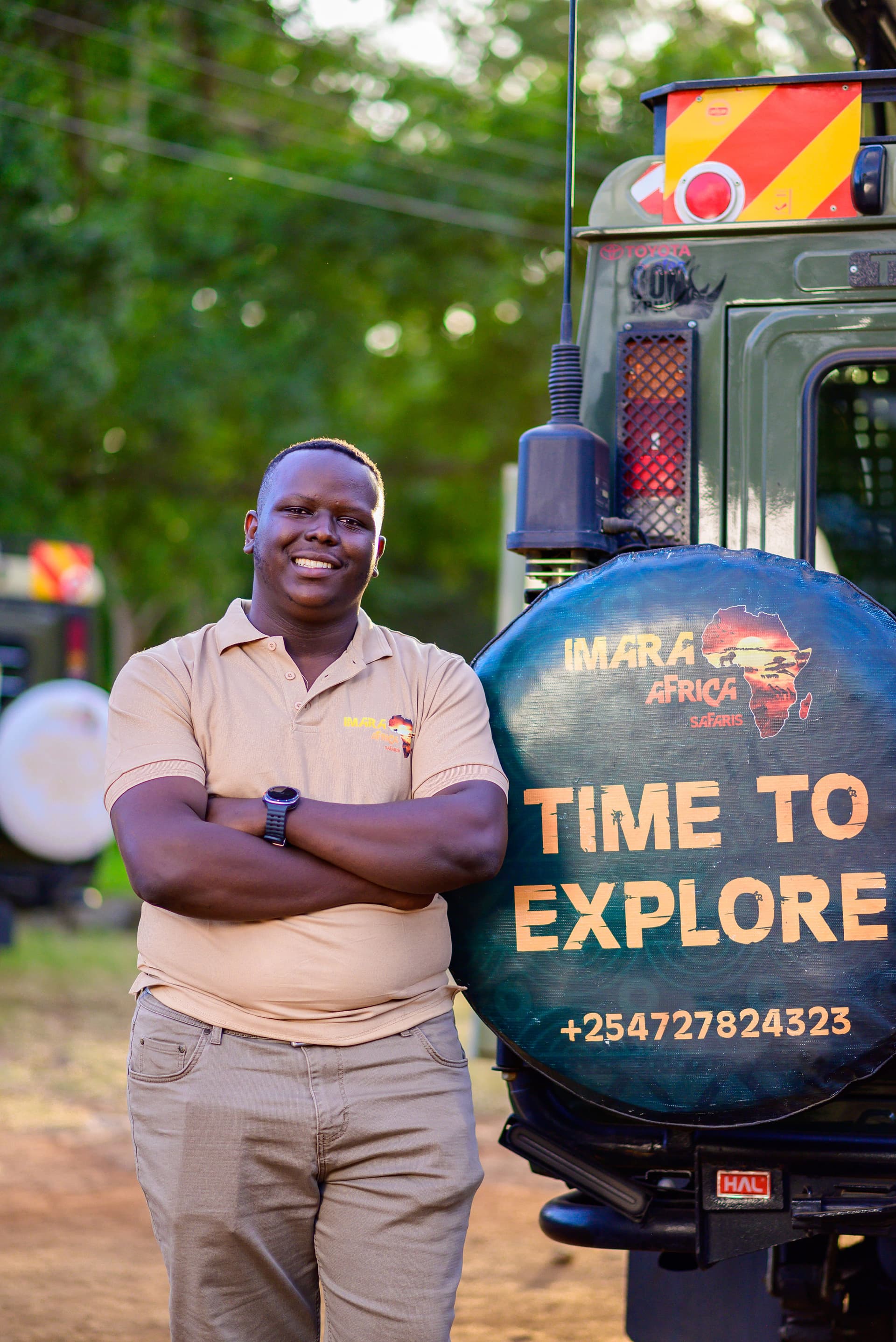
Lewis Munuhe
Founder & Director
<p>Lewis Munuhe is the Director and Owner of Imara Africa Safaris, a trusted safari company dedicated to creating tailor-made African safari experiences across Kenya, Tanzania, Uganda, and Rwanda. With a strong passion for African travel, wildlife, culture, and conservation, Lewis leads the company’s vision of delivering personalized, seamless, and unforgettable safari journeys for travelers from around the world.</p><p>Through Imara Africa Safaris, Lewis helps guests discover East Africa’s most iconic destinations, from the Masai Mara and Serengeti to Uganda and Rwanda’s gorilla trekking regions. His approach focuses on understanding each traveler’s interests, comfort level, budget, and expectations, then transforming those details into carefully curated safari itineraries that feel personal, meaningful, and well-planned.</p><p>As Director and Owner, Lewis is committed to maintaining high standards in safari planning, guest care, destination expertise, and responsible tourism. Whether arranging a luxury wildlife safari, honeymoon escape, family adventure, cultural journey, gorilla trekking safari, or multi-country East African itinerary, he ensures every experience reflects the quality, authenticity, and attention to detail that define Imara Africa Safaris.</p><p>Under his leadership, Imara Africa Safaris continues to help travelers experience the beauty of Africa through expertly planned safaris that celebrate wildlife, landscapes, local cultures, conservation, and unforgettable adventure.</p>
Lewis Munuhe
Founder & Director
<p>Lewis Munuhe is the Director and Owner of Imara Africa Safaris, a trusted safari company dedicated to creating tailor-made African safari experiences across Kenya, Tanzania, Uganda, and Rwanda. With a strong passion for African travel, wildlife, culture, and conservation, Lewis leads the company’s vision of delivering personalized, seamless, and unforgettable safari journeys for travelers from around the world.</p><p>Through Imara Africa Safaris, Lewis helps guests discover East Africa’s most iconic destinations, from the Masai Mara and Serengeti to Uganda and Rwanda’s gorilla trekking regions. His approach focuses on understanding each traveler’s interests, comfort level, budget, and expectations, then transforming those details into carefully curated safari itineraries that feel personal, meaningful, and well-planned.</p><p>As Director and Owner, Lewis is committed to maintaining high standards in safari planning, guest care, destination expertise, and responsible tourism. Whether arranging a luxury wildlife safari, honeymoon escape, family adventure, cultural journey, gorilla trekking safari, or multi-country East African itinerary, he ensures every experience reflects the quality, authenticity, and attention to detail that define Imara Africa Safaris.</p><p>Under his leadership, Imara Africa Safaris continues to help travelers experience the beauty of Africa through expertly planned safaris that celebrate wildlife, landscapes, local cultures, conservation, and unforgettable adventure.</p>
Lewis Munuhe
Founder & Director
<p>Lewis Munuhe is the Director and Owner of Imara Africa Safaris, a trusted safari company dedicated to creating tailor-made African safari experiences across Kenya, Tanzania, Uganda, and Rwanda. With a strong passion for African travel, wildlife, culture, and conservation, Lewis leads the company’s vision of delivering personalized, seamless, and unforgettable safari journeys for travelers from around the world.</p><p>Through Imara Africa Safaris, Lewis helps guests discover East Africa’s most iconic destinations, from the Masai Mara and Serengeti to Uganda and Rwanda’s gorilla trekking regions. His approach focuses on understanding each traveler’s interests, comfort level, budget, and expectations, then transforming those details into carefully curated safari itineraries that feel personal, meaningful, and well-planned.</p><p>As Director and Owner, Lewis is committed to maintaining high standards in safari planning, guest care, destination expertise, and responsible tourism. Whether arranging a luxury wildlife safari, honeymoon escape, family adventure, cultural journey, gorilla trekking safari, or multi-country East African itinerary, he ensures every experience reflects the quality, authenticity, and attention to detail that define Imara Africa Safaris.</p><p>Under his leadership, Imara Africa Safaris continues to help travelers experience the beauty of Africa through expertly planned safaris that celebrate wildlife, landscapes, local cultures, conservation, and unforgettable adventure.</p>
Our trips
 7d
7dStories, sightings & itineraries from the field.
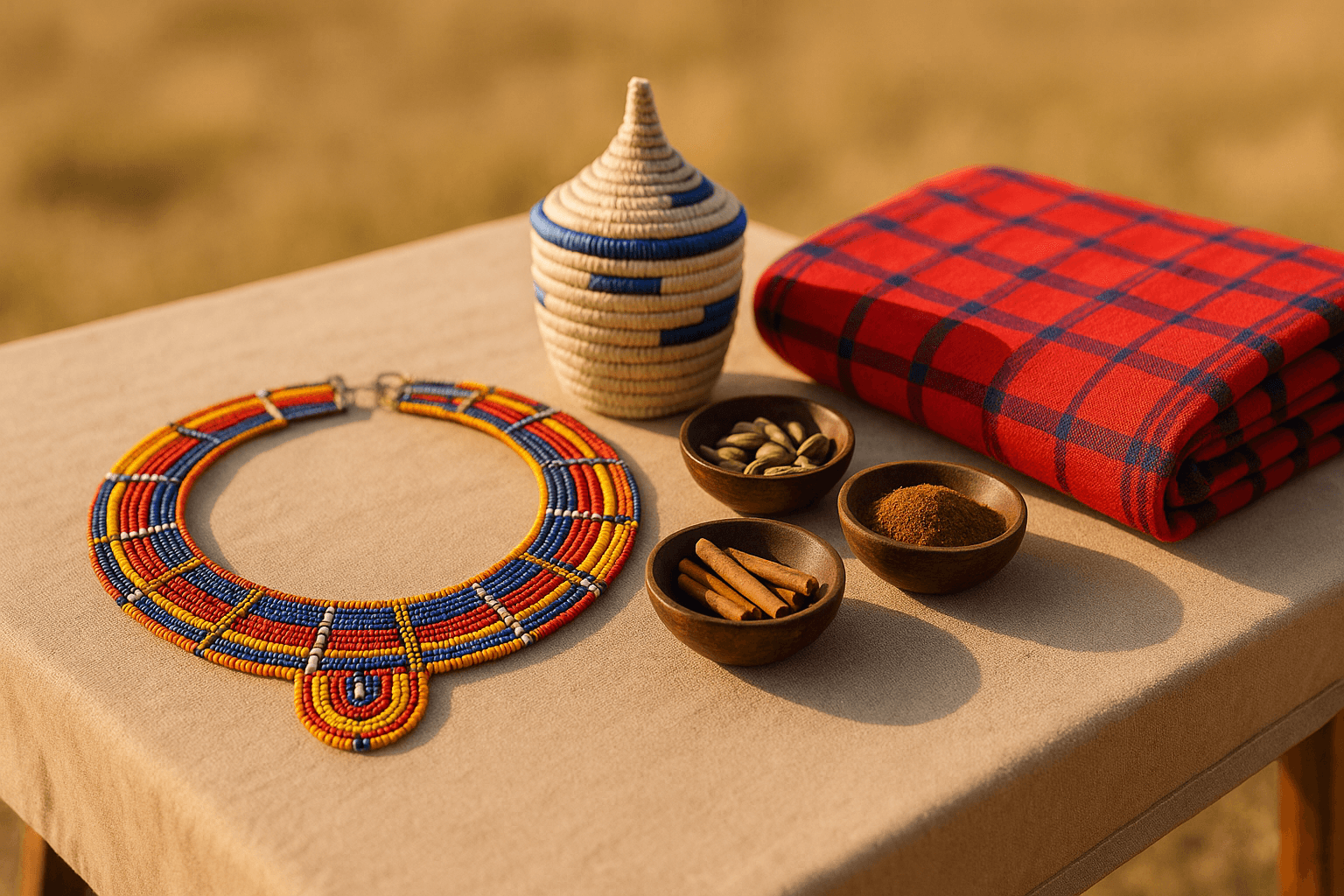 Safari PlanningAfrican safari souvenirs: What to Buy in East AfricaBy Lewis Munuhe·21m read·15 views
14°C
few clouds
Feels like 14° · 94% humidity
🦁Right now in the bush: Quiet hours — a good time for lodge rest before dawn.


Comments
Loading…