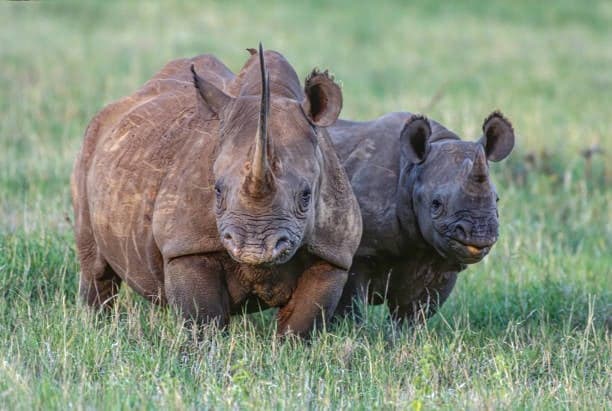
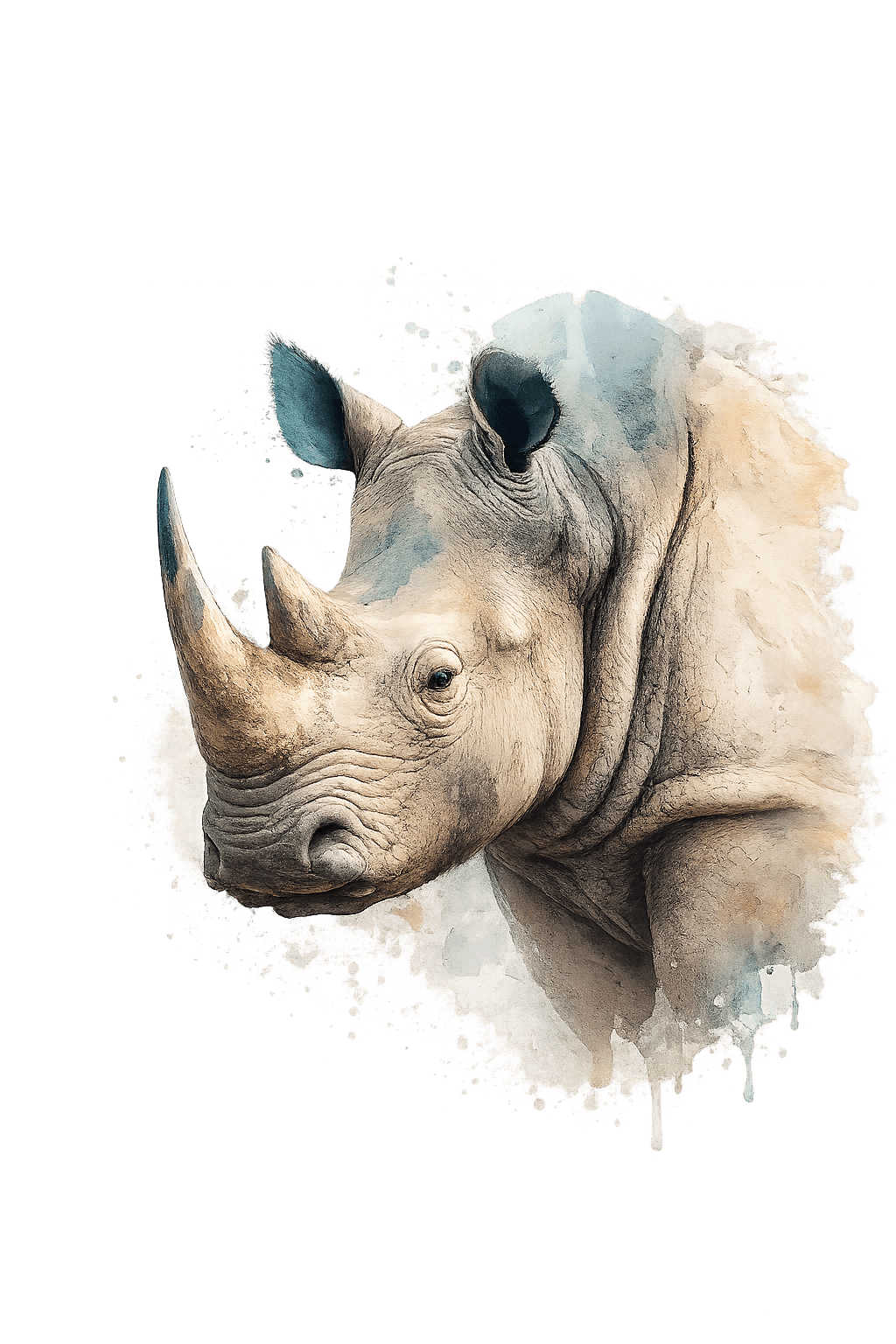
Чёрный носорог (Diceros bicornis) — один из самых знаковых и находящихся под угрозой исчезновения видов дикой природы Африки. Будучи членом легендарной Большой пятёрки, чёрный носорог привлекает любителей дикой природы, фотографов и защитников природы со всего мира.
Несмотря на название, чёрный носорог не чёрный. Его кожа обычно серая или коричневато-серая, похожая на белого носорога. Главное отличие — крючковатая, хватательная верхняя губа, которая специально приспособлена для прогулки листьев, кустарников и ветвей.
Исторически чёрные носороги бродили по большей части субсахарской Африки. Однако массовое браконьерство на рог носорога в XX веке вызвало разрушительное сокращение численности, доведя вид до грани вымирания. Благодаря десятилетиям охраны природы, охраняемым средам обитания и программам по борьбе с браконьерством, популяции в нескольких регионах медленно восстанавливались.
Чёрные носороги обычно одиночки и наиболее активны в прохладные часы суток. Они сильно зависят от своего исключительного обоняния и слуха, так как у них относительно плохое зрение.
В отличие от белых носорогов, которые в основном пасутся на траве, чёрные носороги — это посетители, питающиеся кустарниками, листьями, ветками и древесными растениями. Их специализированный край позволяет им эффективно захватывать растительность.
Сегодня чёрные носороги в основном живут в охраняемых национальных парках, заповедниках дикой природы и частных заповедниках, где интенсивный мониторинг и защита помогают обеспечить их будущее.
Для сафари встреча с чёрным носорогом — поистине особенный опыт, который часто считается одним из самых редких видов дикой природы в Африке.
Где можно увидеть чёрного носорога на сафари?
Чёрного носорога лучше всего искать в хорошо охраняемых заповедниках и заповедниках. Консерванси Ол Педжета и Национальный парк Найроби — одни из самых надёжных оплотов Кении, а эти животные также присутствуют в национальном заповеднике Масаи Мара и вокруг Накуру. За границами кратер Нгоронгоро и национальный парк Акагера в Руанде представляют реальные шансы на встречу.
Когда лучше всего их увидеть?
Наблюдения возможны в любое время года, особенно в огороженных заповедниках, где за животными тщательно наблюдают. Раннее утро и поздний вечер — самые продуктивные часы, а сухой сезон привлекает носорогов к оставшимся источникам воды для удобства наблюдения.