Планируйте сафари на масаи-мара вокруг миграции гну: узнайте о времени, переходах через реку, маршрутах, лагерях, стоимости, советах по упаковке и практических советах по бронированию.
28 min read61viewsUpdated Oct 19, 2026
Blue Wildebeest
61views
Share
Listen~28 min
In this articleTap to view 20 sectionsTap a section to jump
С июля по октябрь — обычное окно миграции Масаи Мара, но осадки — не фиксированная дата — контролируют движение стада и переправу через реки.
Три ночи — это разумный минимум в Маре; четыре-пять ночей дают первому посетителю больше гибкости, когда дикая природа рассеяна по всему миру.
Масаи-Мара официально является национальным заповедником, а не национальным парком, хотя обе фразы встречаются в онлайн-поисках.
Частные заповедники могут предлагать меньше транспортных средств, вождение по бездорожью и ночные поездки, где это разрешено, а заповедник предлагает классические пейзажи Мара и доступ к реке.
В тарифе на сафари следует чётко разделять проживание, стоимость парковки или охраны природы, использование транспорта, перелёты, трансферы, питание и услуги гида.
С первого взгляда: что включает в себя миграционное сафари
С июля по октябрь самые большие шансы увидеть стада в Маре, но пересечения обещать нельзя. Миграция идёт по дождю, траве и воде, а не по фиксированному календарю. В некоторые годы большие группы прибывают раньше; в другие — они задерживаются в Танзании дольше.
Планирование миграции
Мара — это сезон, а не гарантия
Самый разумный маршрут следует за осадками, местом обитания и доступом — а не фиксированной датой пересечения.
Запланируйте три ночи для специализированного сафари по дикой природе. Четыре-пять ночей дают вам больше времени, чтобы найти больших кошек, следить за движением стада и ждать изменяющихся условий в реке. Лучший лагерь также зависит от вашего приоритета, ведь заповедник и заповедники занимают большую территорию.
Decision
Best fit
What to know
Kenya or Tanzania
Kenya for the Mara; Tanzania for the wider circuit
The two countries show different phases of the same migration.
Reserve or conservancy
Reserve for broad access; conservancy for quieter viewing
Rules, vehicle numbers and activities differ by location.
Road or fly-in
Road for a wider Kenya route; flights for speed
Nairobi road transfers take longer but add scenery and flexibility.
Peak or shoulder season
July to October for crossings; January to June for other wildlife
Shoulder months often offer lower rates and fewer vehicles.
Главное решение — не только куда поехать. Важно то, сколько времени уделять ландшафту. Короткая поездка может сработать хорошо, но поспешное двухночное проживание оставляет мало места для погоды, перемещения животных или задержек рейсов.
Что такое Великая миграция и что происходит в реке Мара?
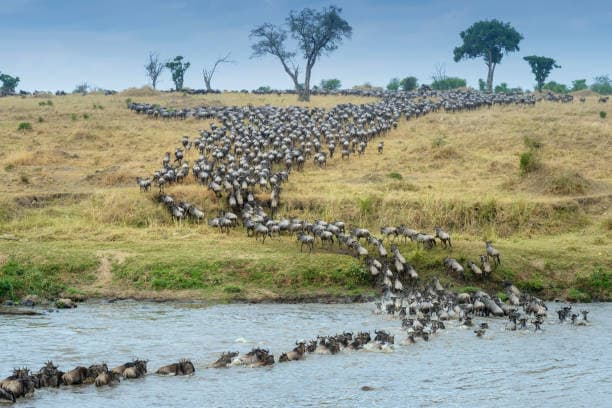
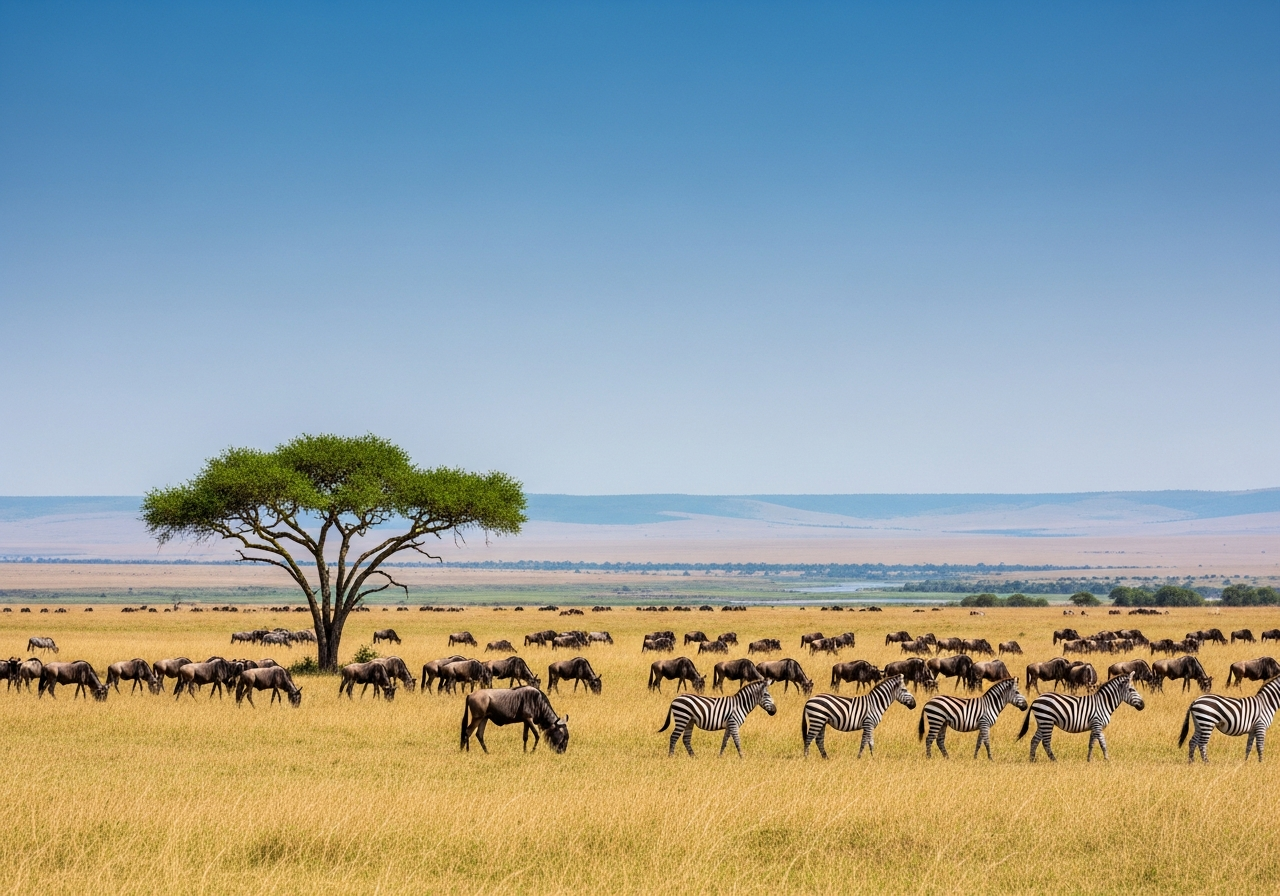
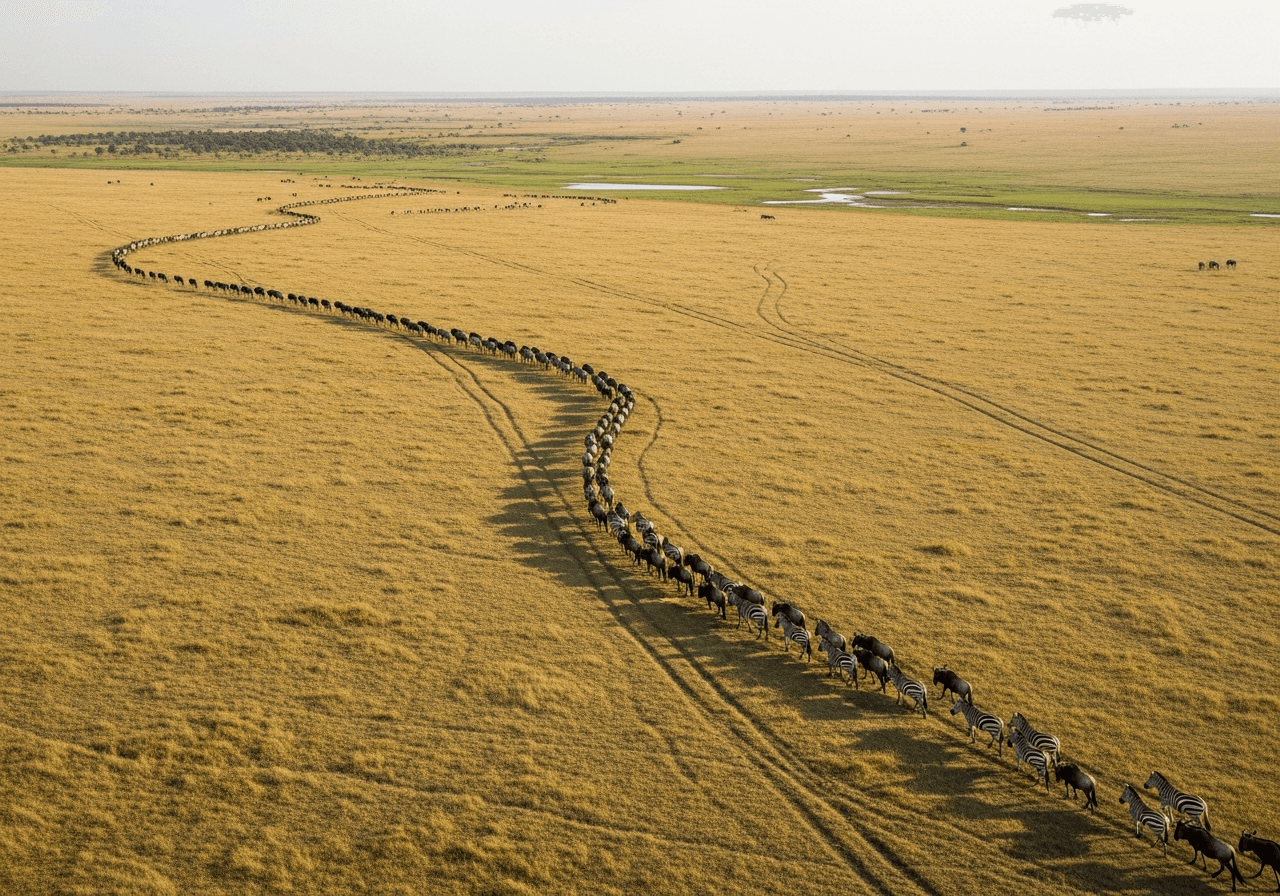
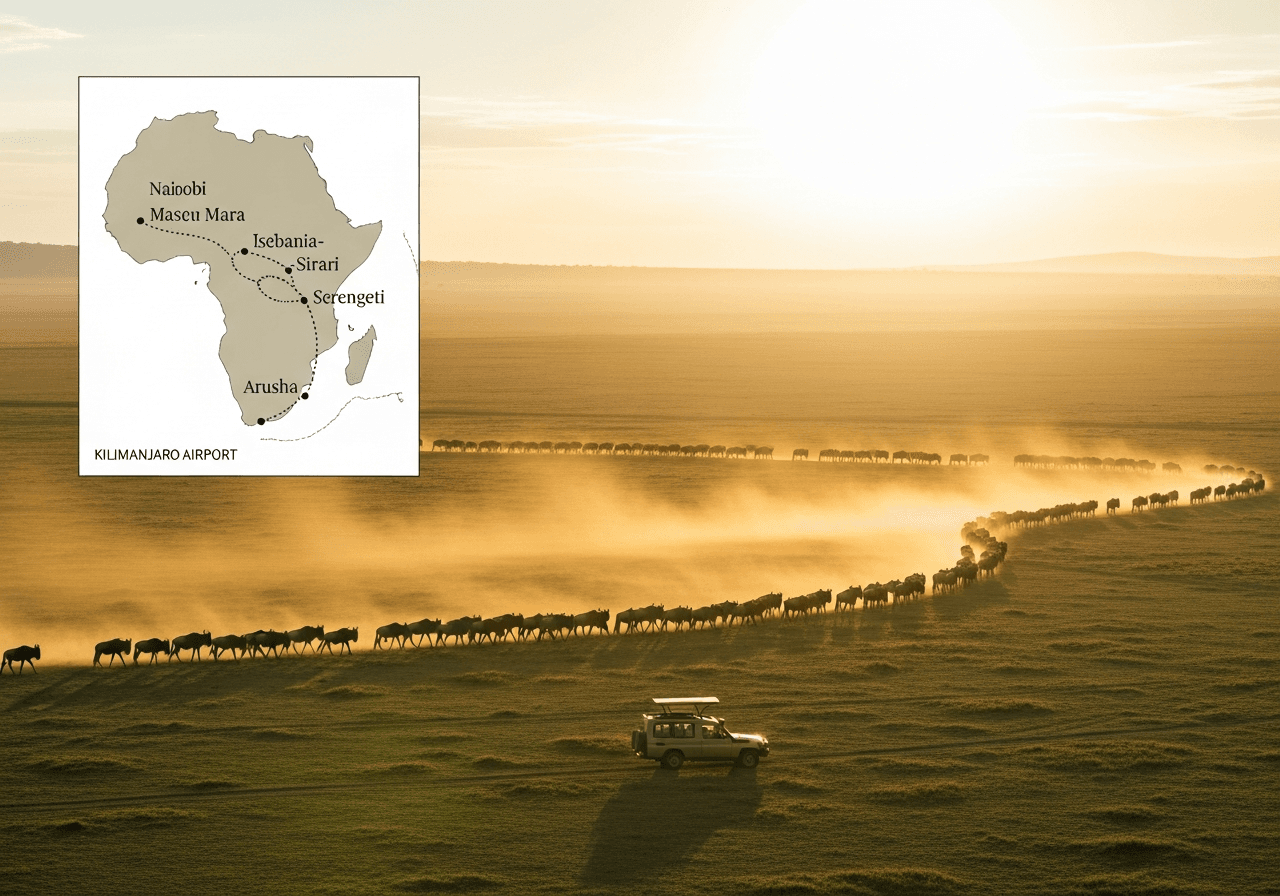
Стадо гну течёт по равнинам Серенгети-Мара, запечатлевая масштаб и ритм Великой миграции.
At a glance
Основы миграционного сафари
Движение стада
About 1.5 million blue wildebeest
Более широкая экосистема
The Serengeti–Mara ecosystem
Обычное окно Mara
July–October, rainfall dependent
Заповедная территория
About 1,510 km²
Полный миграционный круг охватывает примерно 1 000–1 500 км, в зависимости от осадков и условий выпаса. Это не одна процессия, движущаяся на север в одну установленную дату. Стада разделяются на меньшие группы, останавливаются для выпаса и меняют направление, когда штормы меняют доступную траву.
С июля некоторые стада достигают северного Серенгети и переходят в Масаи Мара. Другие остаются южнее реки Мара или проходят через пограничные земли без драматичного перехода. Это естественное разнообразие делает сафари с миграцией дикой природой, а не запланированным выступлением.
Река Мара представляет собой одну из самых известных опасностей северного этапа. Гну могут собираться на берегу часами или днями перед входом. Внезапное движение может отправить тысячи в воду, но стадо также может повернуть обратно, если склон, течение или крокодилы вызывают тревогу.
Нильские крокодилы ждут в более глубоких бассейнах, а африканские львы, пятнистые гиены и крокодилы пользуются усталыми или разлучёнными животными. В реке также обитают бегемоты, которым нужно пространство, и к ним нельзя приближаться с помощью транспорта или лодок.
Многие путешественники ищут «Национальный парк Кении Масаи Мара». Официальное название — национальный заповедник Масаи Мара, а не национальный парк. Служба дикой природы Кении управляет многими охраняемыми территориями в Кении, в то время как у Мара есть собственные заповедники и органы охраны с другими правилами.
Площадь реки Мара составляет около 1 510 км². Её открытые луга, речные леса и сезонные ручьи поддерживают сильную обитающую дикой природы, даже когда мигрирующие стада находятся в других местах.
Когда лучшее время для сафари на масаи-мара?
С июля по октябрь — классический сезон миграции в Кении. Обычное окно пересечения мара длится с июля по октябрь, примерно 4 месяца, но время варьируется.
Сотни гну пробегают через реку Мара в Кении в драматическом моменте Великой миграции.
Календарь Великой миграции
Где найти стада, месяц за месяцем
Live
The Great Migration is a continuous, year-round clockwise loop of over 1.5 million wildebeest and hundreds of thousands of zebra, driven by rainfall and fresh grazing across the Serengeti–Mara ecosystem. Use the live calendar below to see where the herds are right now — and plan your trip around calving or the famous river crossings.
1.5M+
Гну в движении
300K+
Зебра и газель
~8,000
Рождение телят / день (январь–февраль)
1,800 km
Ежегодный круговой маршрут
JanuaryCalving
Calving season begins on the southern Serengeti's short-grass plains around Ndutu. Roughly 8,000 wildebeest are born each day, drawing lion, cheetah and hyena.
Southern Serengeti
Southern SerengetiLate Jan–Mar (+ Dec)
Western CorridorMay–Jul
Northern SerengetiJul–Oct
Masai MaraAug–Oct
Region
Southern Serengeti
Western Corridor
Northern Serengeti
Masai Mara
Peak season Herds present Not present
Southern Serengeti
Late Jan–Mar (+ Dec)
Ndutu & southern plains
The short-grass plains around Ndutu host the calving season — the densest concentration of newborns and predators in the entire cycle. Around 8,000 calves are born each day at the peak, drawing lion, cheetah and hyena onto the open plains.
Western Corridor
May–Jul
Grumeti River
The herds push through the western corridor, where the Grumeti River and its giant crocodiles provide the season's first dramatic crossings, alongside the wildebeest rut. Exclusive reserves mean far fewer vehicles.
Northern Serengeti
Jul–Oct
Kogatende & Mara River (TZ)
The Mara River runs through the northern Serengeti, making it the prime crossing zone from July to October — often with fewer vehicles than the Kenyan side, plus big resident lion prides.
Masai Mara
Aug–Oct
Masai Mara, Kenya
The northern stage of the loop. From August to October the herds spill across the Mara River into Kenya for heart-stopping crossings, with superb resident big cats and balloon safaris all year.
Изменение климата изменило время миграции в последние годы; стада следуют за дождями, поэтому фактическое перемещение может варьироваться на несколько недель в году.
Для более широкого понимания сезонных перемещений прочитайте это руководство по временным перемещениям. Оно поможет сопоставить ваш месяц путешествия с регионом, где чаще всего будут содержать стада.
Months
Likely focus
Why choose this period
January to March
Southern Serengeti calving grounds
Newborn wildebeest attract lions, cheetahs and hyenas.
April to June
Western and central Serengeti
Herds move as grass and water conditions change.
July to October
Masai Mara and northern Serengeti
Best chance of large herds and possible Mara River crossings.
November and December
Return movement towards Tanzania
Short rains refresh the plains and shoulder-season rates may apply.
Январь — март: отёлы и активность хищников
С января по март подходит путешественникам, предпочитающим действия хищников, а не переправу через реку. Откалывание происходит преимущественно в южной части Серенгети, где свежая трава поддерживает большое количество беременных самок и новорождённых детёнышей.
Молодые гну могут быстро после рождения стоять и бегать, но остаются уязвимыми. Африканские львы, гепарды, пятнистые гиены и шакалы патрулируют стада. Проводник, который читает следы и сигналы тревоги, часто может находить хищников вдали от основных пастбищных групп.
Апрель — июнь: зелёные равнины и сдвигающиеся стада
Апрель и май приносят дожди на большую часть экосистемы. Дороги могут стать грязными, но трава становится богатой, а дикая природа распространяется по равнинам. Июнь часто приносит более ясные условия и движение по западному коридору и центральному Серенгети.
Этот период может подойти путешественникам, предпочитающим меньше транспортных средств и более зелёные пейзажи. Стада, возможно, ещё не находятся в Маре, но постоянные львы, леопарды, слоны и жирафы остаются активными.
Июль — октябрь: основной сезон мара
С июля по октябрь лучшие шансы на сафари в Масай-Мара в Кении, ориентированное на мигрирующие стада. Постоянная фауна Мара делает этот период самым оживлённым путешествием, особенно рядом с выходом к реке и кемпингами с отличными локациями.
Переходы могут происходить в нескольких местах, часто после долгого ожидания. Лагерь у реки может сократить время в пути, но не может контролировать животных. Ваш проводник может провести день, отслеживая движение стада, вместо того чтобы ждать на одном месте переправы.
Ноябрь и декабрь: короткие дожди и возвращение
Короткие дожди могут начаться в ноябре, принося свежую траву и драматичное небо. Стада обычно возвращаются в сторону Танзании, хотя время и маршрут различаются. Этот период хорошо подходит для сафари с низкой плотностью дикой природы, особенно в заповедниках.
Декабрь сочетает полезный просмотр дичи с спросом на праздничный сезон. Бронируйте заранее, если хотите выбрать определённый лагерь, номер или личное транспортное средство.
Где должно проходить сафари по миграции?
Национальный заповедник Масаи Мара предлагает путешественникам классическую кенийскую атмосферу: широкие травяные равнины, разбросанные акации и сильную популяцию местных хищников. Также он обеспечивает доступ к участкам реки Мара, в зависимости от местных правил и положения стада.
Сафари-автомобиль окружён пасущимися зебрами и гнуами во время охоты на охоту в национальном заповеднике Масаи Мара, Кения.
Мара, северный Серенгети или центральный Серенгети?
Каждая зона предлагает разный баланс между временем миграции, доступом и круглогодичной дикой природой.
Masai Mara National Reserve
Лучше всего для новичков
Typical migration timing
July–October is the usual window; crossings are never scheduled
Main strength
July–October can bring herds to the north; crossings remain weather-led
Getting there
Resident wildlife year-round; herds pass through at different times
Best fit
—
Northern Serengeti
Переходы через Танзанию
Typical migration timing
Compact big-game viewing and access to Mara River areas
Main strength
Tanzania access to the northern route and a large ecosystem
Getting there
Strong all-round game viewing in a central location
Best fit
—
Central Serengeti
Круглогодичная игра
Typical migration timing
Road or scheduled flight from Nairobi
Main strength
Usually reached by flight or a longer Tanzania circuit
Getting there
Usually linked with Arusha and other northern parks
Best fit
—
Compare
Лучше всего для новичков
Masai Mara National Reserve
Переходы через Танзанию
Northern Serengeti
Круглогодичная игра
Central Serengeti
Typical migration timing
July–October is the usual window; crossings are never scheduled
Compact big-game viewing and access to Mara River areas
Road or scheduled flight from Nairobi
Main strength
July–October can bring herds to the north; crossings remain weather-led
Tanzania access to the northern route and a large ecosystem
Usually reached by flight or a longer Tanzania circuit
Getting there
Resident wildlife year-round; herds pass through at different times
Strong all-round game viewing in a central location
Usually linked with Arusha and other northern parks
Best fit
—
—
—
Миграция следует за дождями и выпасом скота, поэтому эти сезонные модели служат полезными ориентирами для планирования, а не гарантиями.
KE
Featured
Kenya
Masai Mara National Reserve
The Masai Mara National Reserve in southwestern Kenya is a premier 1,510-square-kilometre wildlife sanctuary. Renowned for the annual Great Wildebeest Migration from July to October, it offers exceptional year-round Big Five viewing across open savannahs. The reserve is contiguous with Tanzania's Serengeti, forming a critical, biodiverse transboundary ecosystem.
Discover the magic of Serengeti National Park, one of Africa’s most celebrated wildlife destinations and home to the spectacular Great Wildebeest Migration. Stretching across the heart of northern Tanzania, the Serengeti offers exceptional game viewing, breathtaking savannah landscapes, and unforgettable encounters with the Big Five. From luxury safari lodges and hot air balloon adventures to year-round wildlife experiences, the park provides the perfect setting for nature lovers, photographers, and safari enthusiasts seeking an authentic and unforgettable African wilderness adventure.
Experience the heart of the Serengeti in Central Serengeti (Seronera), Tanzania's most famous wildlife destination! Renowned for year-round game viewing, the Big Five, abundant predators, and endless golden plains, Central Serengeti offers unforgettable safari adventures in one of Africa's greatest national parks. Discover breathtaking landscapes and exceptional wildlife with Imara Africa Safaris!
Для подробностей о местах назначения смотрите путеводитель по заповеднику Масаи Мара . Заповедник — практичный выбор для первых посетителей, желающих широкого доступа и традиционной программы дичи.
Национальный заповедник Масаи Мара
Заповедник подходит для путешественников, желающих обойти несколько мест обитания за одно пребывание. Охотничьи забеги могут достигать открытых равнин, речных зарослей и мест, известных своими львиными гордостью. Доступ к автомобилям соответствует правилам заповедника, а оживлённые наблюдения могут привлекать несколько автомобилей.
Резервные лагеря также хорошо подходят для классического сафари по львиным краям. Они часто расположены рядом с главными воротами или ключевыми зонами дикой природы, хотя время в пути всё равно зависит от сезона и точного расположения лагеря.
Частные заповедники Мара
Частные заповедники граничат или прилегают к частям заповедника. Обычно они ограничивают количество автомобилей и могут разрешать осмотр по бездорожью, экскурсии с гидом и ночные поездки по разрешениям. Эти преимущества различаются в зависимости от заповедника, поэтому уточните точные правила перед бронированием.
Заповедники могут обеспечивать более спокойные наблюдения и более разнообразный день в дикой природе. Они также могут обеспечить лучший доступ к небольшим лагерям и частным гидам. Компромисс заключается в том, что доступ к заповедникам, расстояние до реки и время пересадки различаются в зависимости от участка.
Северный и Центральный Серенгети
Северный Серенгети предлагает танзанийскую сторону маршрута пересечения. Это может быть отличным выбором для путешественников, желающих следовать за стадами до или после прибытия в Кению, с меньшим числом проблем с границей и пересадкой внутри одной страны.
Центральный Серенгети предлагает надёжное круглогодичное наблюдение за дичью, включая постоянных львов, леопардов и гепардов. Он меньше зависит от точного положения миграции и хорошо сочетается с кратером Нгоронгоро, Арушой и другими северными остановками Танзании.
Как сафари на масаи-мара сравнивается с Серенгети?
Национальный заповедник Масаи Мара компактнее, чем более широкая экосистема Серенгети. Такой масштаб часто подходит для первого африканского сафари с ограниченным временем, поскольку гиды могут охватывать несколько мест обитания без долгих внутренних переходов, необходимых в Танзании.
Национальный парк Серенгети занимает гораздо более широкий ландшафт. Он поддерживает более длинные маршруты и позволяет путешественникам следить за разными этапами миграции на более широкой территории.
Feature
Masai Mara
Serengeti
Best for
A focused Kenya wildlife safari and classic Mara scenery
A longer route across the migration ecosystem
Landscape
Open plains, riverine woodland and compact game-viewing areas
Vast plains, kopjes, woodlands and several distinct regions
Migration access
Strong July-to-October option
Useful across more months and regions
Natural extensions
Lake Nakuru, Lake Naivasha or Amboseli
Ngorongoro Crater, Arusha and Zanzibar
Возможно провести сафари на Масаи Мара Серенгети, но оно требует тщательного планирования. Между этими двумя парками нет простого туристического перехода границы. Путешественники обычно используют рейсы и пограничные маршруты или маршруты через Найроби и Арушу с дополнительными ночами.
Прочитайте это руководство по комбинациям Mara Serengeti перед добавлением обеих стран. Дополнительная логистика может быть полезна для более длительного сафари в Африку, но может сократить время, проведённое на дичных поездках.
Какую дикую природу увидят путешественники, кроме гну?
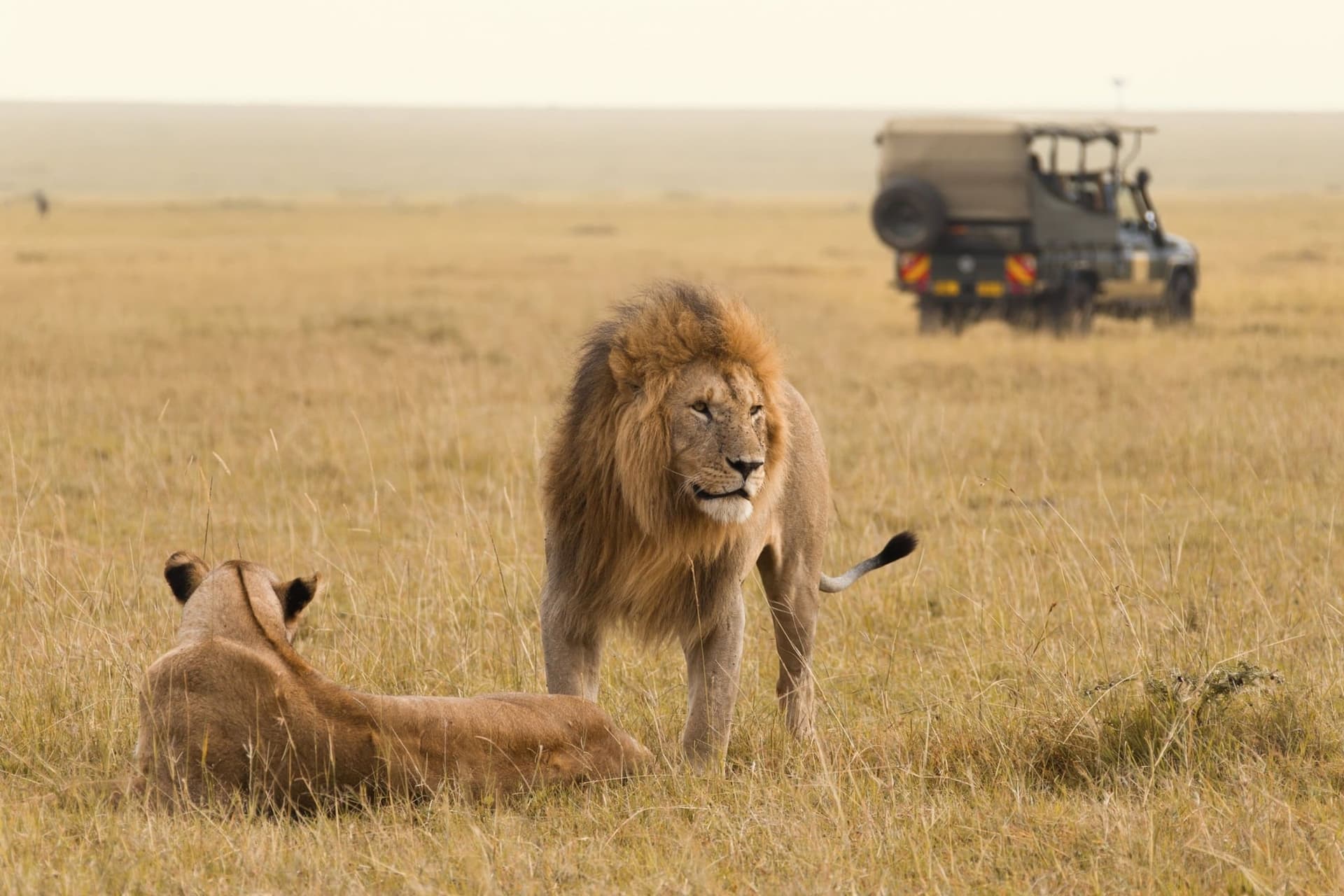
Сафари на Масаи Мара не зависит от миграции для получения сильных наблюдений. В Маре круглый год остаются постоянные африканские львы, гепарды, леопарды и пятнистые гиены.
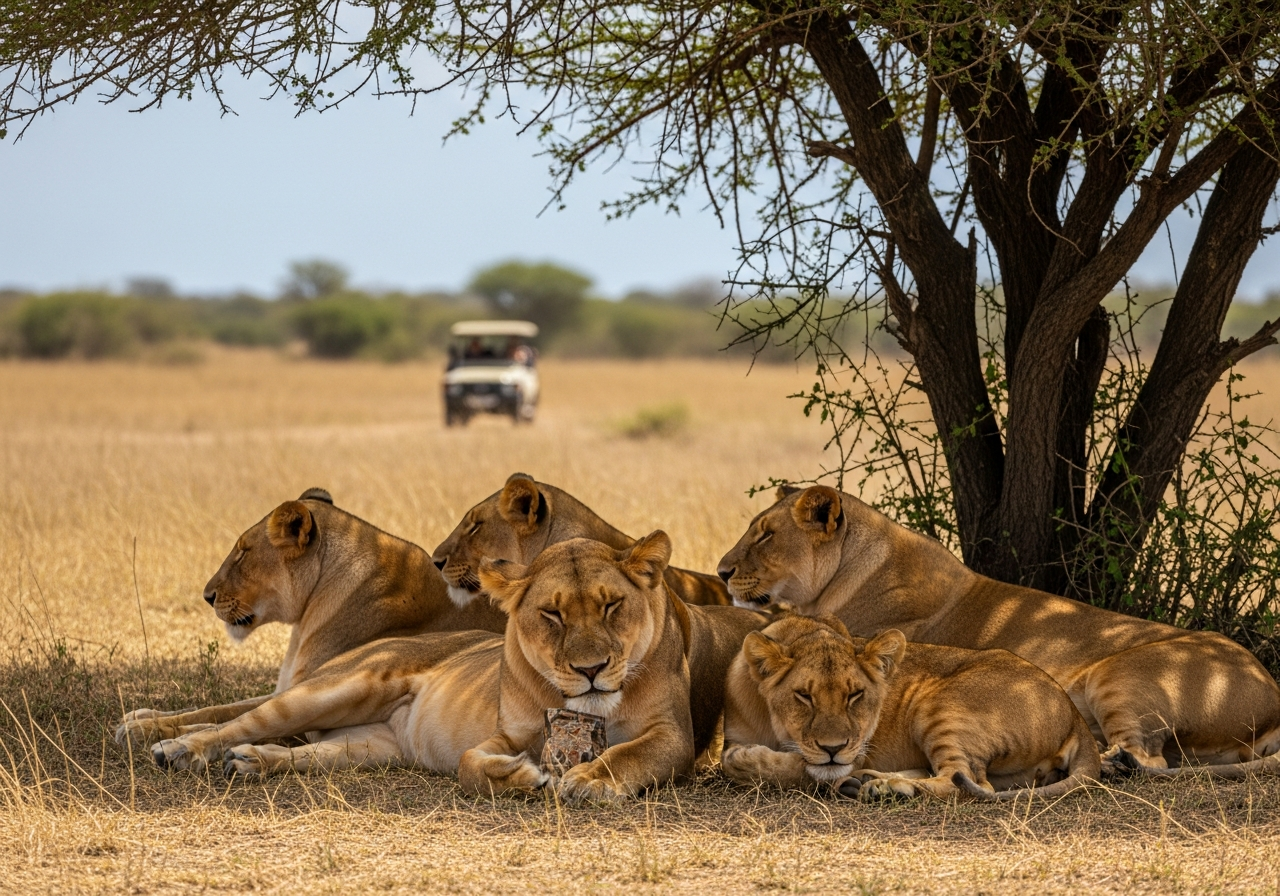
Сдержанная львица изучает стадо гну на золотых равнинах Масаи Мара на рассвете.
Львы
Местные гордые патрулируют открытые равнины и могут концентрироваться там, где мигрирующие травоядные создают более лёгкие возможности для охоты.
Гепарды
Открытые луга могут отлично наблюдать за гепардом, особенно в прохладные ранние часы, когда кошки активны.
Леопарды
Леопарды более скрытны и предпочитают речные заросли, поэтому терпеливые проводники и повторяющиеся забеги увеличивают шансы.
Зебра и равнинная дичь
Равнинные зебры, топи, газели, жирафы, импала и другие травоядные делают мара приятной даже когда стада находятся в другом месте.
Львы часто отдыхают в тени в жаркое время дня, а затем становятся активными до заката. Гепарды предпочитают открытые пространства, где могут использовать скорость, а леопарды предпочитают держаться у более густого укрытия и могут нести убитые на деревья.
Равнинная зебра, топи, газель Томсона, импала и жирафы — распространённые поддерживающие виды. Эланд, буйволы, бородавочники и слоны могут образовывать крупные постоянные группы. Их присутствие даёт проводникам полезные альтернативы, если мигрирующие стада уже ушли.
В реке Мара обитают бегемоты и нильские крокодилы. Речные деревья поддерживают зимородков, цапли и других птиц, а на открытых равнинах обитают секретарь, стервятники, жаворонки и хищные птицы.
Для более широкого руководства по видам смотрите Руководство по дикой природе Кении. Хорошее руководство объяснит поведение, следы и среду обитания, а не ограничит только выделение видов.
“
“Переход — это бонус; местная фауна Мары — причина оставаться там несколько дней.”
Сколько дней должно длиться первое африканское сафари?
Три ночи в Маре — это практически минимальный минимум для целенаправленного сафари по дикой природе. Это даёт время прибытия, два полных дня на дичине и последнюю утреннюю поездку перед отъездом.
Day 1Nairobi to Masai Mara
Найроби — Мара
Путешествуйте на автомобиле или по расписанию, устраивайтесь в лагере и устраивайтесь на дневную игровую поездку, если есть время.
Day 2Masai Mara
Первый полный день игры
Ищите открытые равнины, речные леса и известные территории хищников с помощью частного гида.
Day 3Masai Mara
Следите за дикой природой
Делайте день гибким для движения стада, больших кошек, пикника или более длительной поездки в другое местообитание.
Day 4Masai Mara
Второй полный день в поле
Используйте местные знания и свежие наблюдения, чтобы решить, сосредотачиваться ли на хищниках, речных районах или на более спокойных равнинах.
Day 5Masai Mara to Nairobi
Финальная поездка и отправление
Сделайте короткую утреннюю поездку, если это возможно, а затем возвращайтесь в Найроби по дороге или самолётам.
7-Day Great Migration River Crossing Safari in Tanzania
Serengeti National ParkNgorongoro CraterTarangire National Park+1
This 7-day Great Migration river crossing safari is a mid-range Tanzania road itinerary from Arusha through Tarangire, the Northern Serengeti, the Central Serengeti and the Ngorongoro Crater, priced from US$2,140 per person. Timed for the July-to-October season, it places travellers near the Mara River when wildebeest crossings are most likely.
Четыре-пять ночей дают лучшую гибкость. Один день можно провести на отслеживание стад, другой — на крупных кошках, а третий — на исследование другой среды обитания или заповедника.
Trip length
Suggested plan
Best suited to
Three nights
Mara only, with road or scheduled flight transfers
A short wildlife safari
Four to five nights
One reserve stay or a reserve and conservancy combination
Better flexibility for wildlife and photography
Seven to ten days
Mara with Nakuru, Naivasha, Amboseli or another Kenya region
A broader Kenya safari
Ten days or more
Kenya and Tanzania with flights and carefully placed stays
A multi-country migration itinerary
Впервые посещающие туристы часто получают больше пользы от четырёх хорошо спланированных ночей, чем от нескольких поспешных направлений. Этот первый африканский сафари-гид даёт больше контекста баланса между временем в пути и наблюдением за дичью.
Как путешественникам выбирать между автомобильными и самолётными поездками?
Пересадка на дороге из Найроби в Мару обычно занимает около 5–6 часов, а регулярные рейсы — примерно 45–60 минут. Время на дороге может быть дольше в дождливых условиях или с остановками, особенно возле ворот резерва.
Автомобильное путешествие подходит для более широкого маршрута по Кении. Путешественники могут связать Мара с озерами Найваша, Накуру или Амбосели и наблюдать, как ландшафт меняется от окраин Найроби до Рифтовой долины и открытых лугов.
Регулярные рейсы подходят для короткого сафари на масаи-мара из Найроби. Они оставляют больше дневного света для охотничьих поездок и снижают усталость, но лёгкие самолёты используют небольшие взлётно-посадочные полосы и строгие ограничения по багажу.
Лимиты багажа для проверки: обычно требуется мягкий багаж, но лимиты часто ниже стандартных авиакомпаний.
Подтвердите переводы с взлётно-посадочной полосы: уточните, на каком расстоянии находится лагерь от взлётно-посадочной полосы прибытия и является ли пересадка совместной.
Спросите о транспортных средствах: общий автомобиль стоит дешевле, а частный автомобиль даёт контроль над временем и остановками.
Сравните часы поездок: некоторые пакеты включают полнодневную поездку, другие — только утренние и дневные вылазки.
Учитывайте погоду: рейсы могут задержаться из-за штормов, поэтому избегайте плотных международных пересадок в тот же день.
Где путешественникам следует останавливаться в Маре?
Резервные лагеря подходят путешественникам, желающим широкого доступа к основному заповеднику и району реки Мара. Они часто подходят для первого посещения, сосредоточенного на классических охотничьих забегах и местных хищниках.
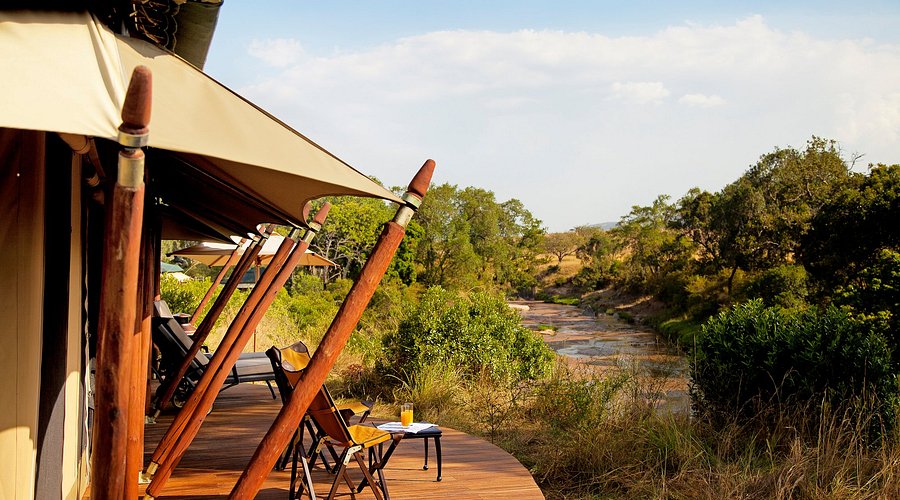
Палатка из холста на реке Элевана Сэнд Масаи Мара оснащена открытым телескопом под деревьями.
Резервация против частной консервации
Pros
The national reserve offers classic Mara landscapes and access to important wildlife areas.
Private conservancies generally limit vehicle numbers compared with busier public sightings.
Many conservancies permit off-road driving and night drives where local rules allow.
Cons
Famous reserve sightings and river viewpoints can become busy during peak migration months.
Conservancy fees and smaller camp rates can be higher.
A conservancy may be farther from a particular crossing point or seasonal herd location.
Лагеря Conservancy предлагают более спокойные наблюдения, экскурсии с гидом, ночные поездки и осмотр внедорожников по разрешениям. Они часто лучше подходят путешественникам, ценящим уединение, глубину и время вне стандартных часов езды.
Местоположение важнее, чем известное имя. Спросите о ближайшей аэродроме, верных точках пересечения, доступе в резерв, времени пересадки и расположении лагеря в заповеднике.
Некоторые лагеря сезонные и перемещаются между объектами, чтобы соответствовать спросу или защищать землю. Другие работают круглый год. Сравните сафари-лоджи и лагеря по месту, модели гида, политике транспорта и стоимости.
Location type
Main advantage
Questions to ask
Main reserve area
Broad access to classic game-viewing zones
How far is the camp from the river and main gate?
River-adjacent camp
Shorter drives to possible crossing areas
Does the camp have year-round river access?
Private conservancy
Fewer vehicles and more varied activities
Are night drives and off-road driving authorised?
Airstrip-area camp
Efficient fly-in and fly-out transfers
How many airstrips and transfer legs are involved?
Сколько стоит сафари на масаи-мара?
Стоимость сафари на масаи-мара зависит от сезона, типа лагеря, расположения транспорта и транспорта. Пиковые даты миграции обычно стоят дороже, особенно для лучших речных мест и небольших лагерей.
Cost driver
What it covers
Why it matters
Accommodation
Camp or lodge room, meals and sometimes drinks
Location, service level and season affect the rate
Transport
Private 4x4, shared vehicle, road transfers or flights
Fly-in itineraries save time but add air costs
Access fees
Reserve or conservancy entry charges
Fees can vary by destination, season and visitor category
Season and length
Peak dates and number of nights
More nights improve flexibility but increase the total
Общая цена формируется несколькими движущимися частями; попросите каждую из них перечислить.
В качестве широкого руководства по планированию пакет совместных маршрутов может начинаться с $350 pp за ночь. Комфортный палаточный лагерь может начинаться с $550 pp за ночь, а частный лагерь с премиальными гидами — от $900 pp за ночь.
Style
Indicative rate
Usually suits
Simple shared safari
From $350 pp per night
Travellers prioritising core game drives and price
Comfortable tented camp
From $550 pp per night
Travellers seeking more space, service and camp facilities
Private conservancy stay
From $900 pp per night
Private guiding, quieter sightings and added activities
Эти цифры являются руководством по планированию для двух человек, которые делятся. Они могут исключать международные рейсы, туристическую страховку, визы, премиальные напитки и некоторые занятия. Пиковые даты, частные автомобили и прямые рейсы могут увеличить общее количество пассажиров.
Разбейте каждую цитату на части перед сравнением:
Проживание и план питания
Плата за доступ к заповедникам или заповедникам
Автомобильные пересадки или регулярные рейсы
Расходы на совместный или частный транспорт
Направляющие и машинисты
Напитки, стирка и дополнительные занятия
Трансферы в аэропорт и внутренние пересадки
Сравнивайте стоимость по ночным числам, расположению автомобиля и включённым впечатлениям, а не только по основной цене. Подробное руководство по стоимости сафари в Масаи Мара поможет вам проверить предложение строка за строкой.
Что стоит собрать и знать путешественникам перед отъездом?
Ранние утренние поездки могут казаться холодными даже в сухой сезон. Берите с собой лёгкие слои, нейтральную одежду, флис, солнцезащитную защиту, солнцезащитные очки, шапку и удобную закрытую обувь.
Премиальный открытый 4x4 сафари-автомобиль готов к приключениям в залитой солнцем золотой саванне Масаи Мара в Кении.
Список сборов для сафари
Everything you need for an unforgettable East African safari — organised, prioritised and ready to tick off.
0/62
Clothing & Footwear
0/12
Must
Must
Must
Must
Must
Rec
Rec
Opt
Rec
Must
Must
Rec
Safari Gear & Optics
0/12
Must
Rec
Must
Must
Must
Must
Rec
Rec
Opt
Opt
Rec
Opt
Toiletries & Health
0/12
Must
Must
Must
Must
Rec
Rec
Rec
Must
Rec
Rec
Opt
Opt
Возьмите бинокль и запасные батарейки для камер и фар.
Для лёгких самолётов используйте мягкую сумку, а не жёсткий чемодан.
Храните личные лекарства, проездные документы и ценные вещи в ручной клади.
Носите с собой небольшой фонарь для прогулки между палатками после наступления темноты.
Ожидайте пыль на сухих дорогах и грязь после сильных дождей.
Спросите о зарядных точках, Wi-Fi и стирке перед упаковкой электроники.
Оформите туристическую страховку перед выездом и проверьте требования к въезду и медицинским состоянию в Кению. Медицинский специалист может проконсультировать по вакцинам и профилактике малярии на вашем маршруте. Храните рецептурные лекарства в оригинальной упаковке.
Как путешественникам сохранять этичность и безопасность наблюдений?
Каждое транспортное средство влияет на поведение животных. Следуйте инструкциям гида, соблюдайте уважительную дистанцию и не блокируйте путь к воде, еде или укрытию.
Нет. Гиды могут читать недавние перемещения и выбирать разумные точки зрения, но погода, уровень воды и поведение стада остаются непредсказуемыми.
Нет. Правила различаются между национальными заповедниками и частными заповедниками. Путешественники должны следовать местному путеводителю и правилам посещаемой территории.
Выбор местных гидов, связанных с сообществом заповедников и ответственных лагерей помогает доходам от туризма поддерживать людей, живущих рядом с дикой природой.
Никогда не требуйте перехода, близкого подхода или внедорожной позиции, нарушающей правила заповедника или охраны. Стрессовое животное может покинуть точку перехода, отделиться от стада или изменить своё обычное поведение.
Оставайтесь внутри автомобиля, если только ваш гид не подтвердит, что можно безопасно выйти.
Держите голос низким рядом с хищниками, гнездящимися птицами и переправами через реки.
Не зовите, не кормите и не гоняйтесь за животными, чтобы улучшить фотографию.
Спросите перед использованием вспышки, особенно рядом с ночной дикой природой.
Выбирайте гидов, которые объясняют поведение и следы, вместо того чтобы инсценировать встречи.
Поддерживайте операторов, которые нанимают местных гидов и вносят вклад в развитие близлежащих сообществ.
Хорошее руководство также означает принятие пустого участка реки. Самые сильные впечатления от сафари по дикой природе возникают из чтения ландшафта, а не от навязывания какого-либо события.
Как путешественникам следует бронировать сафари для миграции?
Начните с приоритетного месяца и главной цели. Пересечения, крупные кошки, общая дикая природа, фотография и совместный маршрут Кения–Танзания требуют индивидуального плана.
Постройте миграционное сафари в подходящее время года
Imara Africa Safaris может соответствовать срокам, расположению лагеря, транспорту и бюджету по всей Кении и Танзании.
Решите, приоритетом ли являются скрещивания с марами, отеление, наблюдение за хищниками или более широкий круглогодичный опыт наблюдения за дикой природой.
2
Выбирайте Кению, Танзанию или обе страны
Подбирайте доступные ночи и предпочтительный темп по сравнению с маршрутом Мара, Серенгети или комбинированным маршрутом.
3
Выберите место
Проверьте, находится ли лагерь в заповеднике или в заповеднике, и спросите о сезонном доступе к рекам и взлётно-посадочным полосам.
4
Сравните включения
Подтвердите использование транспортного средства, условия гида, входные взносы, билеты, трансферы, питание, напитки и активности.
5
Защитите бронирование
Пересмотрите условия депозита, отмены и переноски, а затем создайте разумные буферы прибытия и отправления.
Установьте окно для путешествий. Выберите июль–октябрь для лучших шансов пересечения или другой сезон для более низких показателей и различного поведения дикой природы.
Выберите регион. Выберите между Национальным заповедником Масаи Мара, частным заповедником, северной Танзанией или центральным Серенгети.
Выберите территорию лагеря. Проверьте доступ к реке, расстояние до взлётно-посадочной полосы, вход в резерв и сезонное положение лагеря.
Выберите автомобиль или самолёт. Сопоставьте время пересадки с количеством доступных ночей и остальной частью вашего сафари в Кении.
Сравните полную смету. Проверьте стоимость, питание, напитки, транспортные средства, перелёты, трансферы и активности.
Подтвердите условия. Спросите о депозитах, правилах отмены, задержках из-за погоды, изменениях рейсов и альтернативных мероприятиях.
Ознакомьтесь с планом гида. Уточните, является ли автомобиль частным, как рассчитаны поездки на игру и кто будет вести сафари.
Просматривайте индивидуальные маршруты Safari для поиска идей, а затем корректируйте маршрут под свои даты и приоритеты. Специалист также может порекомендовать лагерь вдали от самого оживлённого коридора, сохраняя доступ к ключевым местам обитания.
Перед оплатой залога используйте сафари по плану , чтобы подтвердить маршрут, расположение лагеря и план транспорта. Раннее бронирование имеет наибольшее значение с июля по октябрь, личные автомобили и небольшие лагеря.
С июля по октябрь самые сильные шансы увидеть мигрирующие стада в реке Мара и возможные переправы через реку Мара. Наблюдение за дикой природой остаётся хорошим с января по июнь, а также в ноябре и декабре, с разными сезонными особенностями.
Три ночи — практически минимум для целенаправленного сафари. Четыре или пять ночей дают больше гибкости при смене положения стада, наблюдения хищников и задержки из-за погоды.
Индикативные тарифы начинаются от $350 pp за ночь за простой общий пакет, $550 pp за ночь для комфортного палаточного кемпинга и $900 pp за премиальное проживание в Conservancy. Точные цены зависят от сезона, транспорта, парковочных сборов, использования автомобиля и проживания.
Масаи Мара подходит для короткого сафари в Кении и предлагает сильное наблюдение за хищниками в компактной местности. Серенгети охватывает гораздо большую экосистему и даёт больше возможностей для отслеживания различных фаз миграции.
Да. Три-пять ночей в Маре — отличное первое африканское сафари, особенно в паре с Найроби, озером Накуру, озером Найваша или Амбосели. Добавьте больше ночей, если хотите также Танзанию или несколько кенийских регионов.
Нет. Переходы зависят от дождя, выпаса, уровня воды, поведения стада и давления со стороны хищников. Хорошо расположенный лагерь и опытный гид повышают ваши шансы, но ни один этичный оператор не может гарантировать переправу.
61views
Share
About the author
Lewis Munuhe
Founder & Director
<p>Lewis Munuhe is the Director and Owner of Imara Africa Safaris, a trusted safari company dedicated to creating tailor-made African safari experiences across Kenya, Tanzania, Uganda, and Rwanda. With a strong passion for African travel, wildlife, culture, and conservation, Lewis leads the company’s vision of delivering personalized, seamless, and unforgettable safari journeys for travelers from around the world.</p><p>Through Imara Africa Safaris, Lewis helps guests discover East Africa’s most iconic destinations, from the Masai Mara and Serengeti to Uganda and Rwanda’s gorilla trekking regions. His approach focuses on understanding each traveler’s interests, comfort level, budget, and expectations, then transforming those details into carefully curated safari itineraries that feel personal, meaningful, and well-planned.</p><p>As Director and Owner, Lewis is committed to maintaining high standards in safari planning, guest care, destination expertise, and responsible tourism. Whether arranging a luxury wildlife safari, honeymoon escape, family adventure, cultural journey, gorilla trekking safari, or multi-country East African itinerary, he ensures every experience reflects the quality, authenticity, and attention to detail that define Imara Africa Safaris.</p><p>Under his leadership, Imara Africa Safaris continues to help travelers experience the beauty of Africa through expertly planned safaris that celebrate wildlife, landscapes, local cultures, conservation, and unforgettable adventure.</p>
<p>Lewis Munuhe is the Director and Owner of Imara Africa Safaris, a trusted safari company dedicated to creating tailor-made African safari experiences across Kenya, Tanzania, Uganda, and Rwanda. With a strong passion for African travel, wildlife, culture, and conservation, Lewis leads the company’s vision of delivering personalized, seamless, and unforgettable safari journeys for travelers from around the world.</p><p>Through Imara Africa Safaris, Lewis helps guests discover East Africa’s most iconic destinations, from the Masai Mara and Serengeti to Uganda and Rwanda’s gorilla trekking regions. His approach focuses on understanding each traveler’s interests, comfort level, budget, and expectations, then transforming those details into carefully curated safari itineraries that feel personal, meaningful, and well-planned.</p><p>As Director and Owner, Lewis is committed to maintaining high standards in safari planning, guest care, destination expertise, and responsible tourism. Whether arranging a luxury wildlife safari, honeymoon escape, family adventure, cultural journey, gorilla trekking safari, or multi-country East African itinerary, he ensures every experience reflects the quality, authenticity, and attention to detail that define Imara Africa Safaris.</p><p>Under his leadership, Imara Africa Safaris continues to help travelers experience the beauty of Africa through expertly planned safaris that celebrate wildlife, landscapes, local cultures, conservation, and unforgettable adventure.</p>
<p>Lewis Munuhe is the Director and Owner of Imara Africa Safaris, a trusted safari company dedicated to creating tailor-made African safari experiences across Kenya, Tanzania, Uganda, and Rwanda. With a strong passion for African travel, wildlife, culture, and conservation, Lewis leads the company’s vision of delivering personalized, seamless, and unforgettable safari journeys for travelers from around the world.</p><p>Through Imara Africa Safaris, Lewis helps guests discover East Africa’s most iconic destinations, from the Masai Mara and Serengeti to Uganda and Rwanda’s gorilla trekking regions. His approach focuses on understanding each traveler’s interests, comfort level, budget, and expectations, then transforming those details into carefully curated safari itineraries that feel personal, meaningful, and well-planned.</p><p>As Director and Owner, Lewis is committed to maintaining high standards in safari planning, guest care, destination expertise, and responsible tourism. Whether arranging a luxury wildlife safari, honeymoon escape, family adventure, cultural journey, gorilla trekking safari, or multi-country East African itinerary, he ensures every experience reflects the quality, authenticity, and attention to detail that define Imara Africa Safaris.</p><p>Under his leadership, Imara Africa Safaris continues to help travelers experience the beauty of Africa through expertly planned safaris that celebrate wildlife, landscapes, local cultures, conservation, and unforgettable adventure.</p>







Comments
Loading…