

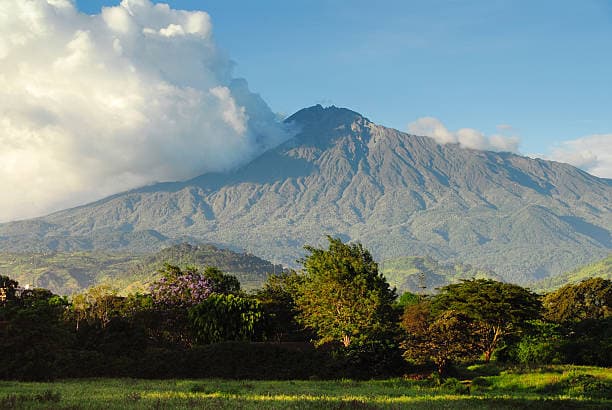
Mount Meru is a 4,566 m dormant stratovolcano in Arusha National Park, northern Tanzania, and the country's second-highest mountain after Kilimanjaro — ranking among Africa's five highest peaks. Its biggest draw is a summit trek that begins as a walking safari, climbing from wildlife-rich forest to a dramatic crater-rim ridge with sunrise views of Kilimanjaro.
The mountain is the remnant of a massive eruption thousands of years ago that blew away its eastern flank, leaving a spectacular horseshoe-shaped crater and rugged summit ridge. Its fertile volcanic slopes support dense forest and abundant wildlife, making Meru one of East Africa's most scenic and biologically rich trekking destinations.
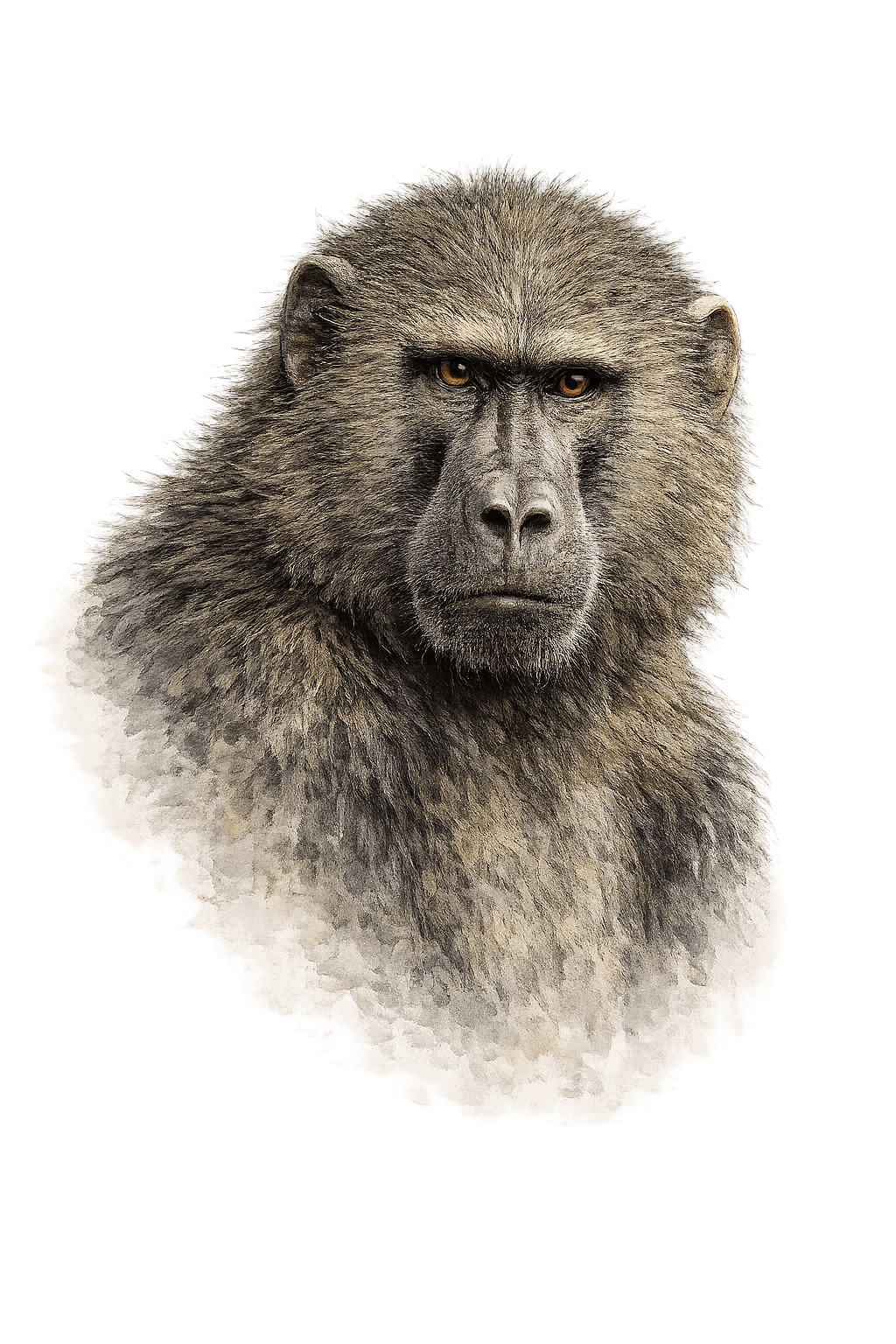
Uniquely among major African climbs, the Meru ascent starts with a genuine walking safari through Arusha National Park. Trekkers frequently pass giraffes, buffaloes, zebras, warthogs, colobus monkeys and baboons on the lower trails, which is why an armed park ranger accompanies every group through the forest zone.
The route then climbs through distinct ecological zones — montane forest, heathland, moorland, alpine desert and finally the bare volcanic rock of the summit ridge. The final push to Socialist Peak, the 4,566 m summit, is usually made in darkness along the crater rim, timed to arrive for sunrise over Kilimanjaro, the Momella Lakes and the Rift Valley — a panorama many climbers rank among the finest in East Africa.
Meru serves two audiences equally well. As an acclimatisation climb it significantly improves summit chances on a subsequent Kilimanjaro attempt; as a standalone objective it offers a challenging, uncrowded trek with wildlife, scenery and altitude in a compact itinerary.
The standard itinerary follows the Momella route, overnighting at Miriakamba and Saddle huts on the way up — simple but solid mountain huts that spare climbers the need to carry camping equipment. From Saddle Hut, an optional afternoon ascent of Little Meru (3,820 m) aids acclimatisation and delivers a fine preview of the summit ridge. Temperatures fall sharply with altitude: warm days in the forest give way to sub-zero conditions on the pre-dawn summit push, so layered clothing is essential.
Scenic highlights come thick and fast even below the ridge. The route passes the Momella Lakes, Meru's ash cone rising from the crater floor, giant fig-tree arches in the forest and frequent sightings of colobus monkeys overhead — reasons why many trekkers describe Meru as the most varied three days of walking in northern Tanzania.
What Is Mount Meru Known For?
- Tanzania's second-highest peak at 4,566 m
- A summit route that begins as a walking safari among wildlife
- The dramatic horseshoe crater and knife-edge summit ridge
- Sunrise views across to Kilimanjaro from Socialist Peak
- Ideal acclimatisation before a Kilimanjaro climb
- Far fewer trekkers than Africa's other major summits
When Is the Best Time to Climb Mount Meru?
The dry seasons — June to October and December to February — offer the most favourable trekking conditions, with clear skies, good visibility and the best chance of crisp Kilimanjaro views from the summit. Climbs run outside these windows but involve more rain and cloud.
How Do You Get to Mount Meru?
The mountain rises within Arusha National Park, approximately 15 km from Arusha city and about 60 km from Kilimanjaro International Airport, making it one of Tanzania's most accessible major treks. Climbs start from the Momella Gate on the mountain's eastern side.
How Many Days Do You Need?
The standard ascent takes three to four days, overnighting in mountain huts on the route. Four-day itineraries improve acclimatisation and summit success, particularly for trekkers heading to Kilimanjaro afterwards.
Whether as a warm-up for Kilimanjaro or a rewarding adventure in its own right, Mount Meru delivers one of Africa's most varied and underrated mountain experiences. Those who climb both mountains often say Meru gave them the better wildlife, the quieter trails and the more dramatic summit ridge — Kilimanjaro simply gave them the altitude.