Фламинго — одни из самых знаковых и визуально впечатляющих птиц в мире. Их яркая розовая окраска, длинные шеи, стройные ноги и синхронные движения стаи делают их одной из самых известных достопримечательностей дикой природы Африки.
В Восточной Африке обитают два вида фламинго: малый фламинго (Phoeniconaias minor) и большой фламинго (Phoenicopterus roseus). Малый фламинго более многочисленн и особенно известен формированием массивных колоний вдоль щелочных озёр Большой рифтовой долины.
Характерный розовый цвет фламинго обусловлен пигментами, известными как каротиноиды, которые встречаются в водорослях, цианобактериях и ракообразных, которых они потребляют. Птицы с более богатым рационом часто демонстрируют более ярко-розовое оперение.
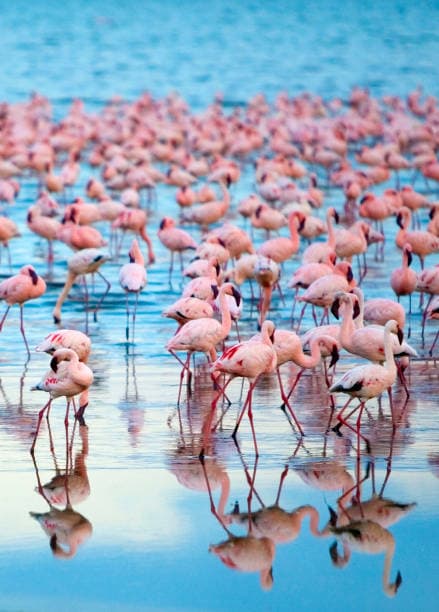
Фламинго процветают в щелочных и солёных озёрах, где мало кто из других видов может выжить. Их уникально адаптированные клювы позволяют фильтровать микроскопические организмы, стоя в мелкой воде. Большие стаи часто движутся вместе в синхронных схемах, создавая впечатляющие шоу, привлекающие посетителей со всего мира.
Одно из самых известных зрелищ фламинго происходит в озёрах Рифтовой долины Кении, где вдоль берегов озёр собираются сотни тысяч, а иногда и миллионы фламинго. Эти собрания создают захватывающие розовые пейзажи, видимые даже с воздуха.
Фламинго — это очень социальные птицы, которые гнездятся крупными колониями. Они строят конусообразные глиняные гнёзда и обычно откладывают одно яйцо. Оба родителя участвуют в воспитании птенца.
Хотя популяции фламинго остаются относительно стабильными, изменение уровня воды, загрязнение, деградация среды обитания и изменение климата могут повлиять на места размножения и кормовые угодья.
Для сафари-путешественников, фотографов и орнитологов фламинго представляют собой одно из самых красивых дикой природы Африки и остаются изюминкой многих туров по Восточной Африке.
Что такое «дружба фламинго»?
Дружба фламинго описывает стабильные и долгосрочные социальные связи, которые фламинго формируют внутри стаи. Многолетние исследования колоний фламинго показывают, что отдельные птицы последовательно выбирают стоять, питаться и ухаживать рядом с одними и теми же спутниками — связанными парами, однополыми друзьями и небольшими группами — при этом активно избегая некоторых других членов стаи. Эти дружбы могут сохраняться годами и, по-видимому, снижают стресс и ссоры в больших, шумных колониях.
Парные связи одинаково преданны: большинство фламинго содержат одного партнёра в течение брачного сезона, строят вместе конусообразное грязевое гнездо и делят функции по инкубации и кормлению птенцов, при этом оба родителя производят питательное молоко. В огромных стаях Рифт-Вэлли наблюдайте за парами и тройками, которые двигаются в ногу, повторяют друг другу демонстрации с оглушающими головами и защищают небольшое пространство для кормления бок о бок — это и есть дружба фламинго в действии.
Где увидеть фламинго в Кении
Озёра Большой рифтовой долины Кении принимают одни из крупнейших в мире собраний фламинго. Национальный парк озера Накуру — классическое место для наблюдения, сочетающее фламинго с носорогом и жирафом Ротшильда за одну игру. В последние годы озеро Богория часто содержало крупнейшие стаи мелких фламинго — иногда более миллиона птиц — потому что его щелочная вода, питаемая горячими источниками, производит обильное количество спирулины. Рядом с озером Найваша небольшое щелочное озеро Олойден также привлекает фламинго, когда условия благоприятны.
Уровень воды решает всё. Фламинго питаются цианобактериями и крошечными ракообразными, которые процветают в мелкой, сильно щелочной воде. Когда сильные дожди поднимают уровень озера — как это повторялось на Накуру — вода разбавляется, пища падает, и стаи перемещаются в Богорию, Элементайту или озеро Натрон в Танзании. Более сухие месяцы — январь–март и июнь–октябрь — обычно самые надёжные окна для наблюдения, но стаи перемещаются между озёрами круглый год, поэтому хороший гид проверит текущие условия перед выездом на охоту.