Featured
ultra luxury
- Big Five game viewing
- Cultural village visit
6D / 5NDuration
“Imara” means strong in Swahili. We build every safari with that same strength — expert knowledge, honest pricing, and relentless attention to detail.
Tell us what you're looking for and we'll build a custom itinerary — free, no obligation, within 24 hours.
Start PlanningNo spam, ever. Unsubscribe anytime.
Protected by Cloudflare Turnstile & Google reCAPTCHA. Privacy & Terms apply.
Safari deals, travel tips & destination guides — straight to your inbox.
No spam, ever. Unsubscribe anytime.
Protected by Cloudflare Turnstile & Google reCAPTCHA. Privacy & Terms apply.
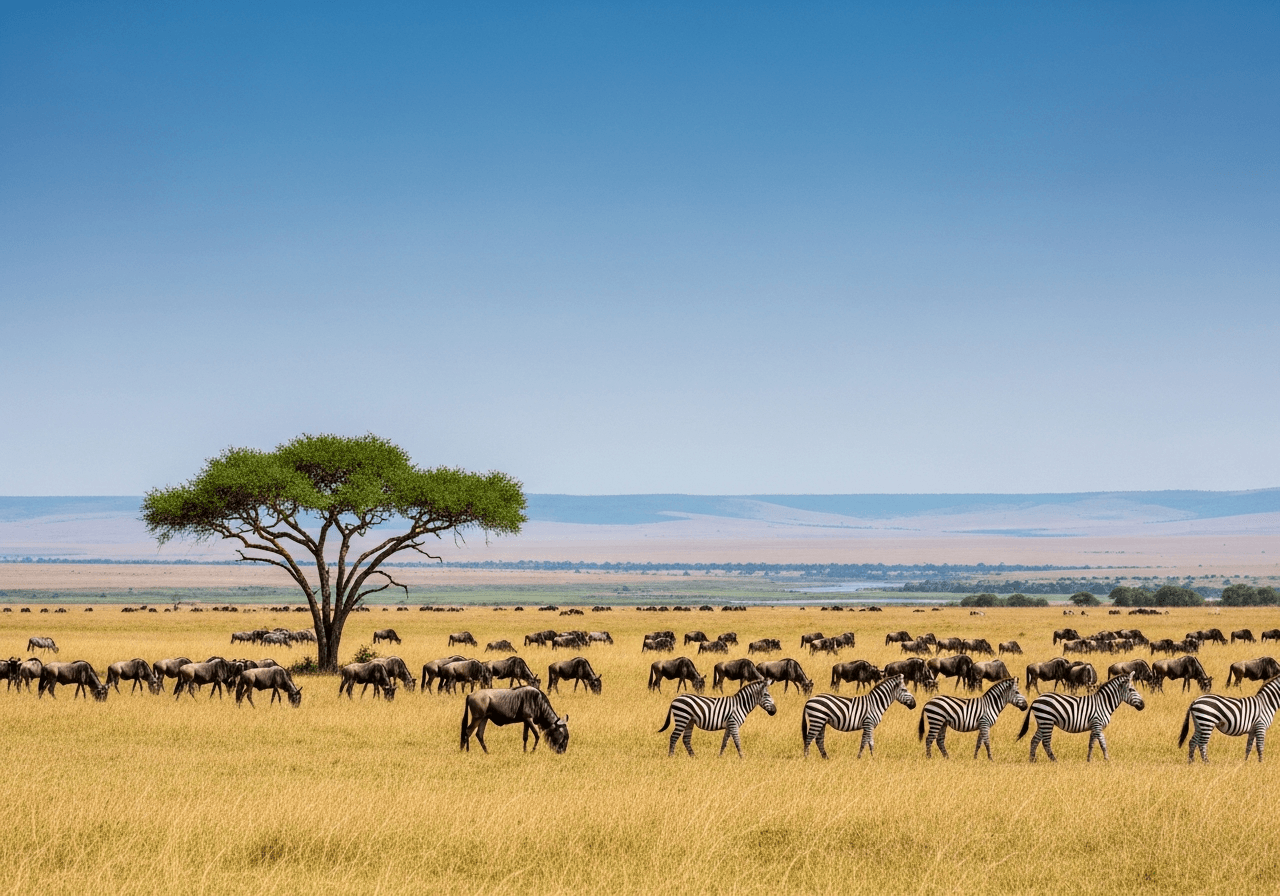
Over 1.5 million wildebeest and hundreds of thousands of zebra circle the Serengeti–Mara ecosystem in the greatest wildlife spectacle on Earth. Here's how to be in the right place at the right time — including the famous river crossings.
The herds move year-round, so timing depends on what you want to see. For the dramatic Mara River crossings, visit the northern Serengeti (Jul–Oct) or Kenya's Masai Mara (Aug–Oct). For the calving season and intense predator action, go to the southern Serengeti (late Jan–Mar). Because the timing shifts with the rains each year, book a camp positioned for that month and stay 3–4 nights in the migration zone to maximise your chances.
The Great Migration is not a single event but a continuous, year-round clockwise loop driven by rainfall and fresh grazing. The herds spend the early year on the nutrient-rich southern Serengeti plains, move northwest through the western corridor around mid-year, push into the northern Serengeti and Masai Mara for the dry season, then drift back south as the rains return.
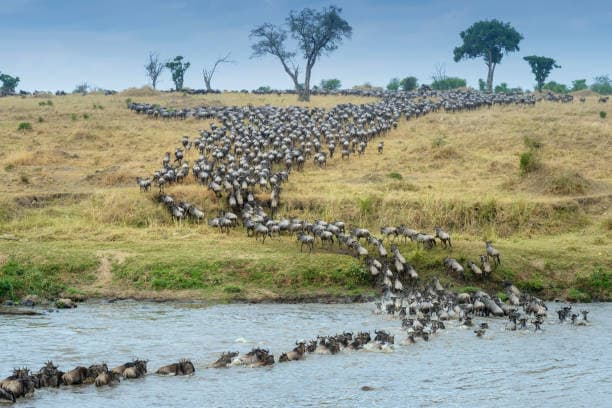
The two headline moments are the calving season (late January to March), when around 8,000 wildebeest are born each day on the southern short-grass plains — a magnet for lion, cheetah and hyena — and the river crossings (roughly July to October), when columns of wildebeest brave crocodile-filled rivers in heart-stopping, dust-and-water chaos.
Crossings cannot be scheduled — they happen when the herds decide. The key to success is position and patience: stay in a camp located in the active migration zone for that month, allow several days, and travel with a guide who tracks herd movements daily. We monitor the migration constantly and place you exactly where the action is most likely.
Why It's Unmissable
Wildebeest plunge down banks into the Mara and Grumeti rivers, dodging crocodiles — raw, unscripted and unforgettable.
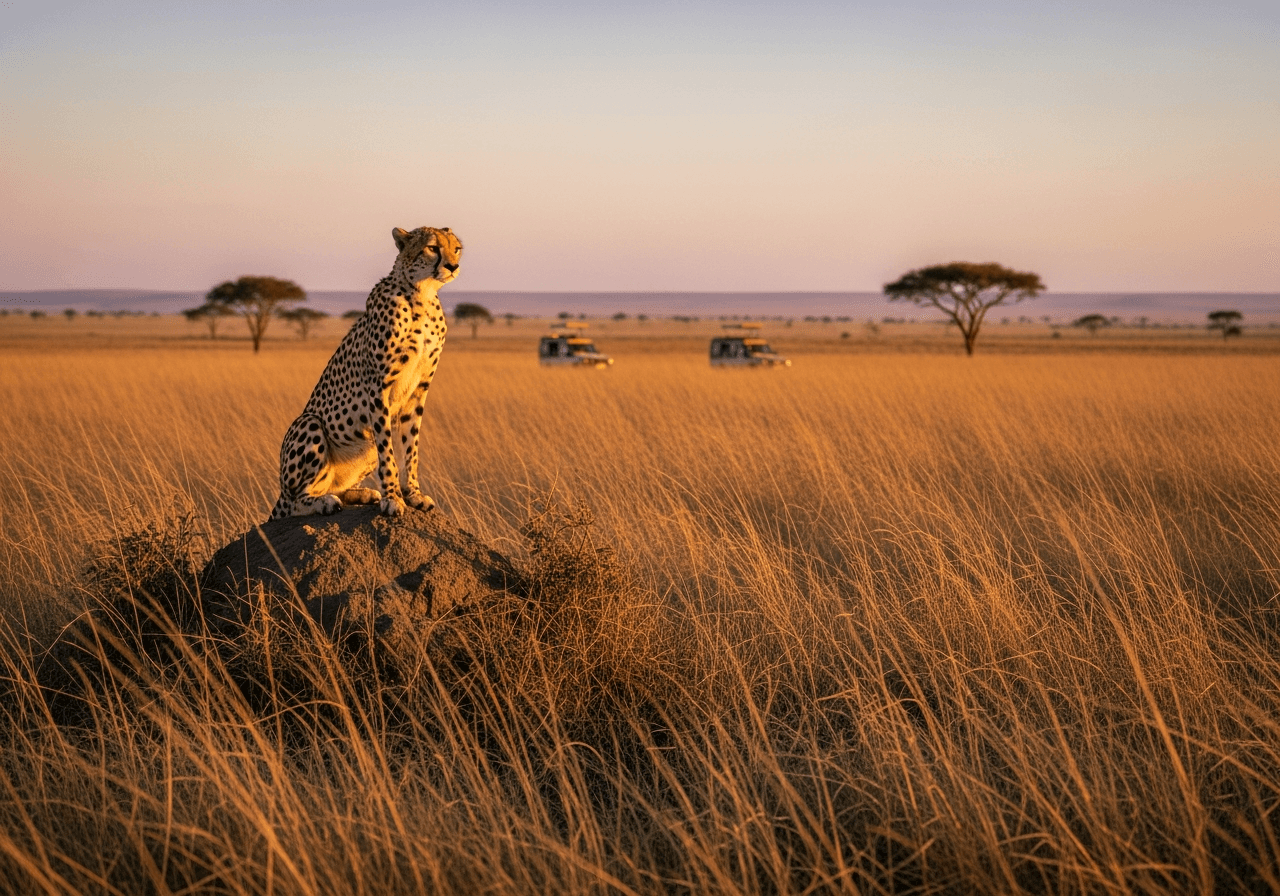
Where the herds go, big cats follow. Calving and crossings concentrate lion, cheetah and crocodile drama like nowhere else.
Horizon-to-horizon columns of animals — a living river of more than two million hooves on the move.
Dust, golden light and dramatic action make this one of the world's great wildlife photography events.
Witness thousands of newborns finding their feet within minutes — and the predators that shadow them.
Light-aircraft hops drop you straight into the active zone, saving long drives and maximising game time.
Where to Be
The herds are in a different place each month. Select a region to see what it offers and when to go.
The Mara River runs through the northern Serengeti, making it the prime crossing zone from July to October — often with fewer vehicles than the Kenyan side.
Migration Calendar
Approximate timing — the herds follow the rains, so exact positions shift year to year.
Calving — S. Serengeti
Wildebeest gather on the southern short-grass plains to calve. Spectacular predator action and open-plain photography.
Moving northwest
Herds drift through the central and western Serengeti with the long rains; the rut begins and the first Grumeti crossings occur.
River crossings — peak
The classic season: dramatic Mara River crossings in the northern Serengeti and Masai Mara. The most sought-after window.
Returning south
Short rains green the plains and the herds move back toward the southern Serengeti — quieter and excellent value.
Sample Trip
Timed for the river crossings, combining the northern Serengeti and the Masai Mara. Tap any day.
Arrive in Kilimanjaro or Nairobi, overnight, and prepare for your flight into the migration zone.
What It Costs
Migration-season camps are in high demand, so book early. Prices are per person per day, sharing, including game drives, guiding, park fees, accommodation and most meals.
$450–$650 / day
Well-placed seasonal camps that move with the herds, private 4×4 and expert guide.
$700–$1,300 / day
Premier mobile and permanent camps in the heart of the action, with light-aircraft access.
$1,400+ / day
Exclusive crossing-front camps, private guiding and the most coveted locations for the season.
Peak crossing dates (August–September) command premium rates and sell out a year ahead. We secure the best-positioned camps for your travel window.
Ready-Made Itineraries
Hand-crafted starting points — every itinerary is fully customisable to your dates, pace and budget.
Plan With Experts
The Great Migration rewards precise timing and local intelligence. As a Nairobi-based, KATO bonded and TRA-licensed operator working across the Serengeti–Mara ecosystem, we track herd movements daily and know which camps sit in the active zone each month — knowledge that comes from operating here season after season, not from a calendar online.
We place you in camps positioned for the crossings or the calving, allow enough nights to beat the unpredictability, and pair you with guides who read the herds. The result is the best possible chance of witnessing the spectacle — backed by honest pricing and 24/7 support.
Curated and reviewed by the Imara Africa Safaris planning desk and senior guiding team, Nairobi, Kenya.
Migration Safari FAQ
Everything travellers ask us about timing and seeing the wildebeest migration.
The Mara River crossings happen roughly from July to October. The northern Serengeti is reliable from July, and Kenya's Masai Mara peaks from August to October. Crossings can't be guaranteed on a given day — they depend on the herds — so we recommend staying 3–4 nights in the crossing zone to maximise your chances.
Explore related safari styles
Tools, guides and destinations to shape your perfect African journey.
Tell us your travel dates and we'll position you for the crossings or the calving with the best-placed camps and guides — honest pricing, no obligation.