The Blue Wildebeest (Connochaetes taurinus), commonly referred to as the Common Wildebeest, is one of Africa's most iconic and ecologically important herbivores. Best known for its participation in the world-famous Great Migration, this remarkable antelope species is a symbol of Africa's vast wilderness and extraordinary wildlife spectacles.
Despite its somewhat unusual appearance, combining features resembling cattle, horses, and antelopes, the Blue Wildebeest is perfectly adapted to life on Africa's grasslands. It possesses a powerful muscular body, sloping back, broad shoulders, shaggy mane, beard, and curved horns that provide protection against predators.
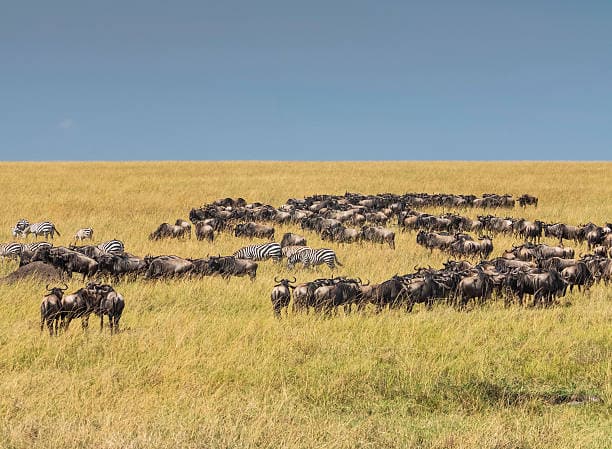
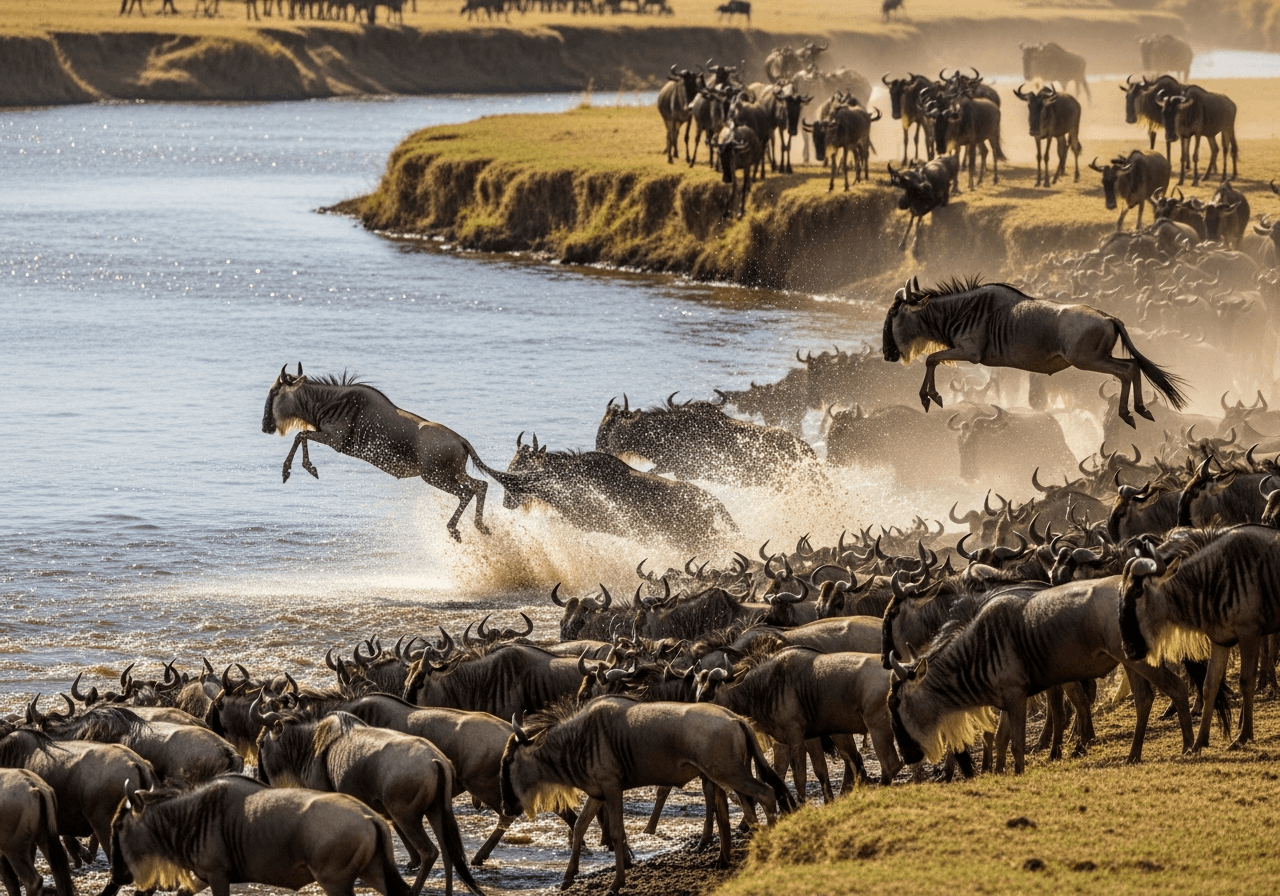
Blue Wildebeests are highly social animals and often form large herds ranging from dozens to hundreds of individuals. During the Great Migration, more than 1.5 million wildebeests move across the Serengeti and Maasai Mara ecosystems alongside hundreds of thousands of zebras and gazelles in search of greener grazing lands.
These migrations create one of the greatest wildlife events on Earth, attracting predators such as lions, leopards, cheetahs, hyenas, and crocodiles. Dramatic river crossings at the Mara River and Grumeti River are among the most photographed wildlife moments in Africa.
Blue Wildebeests are primarily grazers, feeding on short grasses that flourish after seasonal rains. Their movements are closely linked to rainfall patterns and the availability of fresh pasture.
As ecosystem engineers, wildebeests help maintain healthy grasslands through grazing and nutrient cycling. Their migrations support a vast network of predators, scavengers, and other herbivores, making them one of Africa's most important wildlife species.
Today, Blue Wildebeests remain abundant across much of East and Southern Africa, thriving in protected national parks, game reserves, and conservation areas.
Where Can You See Blue Wildebeest on Safari?
The blue wildebeest is the driving force of the Great Migration, and its whereabouts shift through the year. The Serengeti National Park and the Masai Mara National Reserve together host the vast migrating herds, while a large resident population fills the Ngorongoro Crater throughout the year.
When Is the Best Time to See Them?
Timing depends on where the herds are. Calving fills the southern Serengeti plains from January to March, the dramatic Mara River crossings usually occur between July and October, and the Ngorongoro Crater offers reliable sightings in any season regardless of the migration's position.