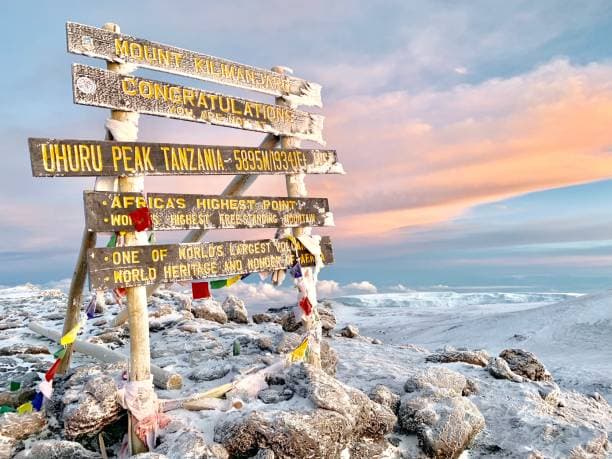
Mount Kilimanjaro is Africa's highest mountain and the tallest free-standing mountain on Earth, rising to 5,895 metres (19,341 feet) above the plains of northern Tanzania near the Kenyan border. A UNESCO World Heritage Site and one of the Seven Summits, it is the world's most accessible major peak, climbable without technical mountaineering skills.
Kilimanjaro consists of three volcanic cones — Kibo, Mawenzi and Shira. Kibo is the highest and carries Uhuru Peak, the goal of every summit attempt. What makes the mountain extraordinary is its vertical stack of climate zones: trekkers pass from tropical rainforest through heath and moorland, alpine desert and finally the arctic summit zone with its glaciers, all within a single week.
What Is Kilimanjaro Known For?
- Uhuru Peak at 5,895 metres — the highest point in Africa and a bucket-list summit
- Five distinct climate zones, from rainforest with monkeys and turacos to summit glaciers
- Giant groundsels and lobelias in the surreal moorland zone
- A choice of established routes: Machame, Marangu, Lemosho, Rongai, Umbwe and the Northern Circuit
- Sunrise above the clouds from the crater rim, widely counted among the world's great mountain views
- Chagga culture, coffee farms and waterfalls on the fertile lower slopes
Each route offers a different balance of scenery, traffic and acclimatisation. The Marangu route is the only one with hut accommodation; Machame and Lemosho are the most scenic camping routes and deliver stronger summit success thanks to their climb-high, sleep-low profiles; Rongai approaches from the drier north; and the Northern Circuit is the longest and quietest. Because summit success correlates closely with time on the mountain, most climbers choose itineraries of six to eight days.
The mountain rewards non-climbers too. The Kilimanjaro region offers cultural experiences with the Chagga people, coffee farm tours, waterfall walks and day hikes to the first huts, and it connects easily to Tanzania's Northern Safari Circuit — Serengeti National Park, Ngorongoro Crater, Tarangire National Park and Lake Manyara — for a climb-and-safari combination.
The climb itself follows a steady rhythm: four to six hours of walking most days at a deliberately slow pace — guides' constant refrain of "pole pole" (slowly, slowly) is the single best predictor of summit success — with camps pitched progressively higher each night. Summit night is the crux: climbers leave camp around midnight, ascending scree switchbacks by headtorch to reach the crater rim at Stella or Gilman's Point before dawn, then traverse to Uhuru Peak as sunrise floods the glaciers with colour. Every expedition is supported by a licensed guide team and porters who carry camp equipment, leaving trekkers with only a daypack. Altitude, not fitness, turns most climbers back, which is why route choice and itinerary length matter more than athletic ability; sensible preparation amounts to good boots broken in beforehand, steady training walks and a commitment to drinking water and eating well on the mountain. Between 30,000 and 50,000 people attempt the mountain in a typical year, yet the experience still feels personal: each group climbs with its own crew, and the higher camps thin out quickly on the less-travelled routes such as Rongai and the Northern Circuit.
When Is the Best Time to Climb Kilimanjaro?
The dry seasons from January to March and June to October offer the most stable weather, clearer skies and the highest summit success rates. January to March is quieter and slightly colder, while June to October brings peak-season conditions and the most reliable trekking weather.
How Do You Get to Kilimanjaro?
The mountain rises about 45 kilometres from Moshi and roughly 80 kilometres from Kilimanjaro International Airport (JRO). Climbers transfer by road from Moshi, Arusha or the airport to their route's starting gate, usually the day before the trek begins.
How Many Days Do You Need?
Allow six to eight days on the mountain for a safe, well-acclimatised climb — shorter five-day itineraries exist but carry noticeably lower summit success. Add a night in Moshi or Arusha on either side of the trek for rest and gear checks.
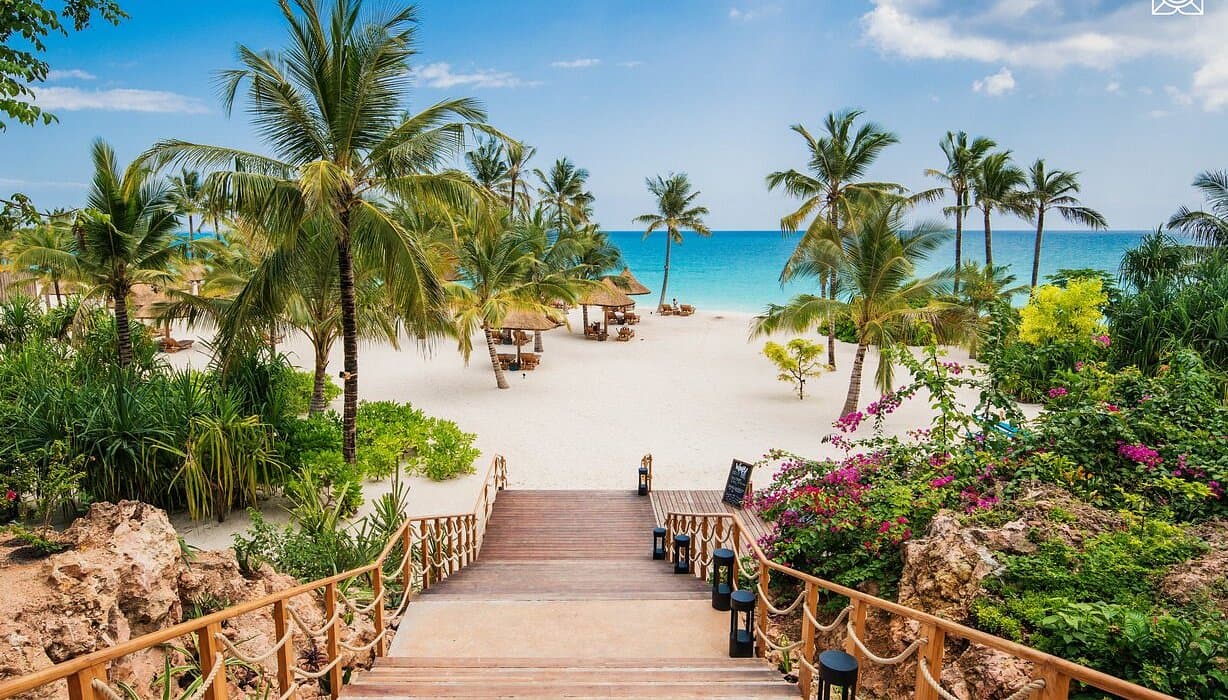
Many climbers unwind afterwards on the coast: the 8-Day Ultra-Luxury Tanzania Safari and Zanzibar Beach Escape pairs northern Tanzania's wildlife with Zanzibar's beaches, the classic post-Kilimanjaro recovery.
Planning the climb as part of a bigger adventure? Read our ranked guide to the tallest mountains in Africa to see how Kilimanjaro compares with Mount Kenya, the Rwenzoris and Mount Meru — and how to combine any of them with a safari.